Protected fungi in Poland, and which you may not pick
117 species of fungi are protected, from lion’s mane to morels and Satan’s bolete. Some can be bought legally in shops, but picking them in the wild without a permit is banned.
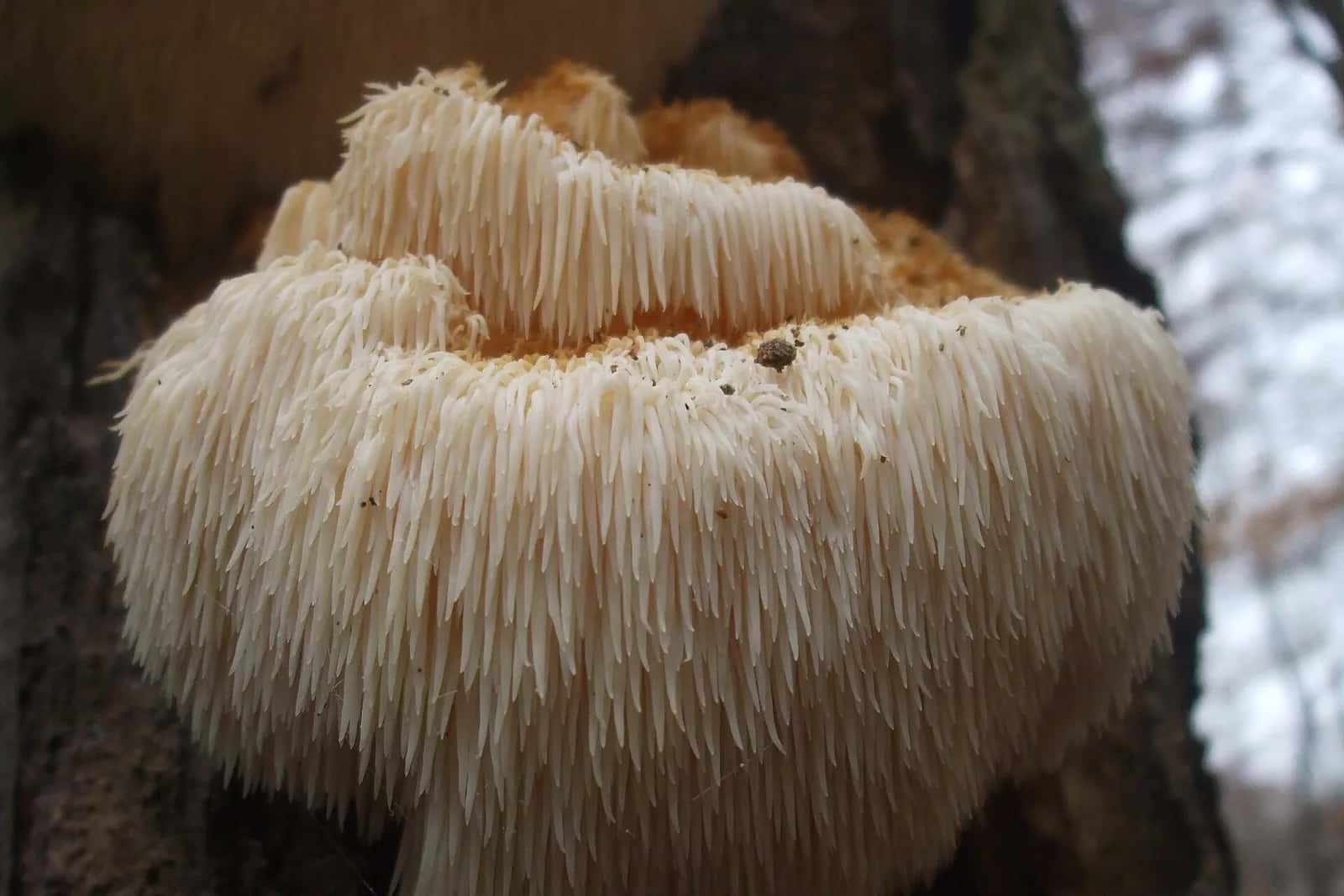
Lion’s mane, a white fungus with long hanging spines, grows on tree trunks. Cultivated lion’s mane can be bought legally, because the official list allows its sale if farmed. In a Polish forest you may not even pick it: it is strictly protected.
It is not alone. A Ministry of Environment regulation of October 9, 2014 on the protection of fungal species covers 117 species of macrofungi and 205 lichens, and it remains in force unchanged. Alongside rare earthstars, the list includes mushrooms many foragers know by sight, such as Satan’s bolete and morels.
Here is the difference between strict and partial protection, which familiar fungi are protected and which are not, why some protected species are legally sold in shops, and what you risk by picking them.
How many fungi are protected in Poland?
The regulation has three annexes. The first lists 232 strictly protected species: 54 macrofungi and 178 lichens. The second lists 90 partially protected species: 63 fungi and 27 lichens. That makes 322 species in all, including 117 fungi a forager might see in the woods and 205 lichens, which are fungi living in partnership with algae.
The third annex lists 10 partially protected species that may be harvested, but only with a permit from a regional or national environmental protection director. They include lakownica żółtawa (a Ganoderma bracket), hen of the woods, chaga, five species of morel, the umbrella polypore and Iceland moss, a lichen. Collection must be by hand.
Strict and partial protection: what is banned?
Strict protection carries the most bans. It is illegal to deliberately destroy, pick or damage the fungi, to destroy their habitats, or to collect them. Keeping or possessing specimens, selling, offering for sale, swapping or giving them away, importing and exporting them, deliberately moving them and releasing them into the wild are also banned.
Partial protection drops the bans on possession, sale, import and export. Picking or destroying partially protected fungi in the wild is therefore just as illegal as for strictly protected ones.
The regulation makes an exception for farming and forestry work, where the technology used makes compliance impossible, except for species specially marked in the annex. The exception does not cover foragers: picking for your own use is not forestry work.
Chaga, morels, hen of the woods: what may be picked with a permit?
The ten species in the third annex are the exception to the rule that protected fungi are not picked. They may be harvested, but only with a permit from a regional or national environmental protection director, and only by picking fruit bodies by hand. Specimens collected this way may then be sold legally.
The list includes chaga, hen of the woods, lakownica żółtawa, the umbrella polypore and five species of morel. Permits go to specific businesses or institutions, not to every forager. Without one, taking chaga or morels in the wild is the same offence as picking any other protected fungus.
The full list, with Polish and Latin names, is in the annexes to the regulation, published in the Journal of Laws. Species marked with a special footnote in the first annex stay protected even from the effects of farming and forestry work.
Which familiar fungi are protected?
Most protected fungi are rare species an ordinary forager would never notice. A few, though, are well known from field guides or shops.
- strictly protected: Satan’s bolete, the rooting bolete, lion’s mane, the eryngo oyster mushroom, the quinine conk, the Jura scarlet cup and nine species of earthstar
- partially protected: morels growing outside gardens, horticultural plots, tree nurseries and green spaces; the oak cauliflower fungus; the coral tooth and the fir tooth; beefsteak fungus; old man of the woods; and two more earthstars
Not protected, though many think they are
The wood cauliflower (Sparassis crispa) is not protected; only its relative, the oak cauliflower fungus, is partially protected. The wood cauliflower is even on the official list of mushrooms that may be sold. Likewise the scarlet elf cup (Sarcoscypha austriaca) is not protected; only the Jura scarlet cup is.
The giant puffball, the giant polypore, the stinkhorn and the oyster mushroom are not on the list either. That does not mean you may pick them anywhere. In national parks and nature reserves, picking any wild fungus is banned except where the park director or the regional environmental director has designated places for it.
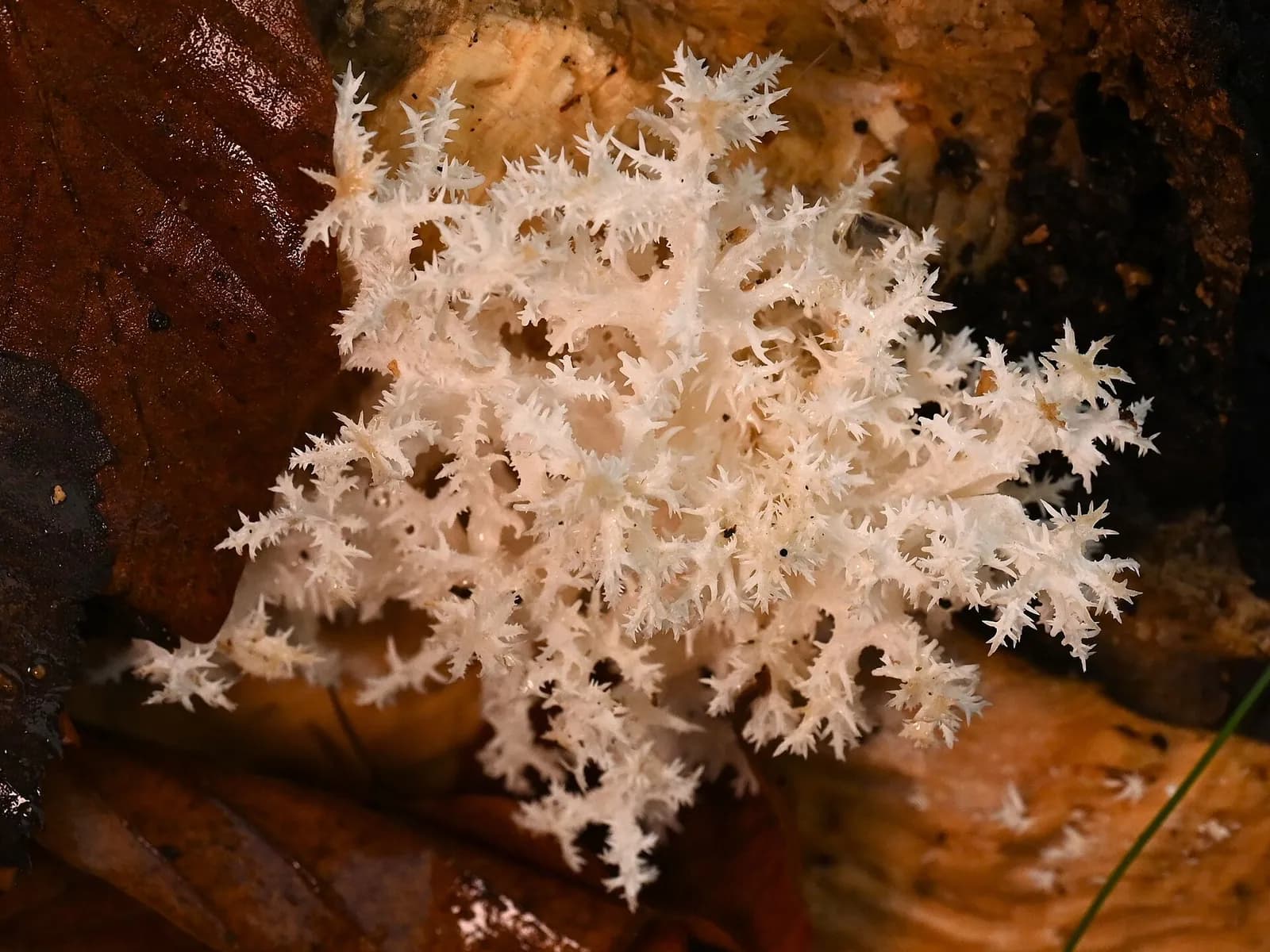
Protected in the forest, on sale in the shop
Poland’s official list of mushrooms that may be sold includes several protected species, with strict conditions on their origin. The eryngo oyster mushroom, lakownica żółtawa, lion’s mane and coral tooth may be sold only if cultivated or imported. The common and black morels only from gardens, horticultural plots, tree nurseries and green spaces, or from abroad. The wrinkled thimble morel only from outside Poland.
A footnote to the list adds that harvesting wild populations of these species abroad also requires a permit under the Nature Conservation Act. A mushroom bought in a shop is legal; the same species picked in a Polish forest is not.
What is the penalty for picking protected fungi?
Article 131 of the Nature Conservation Act provides for arrest or a fine for anyone who, without a permit, breaks the bans on protected fungi. This is a petty offence, handled under the code of procedure for misdemeanors. A fixed penalty can be up to 500 zł, or up to 1,000 zł for several offences. A court can impose a fine of 20 to 5,000 zł or 5 to 30 days’ arrest.
Serious cases are crimes. Under Article 127a, anyone who takes protected fungi in more than negligible numbers and thereby affects the species’ conservation status faces three months to five years in prison. Separate provisions in Article 127 cover breaking the rules in national parks, reserves and Natura 2000 sites. General picking rules and fines in Polish forests are on our Mushrooms in Poland page.
The red list: how many fungi are threatened?
Legal protection covers only some of the species mycologists consider threatened. The red list of Polish macrofungi, compiled by Władysław Wojewoda and Maria Ławrynowicz in 2006, contains 963 species. Earlier editions listed 800 species in 1986 and 1,013 in 1992.
- extinct or missing (Ex): 53 species
- endangered (E): 425
- vulnerable (V): 175
- rare (R): 270
- indeterminate (I): 40
Questions and answers
How many fungi are protected in Poland?
117 species of macrofungi: 54 strictly and 63 partially protected. With lichens, the list covers 322 species.
Are morels protected in Poland?
Yes, partially, when they grow outside gardens, horticultural plots, tree nurseries and green spaces. With a permit they may be picked by hand.
Is lion’s mane protected in Poland?
Yes, strictly. Only cultivated or imported lion’s mane may be sold.
Can you pick chaga in Poland?
Chaga is partially protected. It may be harvested only with a permit from a regional or national environmental director, by hand.
Is the giant puffball protected?
No, it is not in the regulation. In national parks and reserves, however, picking any wild fungus is banned outside designated places.
Is the wood cauliflower protected?
No. Only the oak cauliflower fungus is partially protected. The wood cauliflower is on the list of mushrooms that may be sold.
What is the fine for picking protected mushrooms in Poland?
Arrest or a fine, in practice usually a fixed penalty of up to 500 zł. Taking larger numbers that affect a species’ conservation status is a crime carrying three months to five years in prison.
Can you pick mushrooms in Polish national parks?
Only in places designated by the park director. In nature reserves the regional environmental director designates them.
Sources
- Regulation on protected fungi, 2014 (in Polish) (opens in a new tab)
- Nature Conservation Act, consolidated text 2026 (in Polish) (opens in a new tab)
- Ministry of Health regulation on mushrooms allowed for sale, consolidated text 2026 (in Polish) (opens in a new tab)
- Code of procedure for misdemeanors, consolidated text 2026 (in Polish) (opens in a new tab)
- Code of misdemeanors, consolidated text 2026 (in Polish) (opens in a new tab)
- Grzywacz, Piętka, Szczepkowski, protected fungi in forests (in Polish) (opens in a new tab)
- I. Kałucka, A. Kujawa, the red list of fungi in Poland (2026, in Polish) (opens in a new tab)