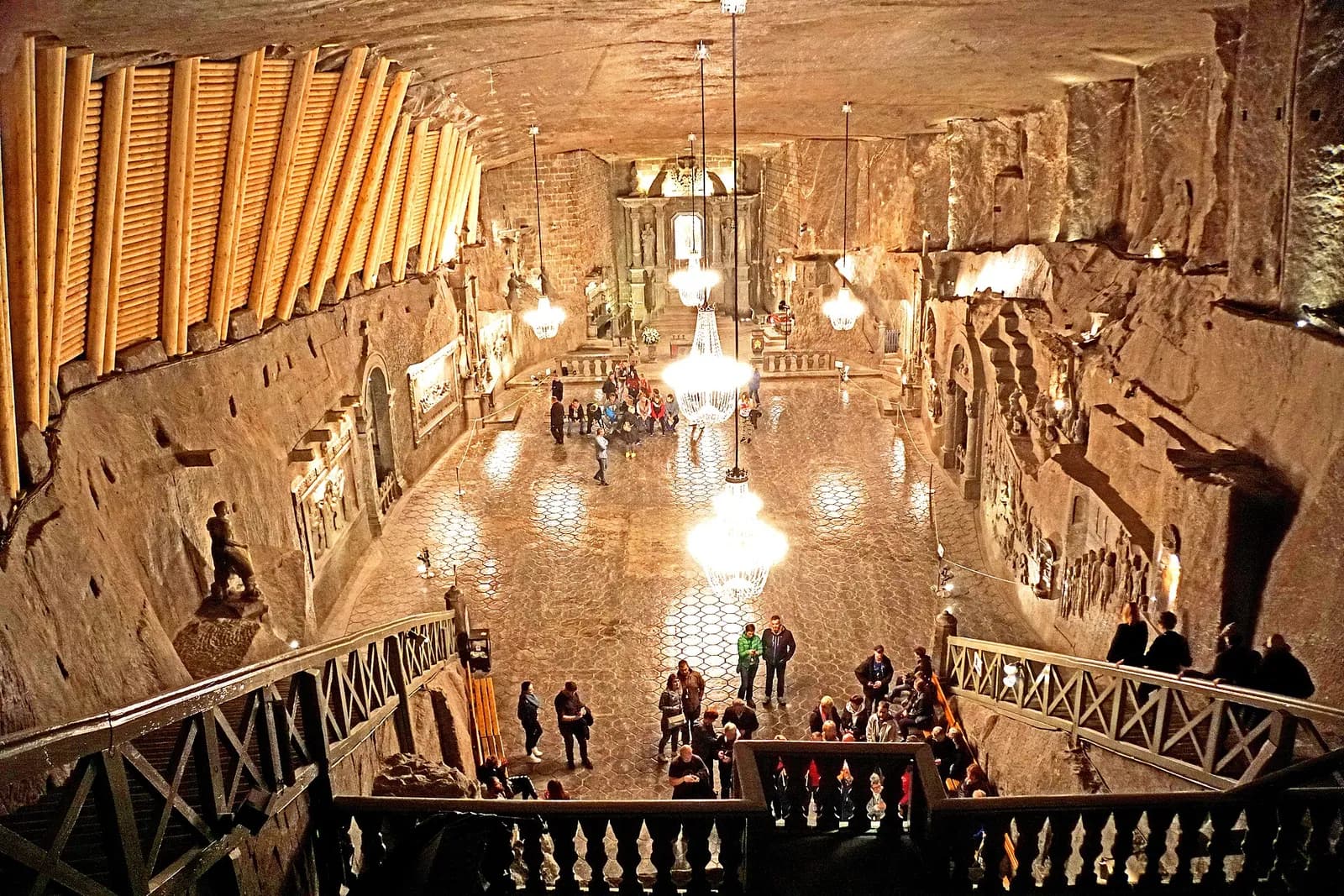
A town carved out of salt
Beneath Wieliczka run some 245 km of passages, down to a depth of 327 meters. The miners even carved a church there.
The country you know. Things you don’t expect.
A boat climbs out onto a meadow, a surveyor maps an underground town, and a steel bridge without a single rivet spans the Słudwia. In Wrocław you can look up and see exactly how the ribs hold up a dome.
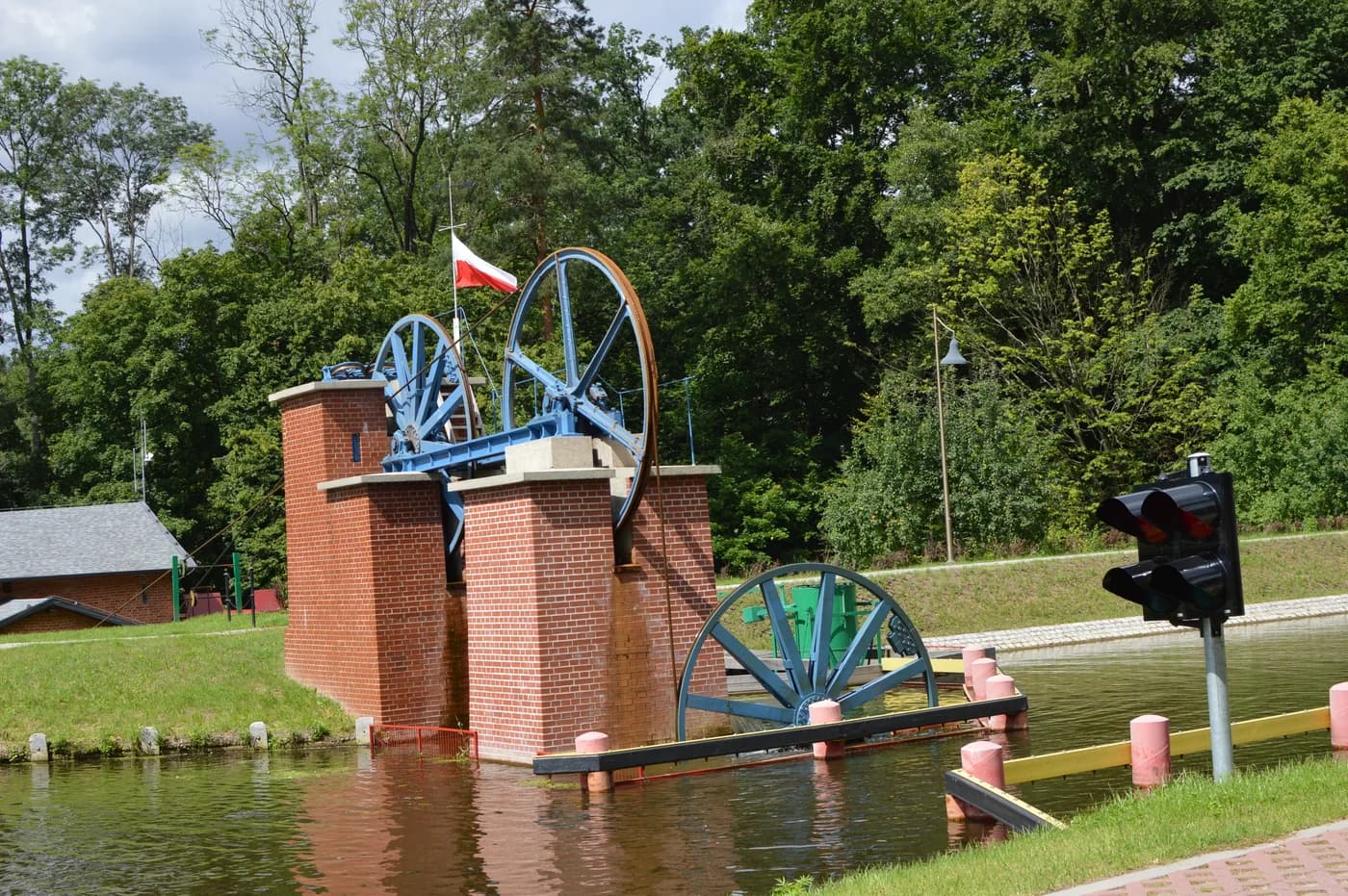
On the Elbląg Canal a boat sails onto a cradle car, rolls out of the water and glides on rails across a meadow. It is all powered by water, just as in 1860.
Read →Beneath Wieliczka run some 245 km of passages, down to a depth of 327 meters. The miners even carved a church there.
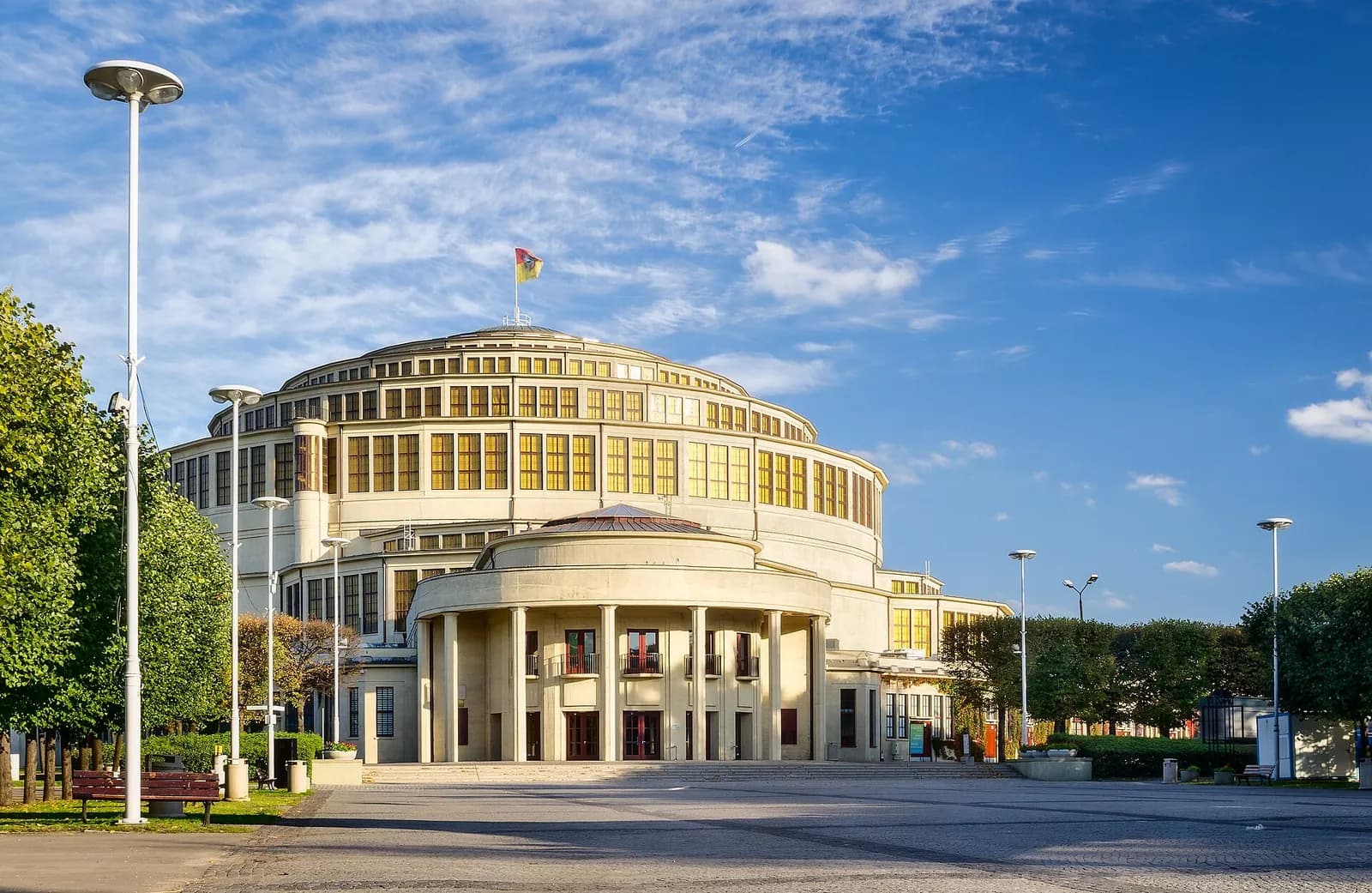
Centennial Hall in Wrocław has a reinforced concrete dome spanning about 65 meters. When it was built, it was the largest reinforced concrete dome in the world.
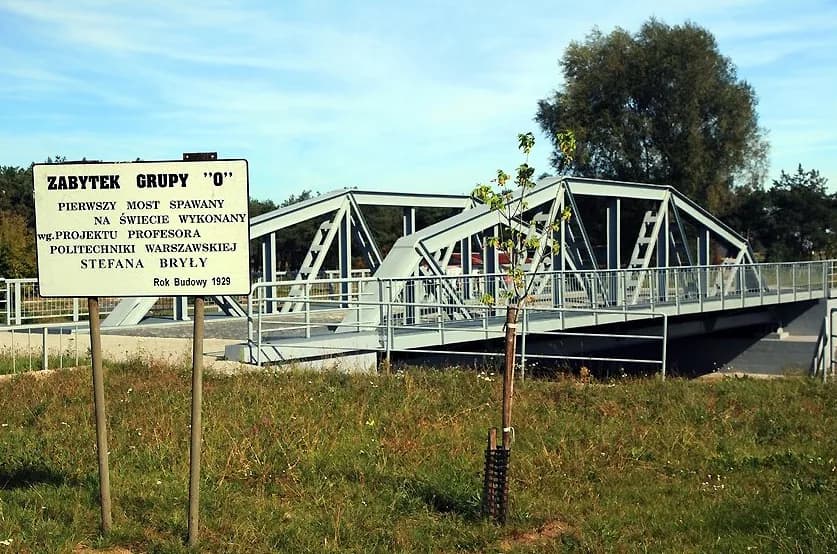
In 1929 drivers near Łowicz crossed the world’s first welded road bridge. Three welders joined the steelwork that still spans the River Słudwia.
Each of the structures in this section began with a problem that seemed impossible to get around. On the Elbląg Canal in northern Poland, boats had to be brought down 99.5 meters over less than 10 km. In Wieliczka, near Kraków, miners spent seven centuries digging ever deeper for salt, down to 327 meters below ground. In Wrocław (then the German city of Breslau) in 1913, a hall for thousands of people had to be roofed without a single column in the middle.
The answers were just as different. Instead of building more than thirty locks, the engineer Georg Jacob Steenke hauled boats out of the water and let falling water pull them over the hills. The miners of Wieliczka did not just dig salt, they built with it: stairs, chapels, even chandeliers. The architect Max Berg bet on reinforced concrete, a material few trusted at the time, and built a dome wider than the Pantheon in Rome.
At Maurzyce, near Łowicz in central Poland, engineers had a small river to cross. They welded the steelwork and put the span to the test under road loads. The original bridge now stands beside its replacement. At the other three sites you can still see the structures at work, from boats riding up the inclines to basketball games under the dome.
The Elbląg Canal runs through Warmia and Masuria in the north, between the towns of Elbląg, Ostróda and Iława; the inclined planes are on the stretch from Buczyniec to Całuny. The salt mine is in Wieliczka, on the edge of Kraków in the south. Centennial Hall stands in the eastern part of Wrocław, next to Szczytnicki Park, in Lower Silesia in the southwest. The Maurzyce bridge stands just outside Łowicz in the Łódź region of central Poland.
Wieliczka received Poland’s Monument of History designation in 1994, Centennial Hall in 2005 and the Elbląg Canal in 2011. The Maurzyce bridge entered the Polish register of historic monuments in 1968. UNESCO added Wieliczka to the World Heritage List in 1978 and Centennial Hall in 2006. Other Polish mining sites on the UNESCO list include the lead and silver mine in Tarnowskie Góry and the prehistoric flint mines of Krzemionki.
On the map that accompanies the canal’s national heritage designation, you can trace the waterway all the way to Lake Jeziorak, far from the famous inclined planes. The designation also names four locks, four safety gates and five weirs. The weirs let the canal keepers control how much water flows out of the lakes.
At Wieliczka, part of the World Heritage Site is above ground. In 2013 UNESCO extended the listing to include the mine in nearby Bochnia and the Saltworks Castle in Wieliczka. The castle housed the officials who ran both mines and sold their salt for the Crown. That is how mine workings in two towns and a medieval headquarters came to share one entry on the list.
In Wrocław, stand at the colonnade at the main entrance to the Exhibition Grounds. Ahead is a square modeled on a Roman forum, with the hall beyond it and the Four Domes Pavilion on your left. Berg and Poelzig laid out the grounds together, setting the hall where the two main axes cross. The UNESCO site takes in the surviving central part of their design, including the Pergola and its pond.
Long before passengers rode over the meadows near Elbląg, inclined planes were hauling coal through New Jersey. Long barges on the Morris Canal had two sections hinged together. The crew could uncouple them to cross an incline. Steenke studied how the Americans hauled boats out of the water. At Buczyniec you can see his answer to the same problem as a passenger boat rides over the crest, its entire hull on a single cradle.
Sometimes an idea only had to travel to the next village. In 1931 Bryła built a second welded bridge over the Słudwia, at Retki. At Maurzyce you see daylight through the trusses that carry the weight. The bridge at Retki uses plate girders, with a solid steel plate forming the web of each beam. Once welding had proved itself at the joints of a truss, it could be tried in a beam of quite a different shape.
On the model of Wieliczka at the Saltworks Museum, a centimeter stands for a meter on the ground. The model shows the town recorded by surveyor Marcin German between 1631 and 1638. Picture yourself standing beside one of the tiny houses and the plan of the old mining town starts to make sense. You can still compare the buildings at a glance nearly four centuries after they were measured.
A bridge drawing asks you to look more closely at where a measurement starts and ends. In his 1929 paper Bryła gave two spans for the same crossing, 26 meters clear and 27 meters between the centers of the supports. The first measures the open space between the abutments. The second reaches a little farther on either side to the points where the structure bears on them. Check the ends of the dimension line before comparing one bridge with another.
In Ciechocinek you can follow brine on its way to becoming table salt. Start at one of the wooden structures known as graduation towers. Troughs at the top spread brine along the length of the tower. It trickles down a wall of blackthorn twigs, losing water to the air on the way. The liquid collected below is saltier than it was at the top.
The next stop is the saltworks at 6 Solna Street, part of which houses a museum. Here the salt makers heat the concentrated brine in broad, shallow pans. They scoop out the crystals, heap the salt on a wooden platform to dry and send it to the storehouse in small rail wagons. Because some water has already evaporated outdoors, there is less to boil off in the pans.
The biggest difference is the season. Boats run over the Elbląg Canal’s inclined planes only from spring to fall; in winter you will see empty tracks at most. The Wieliczka mine is open all year, and the temperature underground never changes, so it makes a good plan for a rainy or freezing day. Centennial Hall is open all year too, but the multimedia fountain by the Pergola only runs in season, roughly from late April or early May to the end of October.
The cruise from Elbląg to Buczyniec takes about 4.5 hours, and the Tourist Route in Wieliczka 2–3 hours plus the trip from Kraków. Wieliczka and Wrocław combine easily on one trip through southern Poland, while the canal is better as a separate trip north, ideally together with Malbork Castle or the Masurian lakes.
The five inclined planes of the Elbląg Canal overcome 99.5 meters, and a boat takes about 23 minutes on average to cross one of them. The deepest level of the Wieliczka mine lies 327 meters underground, deeper than the 310-meter Varso Tower in Warsaw, the tallest building in the European Union, is tall. The dome of Centennial Hall spans 65 meters, more than 20 meters wider than the Pantheon’s.
At Maurzyce the figure to look for is the distance between the centers of the supports, 27 meters. Two such spans laid end to end would fit beneath the Wrocław dome. For cruises, directions and places to stay, see gdzieruszyc, our trip planner (in Polish).
You can see boats ride over the Elbląg Canal’s inclined planes, visit the Wieliczka Salt Mine near Kraków and stand under the concrete dome of Centennial Hall in Wrocław. Near Łowicz, Maurzyce has the world’s first welded road bridge.
Wieliczka has been on the list since 1978. UNESCO added the Bochnia mine and Wieliczka’s Saltworks Castle to that listing in 2013. Other sites include Centennial Hall in Wrocław (since 2006), the Tarnowskie Góry mine and the Krzemionki flint mines. The Elbląg Canal holds Poland’s national Monument of History designation.
Pomnik historii is a designation granted by decree of the President of Poland to the country’s most valuable heritage sites. Wieliczka received it in 1994, Centennial Hall in 2005 and the Elbląg Canal in 2011.
The bridge beside national road 92 makes an easy stop on a trip through central Poland. You can combine Wieliczka and Wrocław on a trip through the south, and give the canal cruise its own day in the north.
Wieliczka and Centennial Hall are open all year. Cruises over the Elbląg Canal’s inclined planes run only from spring to fall, and so do the fountain shows next to Centennial Hall.