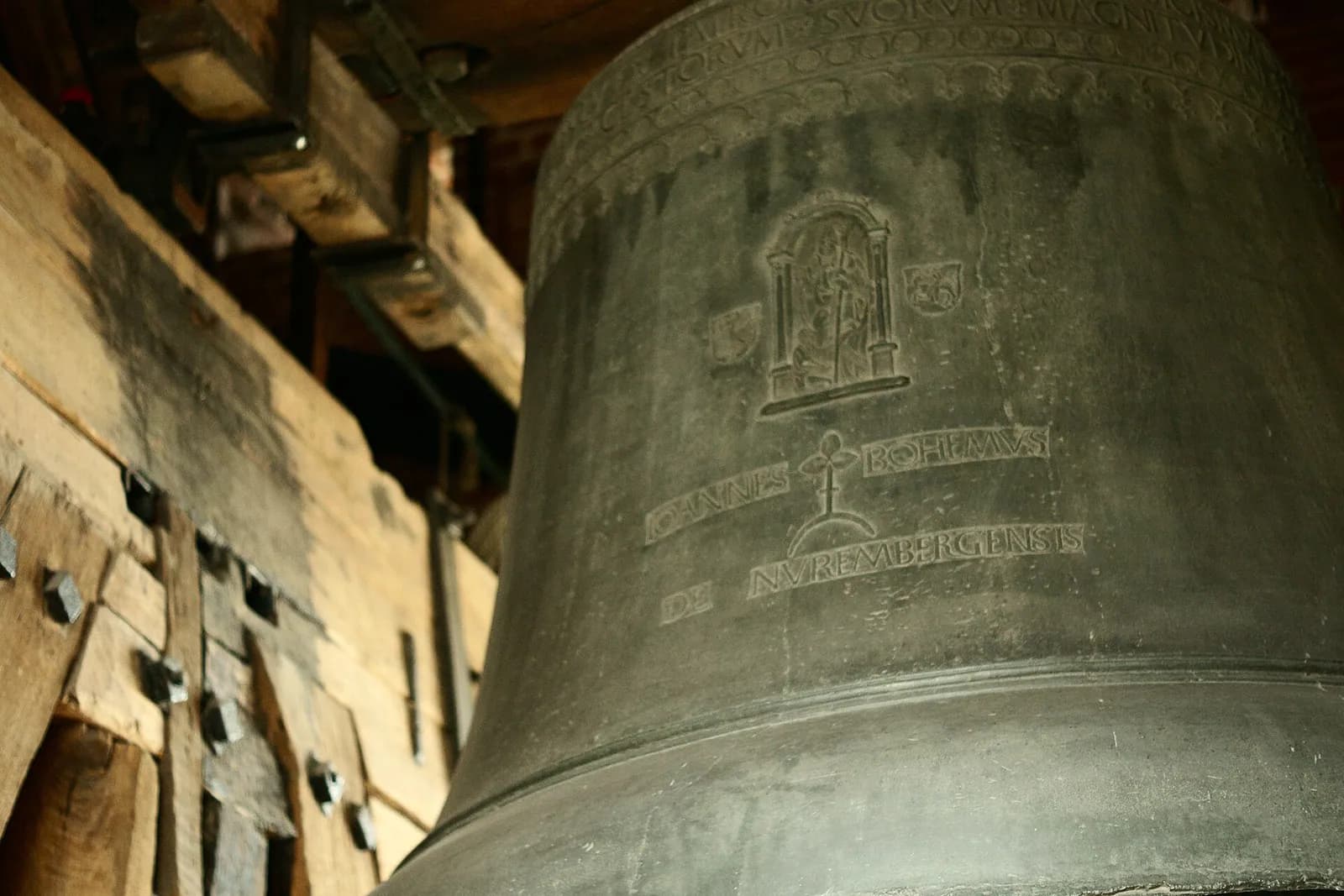
A bell that takes twelve people to swing
The Sigismund Bell at Wawel weighs nearly 13 metric tons. It rings only on the most important holidays and at key moments for the country.
The country you know. Things you don’t expect.
Malbork’s red walls rise above the Nogat. A royal bell rings at Wawel, the Eagles’ Nests perch on the crags of the Polish Jura, and gardens step down the hillside below Książ Castle.
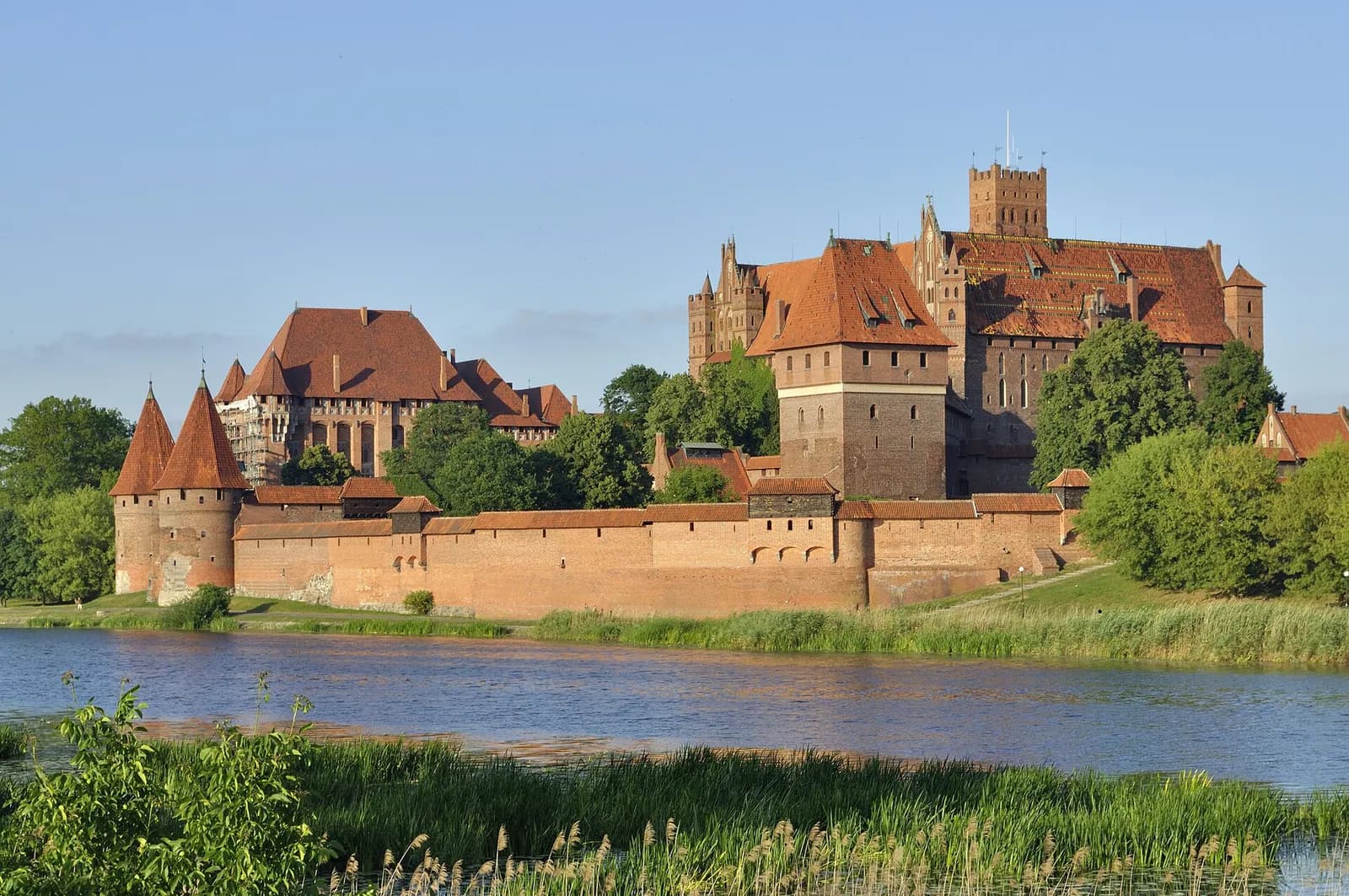
The Teutonic Knights spent more than a century building it. In 1457 Poland bought it instead of storming it.
Read →The Sigismund Bell at Wawel weighs nearly 13 metric tons. It rings only on the most important holidays and at key moments for the country.
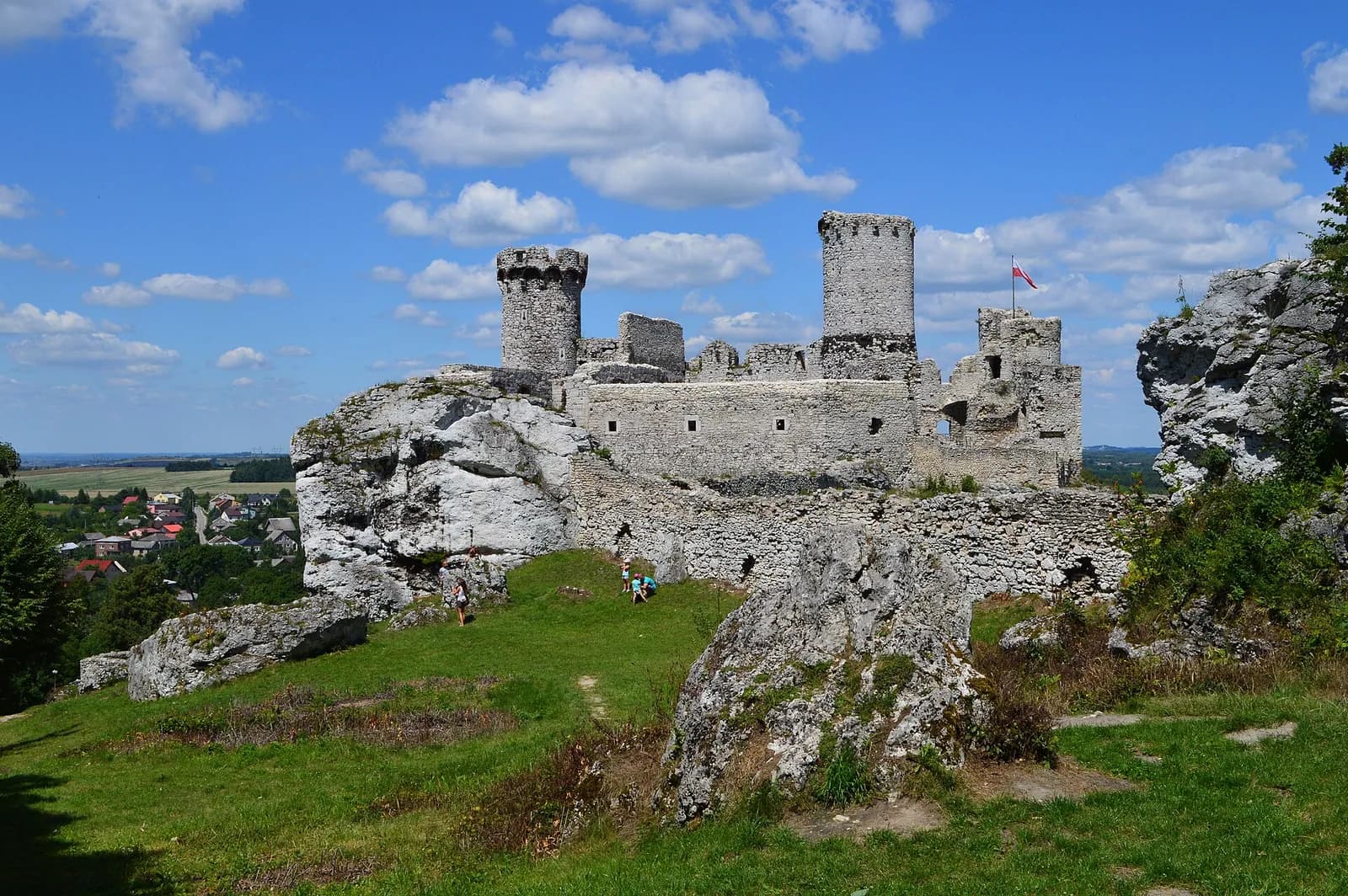
Between Kraków and Częstochowa, ruined castles perch on rocks like the nests of birds of prey. The trail is about 164 kilometers long.
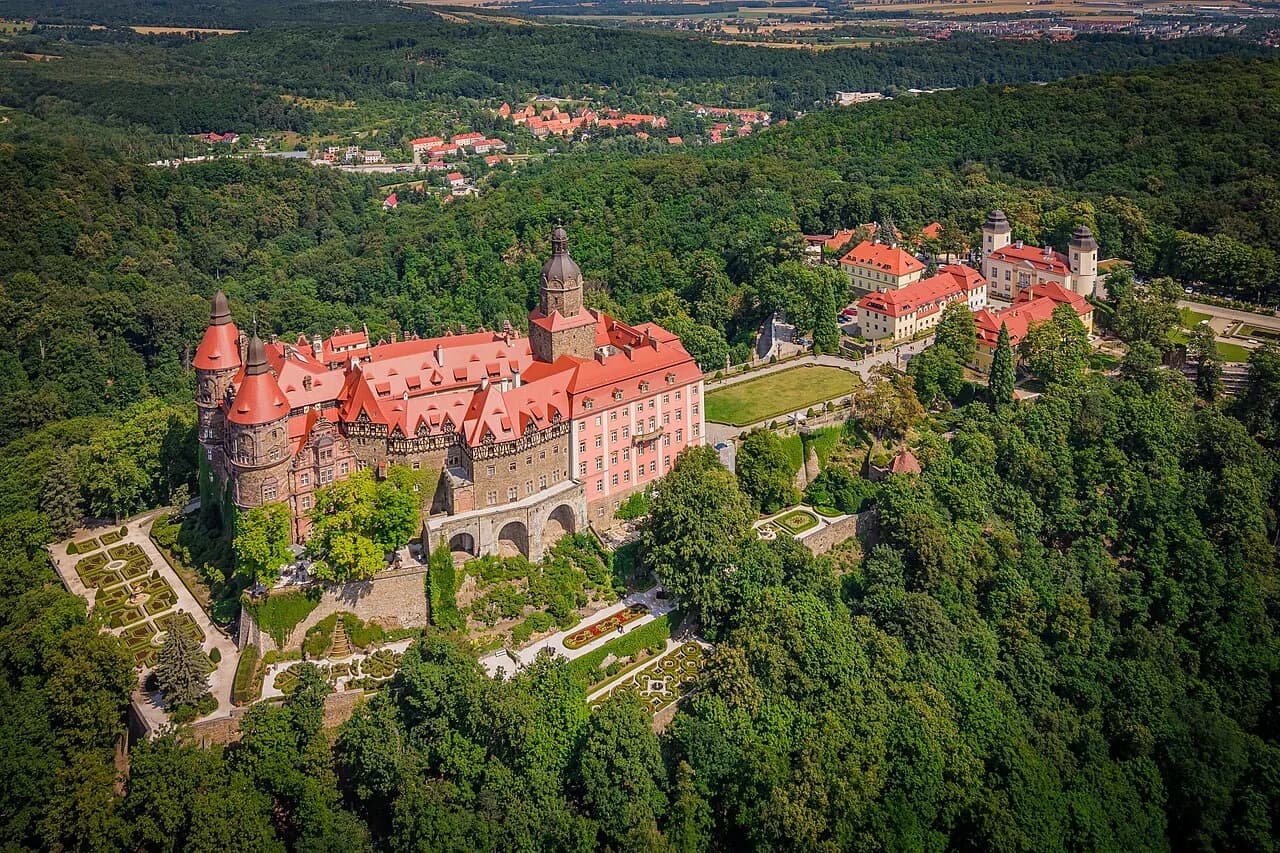
A Baroque facade faces the gate. Two early 20th-century wings overlook the gorge. Between them, the castle’s oldest walls enclose the Black Courtyard.
Poland's castles split roughly by what they are made of. In the north, in the former state of the Teutonic Knights, stand red fortresses of brick. The Vistula delta and Pomerania had little good building stone but plenty of clay, so churches, town halls and castles all went up in brick. The largest of them is Malbork on the Nogat River.
In the south, builders used limestone. Wawel Hill in Kraków and the white crags of the Kraków-Częstochowa Upland, known as the Polish Jura, are the same rock: Late Jurassic limestone laid down on the floor of a shallow sea more than 150 million years ago. In the 14th century a whole line of fortresses was built on those crags, known today as the Eagles' Nests.
Farther west in Wałbrzych, Lower Silesia, the Pełcznica River curls around three sides of a rocky spur. The Silesian Piasts made it the site of Książ Castle. Generations of Hochbergs built the wings of a palace around the stronghold.
Malbork stands in the flat Vistula delta (Żuławy), on the Nogat River, on the railway line from Gdańsk to Warsaw. It is the northernmost point on this map and the only Polish castle inscribed on the UNESCO World Heritage List as a site of its own (1997).
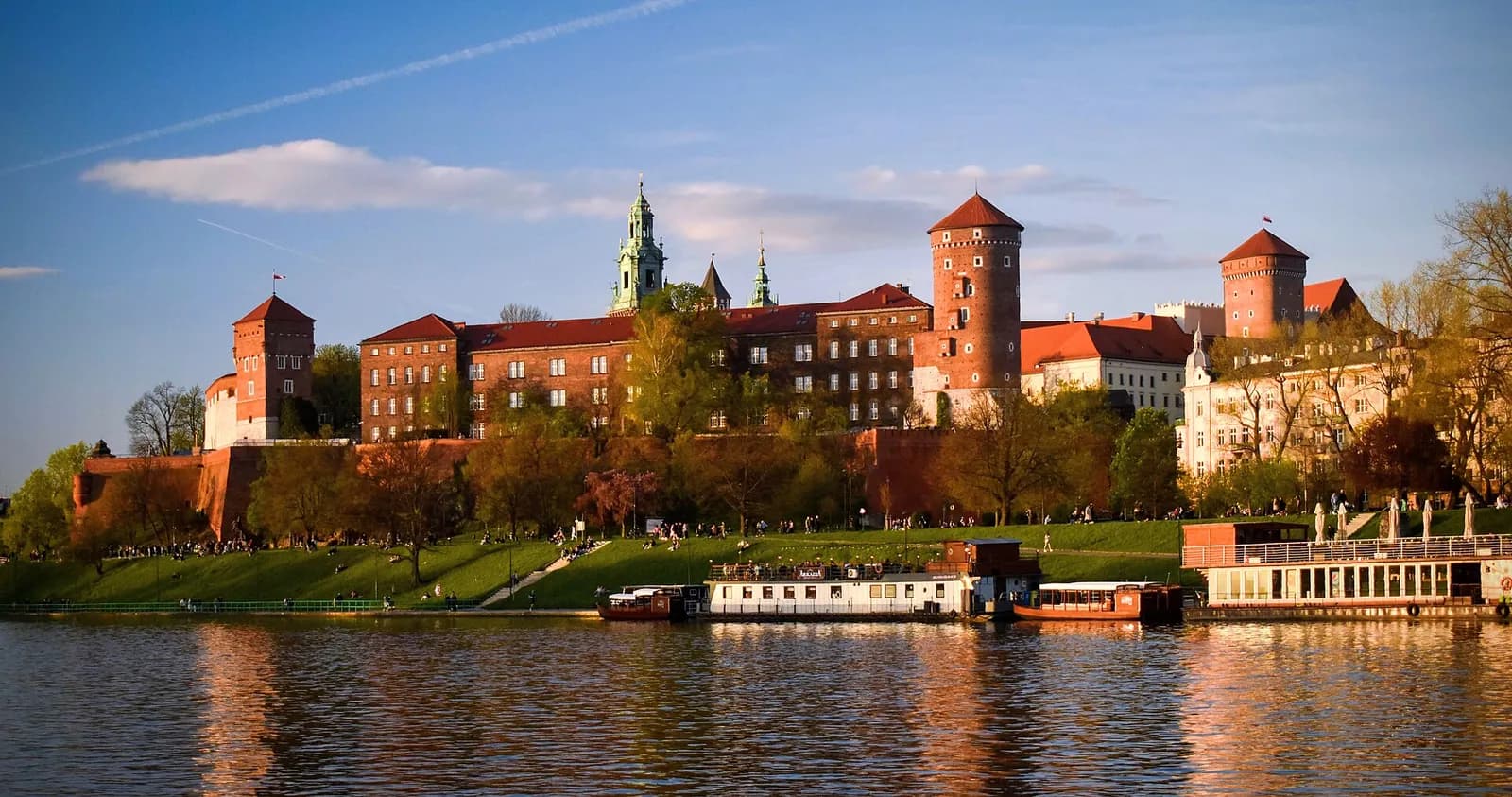
Wawel rises above the Vistula in the middle of Kraków. The royal castle and the cathedral form one complex on a limestone hill, and the cathedral's tower holds the Sigismund Bell of 1520. Since 1978 Wawel has been part of UNESCO's Historic Centre of Kraków.
North of Kraków the Jura begins. The belt of limestone hills runs about 80 km to Częstochowa, with more than a dozen castles and watchtowers along the way: from Pieskowa Skała in Ojców National Park, through Ogrodzieniec on the highest point of the Jura, to Olsztyn near Częstochowa.
Książ is farther west, within the city limits of Wałbrzych. The castle and its terraces occupy a spur in a bend of the Pełcznica. Old Książ, on the opposite bank, is a separate destination in the park.
At Malbork’s High Castle, look beneath the west cloister. A wide doorway leads into the kitchen where the cooks prepared meals for the brothers of the Teutonic Order. The dining hall was two floors up. A hoist beside the kitchen’s south wall carried the dishes upstairs.
Wawel’s courtyard hosted tournaments, but its galleries also solved an everyday problem. The royal rooms opened straight into one another. Servants could take the gallery around the outside to avoid walking through the apartments. A few fireplaces could even be lit from the gallery without anyone entering the room.
At Ojców in the Polish Jura, a well cut into solid rock still marks the middle of the courtyard. Around the edges, archaeologists found traces of timber buildings that once stood against the stone walls. Some of the open ground you see today was once under a roof.
On Wawel’s upper terrace, archaeologists traced ten rectangular beds between strips of brick paving. The layout of the paths pointed to at least twelve beds in the original garden. Look down from the palace windows today and you can count twelve in three rows. One stretch of the new path runs directly above the 16th-century bricks, preserved a few dozen centimeters below.
Court accounts from 1541 mention wooden boxes for herbs. Soil samples, though, gave no clear picture of what grew in the beds the archaeologists found. At Książ there is a record of gardening on a different scale. Before the Second World War, the gardeners replanted the terraces each spring and autumn. For this they needed some 20,000 plants, most supplied by the estate gardens and the Palm House in Lubiechów.
In the Bird Room at Wawel Royal Castle, look for the birds painted on the frieze that runs around the walls. A visitor around 1600 would have looked higher up. Metal birds hung from the ceiling of the room where the king held audiences. They gave the room the name it still carries.
Two fires help date the other decorations. After the fire of 1595, Ambrogio Meazzi made the fireplace for the rebuilt room. Above the hearth you can pick out a sheaf of grain, the emblem of the Vasa dynasty. A second fire in 1702 destroyed the ceiling paintings by Tommaso Dolabella. The paintings overhead today are the work of Felicjan Szczęsny Kowarski, who painted them in 1929.
In the early 20th century Louis Hardouin, the Hochbergs’ head chef, photographed the rooms at Książ and the people he lived and worked with. The family still used Maximilian Hall as a sitting room. Among Hardouin’s subjects were the two younger Hochberg boys, Alexander and Bolko, who played with his own children. In 2016 his granddaughter Jean Wessel gave the castle more than 1,500 photographs that had been kept in Canada.
Some of the paintings found their way back to the castle too. In 2015 an exhibition at Książ brought together 38 paintings and two sculptures from the National Museum in Wrocław. Ten of the canvases had once belonged to the Hochbergs. The exhibition also included four Baroque portraits of people from different branches of the family.
Malbork is a classic day trip from Gdańsk: a train ride, a walk to the castle and a few hours inside. The best view of the whole fortress is from the opposite bank of the Nogat.
Wawel and the Sigismund Bell fit into half a day in Kraków. The cathedral ticket includes the climb up the Sigismund Tower. With more time, a drive of under an hour takes you to Pieskowa Skała and the Prądnik valley, where the Eagles' Nests country begins.
The Jura is best seen over a weekend by car or bike: Ogrodzieniec, Mirów and Bobolice, and Olsztyn are only a short drive apart. Walking the whole 163.9 km trail takes roughly a week.
In Wałbrzych, the castle gardens and the Palm House are separate stops. For the landscape, follow a visit to the terraces with a walk toward Old Książ. For the plants, pair the castle with the Palm House in Lubiechów.
Damage to the castles left their custodians with difficult choices about what to restore. Malbork was half in ruins in 1945 and was rebuilt from the documentation of its prewar conservators. UNESCO credits the castle with the birth of many conservation methods that are now standard.
In the Jura the same question gets different answers: Ogrodzieniec has been preserved as a stable ruin, while the private owners of Bobolice rebuilt their castle from the ground up, which historians still argue about. At Wawel, continuity is the treasure: the Sigismund Bell has rung since 1521 and is still swung by human hands.
Royal names recur across these sites. Casimir the Great, the last king of the Piast dynasty, was crowned at Wawel, and many of the Jura's fortresses went up in his reign. Casimir IV Jagiellon bought Malbork from mercenaries in 1457, and his son, Sigismund I the Old, ordered the bell that still bears his name. At Książ we meet another branch of the Piast family, the dukes of Świdnica and Jawor. Their former stronghold passed to the Hochbergs in the 16th century.
The Teutonic castle in Malbork. Its walls, towers and moats enclose about 21 hectares (52 acres), making it the world's largest brick fortress.
Malbork Castle has been a site of its own since 1997. Wawel is part of the Historic Centre of Kraków, which was on UNESCO's very first list in 1978.
The red-marked hiking trail is 163.9 km (about 102 miles) long and runs from Kraków to Częstochowa.
The Sigismund Bell hangs in the Sigismund Tower of Wawel Cathedral in Kraków. Visitors can see it up close with a cathedral ticket.
Ogrodzieniec pairs well with the nearby castles of Mirów and Bobolice. From Kraków, Pieskowa Skała in Ojców National Park is an easy trip.