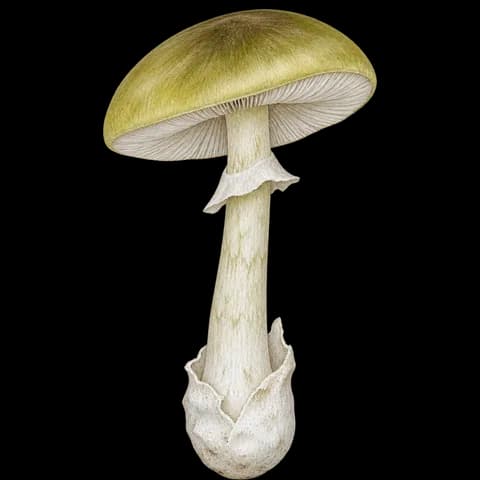
The most dangerous mushroom in Polish forests
The death cap is behind the vast majority of fatal mushroom poisonings. By the time symptoms appear, the toxin is already at work.
The country you know. Things you don’t expect.
In Poland, mushroom picking is a national sport. Thousands of species of fungi grow in the forests, and the season does not end with the first frost.
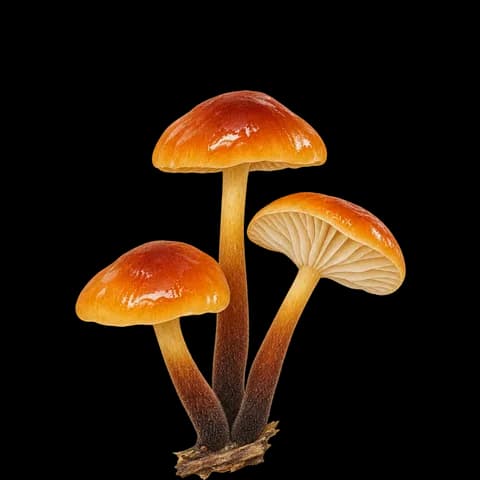
The velvet shank fruits after the frosts, from late fall to spring. Frozen solid, it can thaw and keep growing.
Read →The death cap is behind the vast majority of fatal mushroom poisonings. By the time symptoms appear, the toxin is already at work.
In state forests you can pick mushrooms for your own use without permits or fees. But there are places and days when it is better to stay home.
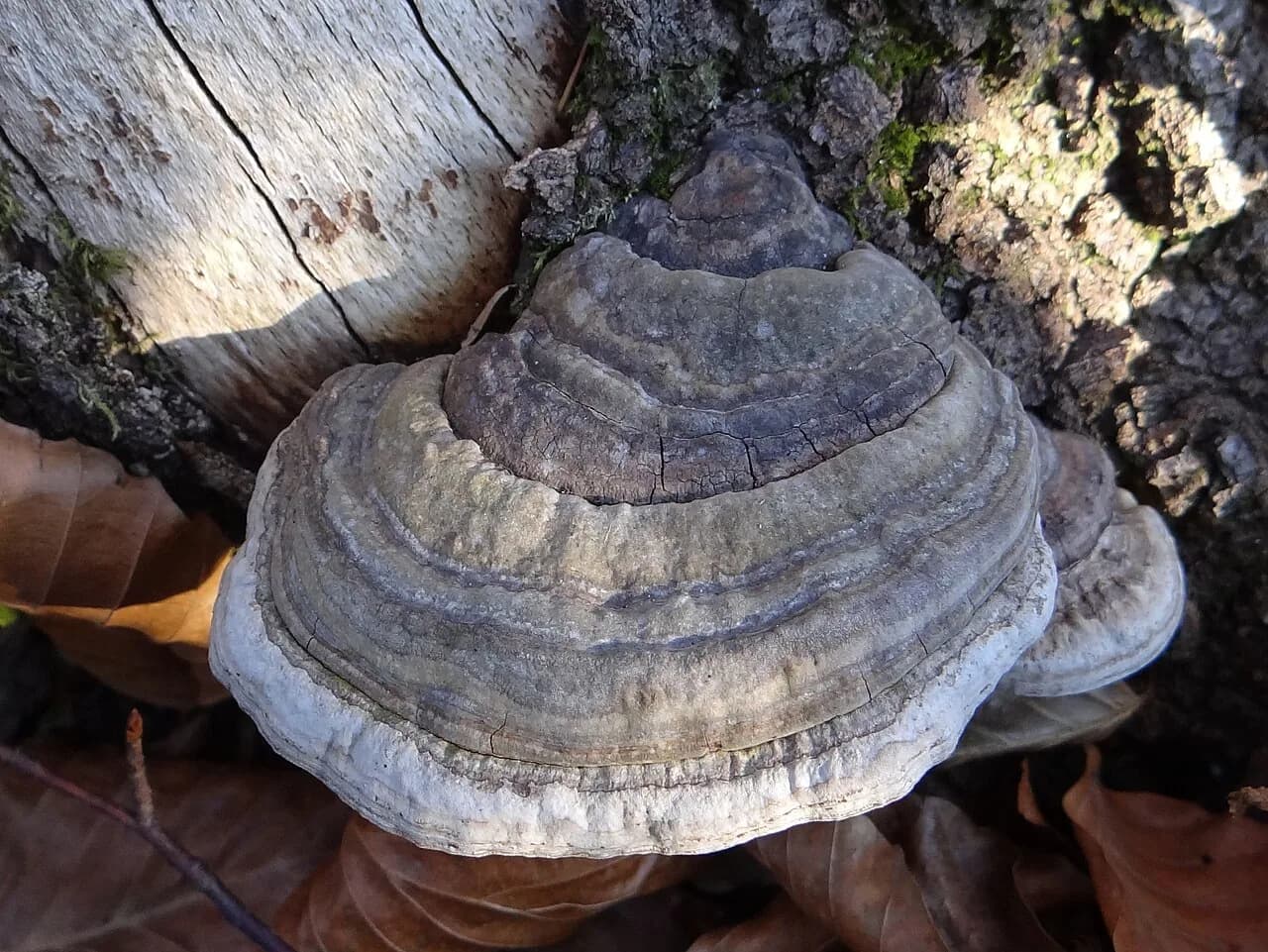
It looks like a gray hoof on a beech trunk. Its soft flesh once caught sparks, and researchers found 204 species of tiny animals in brackets from three Polish parks.
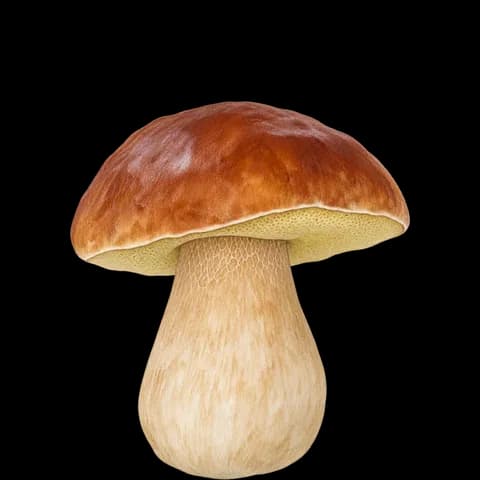
In Poland, going to the woods for mushrooms (grzybobranie) is more than a walk. In a 2018 survey by the CBOS polling institute, 77% of adults said they had picked mushrooms at some point and 43% had done so in the past season. Two in five active pickers go at least once a week. The porcini (borowik) is the clear favorite, named by 80% of respondents, ahead of bay boletes and chanterelles.
The tradition rests on generous rules: in state forests, anyone can pick mushrooms for their own use with no permit and no fee. It also feeds an industry. In 2024, buying stations purchased 4,001 tonnes of fresh wild mushrooms, and Polish growing halls shipped 360,000 tonnes of button mushrooms, making Poland the largest producer in the European Union.
There is a dark side too. The death cap, common in Polish broadleaf woods, causes most fatal mushroom poisonings. That is why, in season, local sanitary inspection offices (sanepid) run free mushroom checks, and at the end of 2024 Poland had 2,237 certified mushroom experts (grzyboznawca).
Forest covers 29.6% of Poland, and about three quarters of it belongs to the state and is run by the State Forests (Lasy Państwowe). For foragers that is good news: most forest is open. Only young plantations, wildlife refuges, river springs and a few other categories are permanently closed, and temporary entry bans are shown on the State Forests’ online map.
Different forests yield different baskets. Dry pine forests on sand, such as the Noteć Forest (Puszcza Notecka) or the Tuchola Forest (Bory Tucholskie), are known for bay boletes, slippery jacks and porcini, and for knights in late fall. Broadleaf woods with oak, beech and hornbeam host more species, but also more death caps. Along rivers, on willows and poplars, the velvet shank appears in winter.
National parks and nature reserves are the exception. Picking is banned there unless the park director, or the regional environmental director for a reserve, designates areas where it is allowed.
In the Białowieża Forest, a single fallen pine cone can support a tiny mushroom called the earpick fungus (Auriscalpium vulgare). Its brown cap blends in with the pine needles. Look underneath and you can see little teeth. Fallen acorns and hazelnuts have a fungus of their own. Hymenoscyphus fructigenus makes cream-colored saucers just 1–2 mm across.
Anna Kujawa and Andrzej Szczepkowski describe both fungi in their guide to the fungi of Białowieża National Park. Each helps break down a different part of the forest litter. If you kneel for a closer look at a tiny mushroom, take a moment to see what it grows from. The old cone beneath the cap can tell you as much as the cap itself.
The sanitary inspectorate treats August, September and October as peak season, when most fresh wild mushrooms reach the markets. But the season is longer. In April and May, morels fruit, although Poland’s official list only allows the sale of morels from gardens, nurseries and green spaces, or imported ones. Porcini appear from May to November.
From October to December, yellow knights grow in the pine forests. Just as most pickers put their baskets away, the velvet shank appears on broadleaf trunks, fruiting until March and shrugging off frost. In a Polish forest you can find mushrooms in every month of the year.
Walk through a beech wood looking for mushroom caps and you can miss an entire harvest underfoot. Some fungi form their fruiting bodies entirely underground. Researchers in Pieniny National Park marked out six plots, mainly in beech and beech-fir woods. They returned in July and September in both 2016 and 2017 and collected over a hundred samples of underground fungi.
The samples yielded 30 species. Only four belonged to Tuber, the true truffles. There were three species of deer truffle and representatives of a dozen other genera. Some, including Octaviania, are closer relatives of boletes than of true truffles. Life underground turns out to suit quite different branches of the fungal family tree. Even a careful count of everything above ground would have missed them.
At the Polish Academy of Sciences’ Institute of Botany in Kraków, the fungus collection goes by the code KRAM F. It holds over 61,000 numbered specimens, most of them European and chiefly from Poland. Alongside the conspicuous fungi that grow on wood are others so small that their story is best told together with the animal they grew on.
Tadeusz Majewski collected Laboulbeniales, tiny parasitic fungi that live on insects. His collection includes the beetles, flies and other insects that hosted them. A researcher returning decades later can still examine both members of the pair. A label giving the name of the fungus alone could never preserve quite that much evidence.
From a trail across a gray dune in Słowiński National Park on the Baltic, look at the sand between the plants. The gray covering resolves into tiny branching lichens. Inside each lichen, fungal threads wrap around algal cells. The algae use sunlight to make sugars that they share with the fungus. Some of the branches bear a bright red dot at the tip, the fruiting body of the fungus.
Rain brings out a second set of colors under the scattered pines on the dunes. Patches that looked much the same when dry now range from the ash gray of reindeer lichen to the yellowish gray and greenish gray of its near relatives. To see the difference, try walking the same stretch of trail in dry weather and again after rain.
One story starts with velvet shanks on a winter walk. Another follows a death cap that slips into a picking basket. A third looks at the Polish tradition of foraging and where you can still do it. The fourth follows a gray bracket on a beech trunk all the way to the Easter fire people once carried home from church.
When picking for the table, choose only what you know for certain and look at every mushroom whole, including the base of the stem. No home test, neither the onion nor the silver spoon, tells an edible mushroom from a poisonous one. If you are unsure of a find, take it to a certified expert at the sanepid.
The peak is August, September and October. Morels appear in spring, porcini fruit from May to November, and the velvet shank keeps growing until March.
No. Poland’s Forest Act lets anyone pick mushrooms in state forests for their own use with no permit or fee. Only commercial-scale picking requires a contract with the local forest district.
The death cap (Amanita phalloides). It causes about 90% of fatal mushroom poisonings worldwide, and a single mushroom can be enough to kill.
At the local sanitary-epidemiological station (sanepid). In season, certified mushroom experts check mushrooms picked for personal use free of charge; each station posts its own hours.
Yes. The velvet shank fruits from October to March on broadleaf trunks, mostly willows and poplars. It stops growing during frost and resumes after a thaw.
Only species on the Ministry of Health’s official list, which has 72 entries, one of them repealed in 2026. Wild mushrooms may be sold only with a certificate from a mushroom expert or classifier.