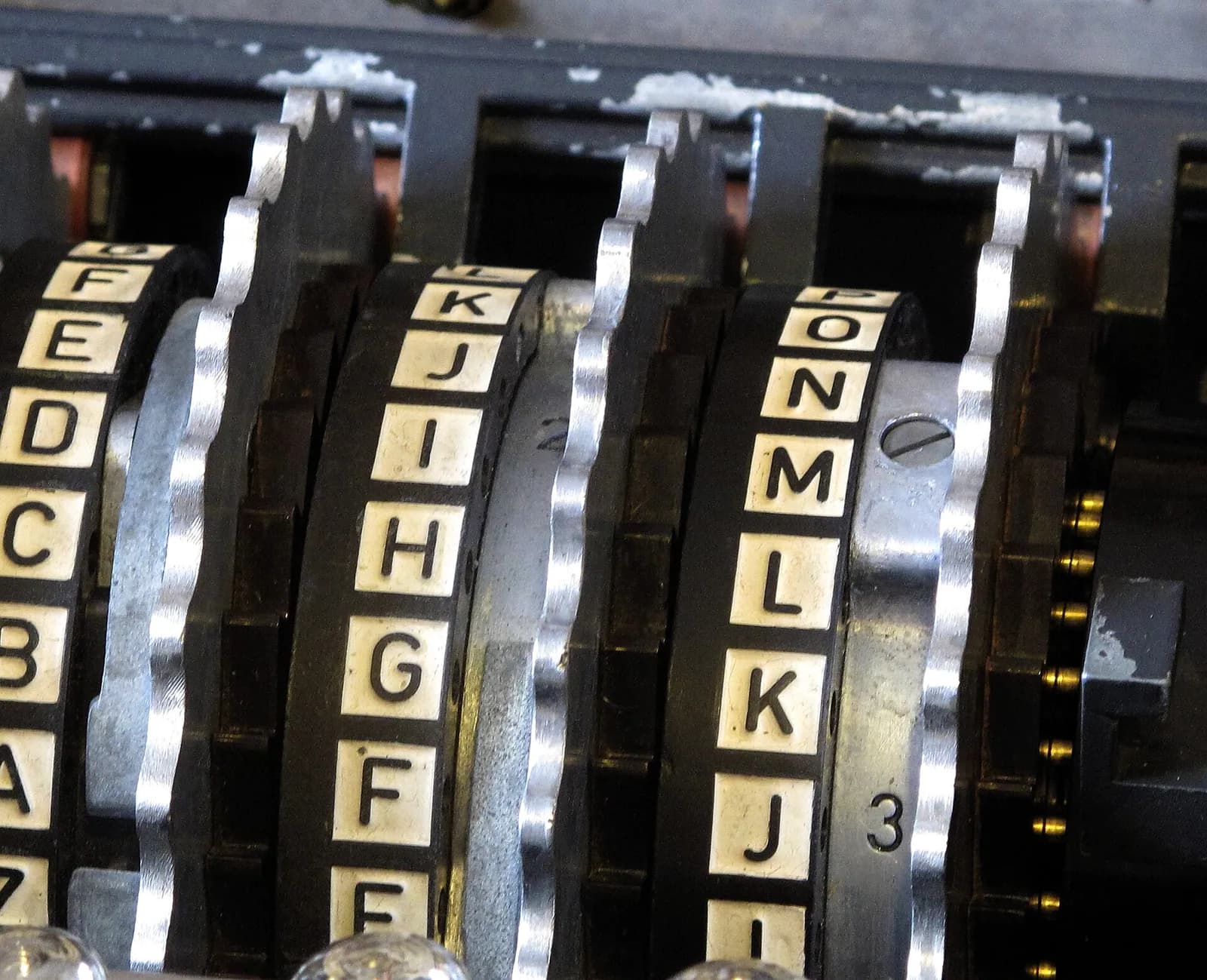
Enigma was broken by Polish mathematicians
Marian Rejewski cracked the German cipher in 1932, seven years before the war broke out. Without that work the British would have been starting from scratch.
The country you know. Things you don’t expect.
A surgeon working by lamplight, an element named for Poland, a crystal drawn from a crucible and an Enigma message read in Warsaw. Each opened a different chapter in the history of Polish science.
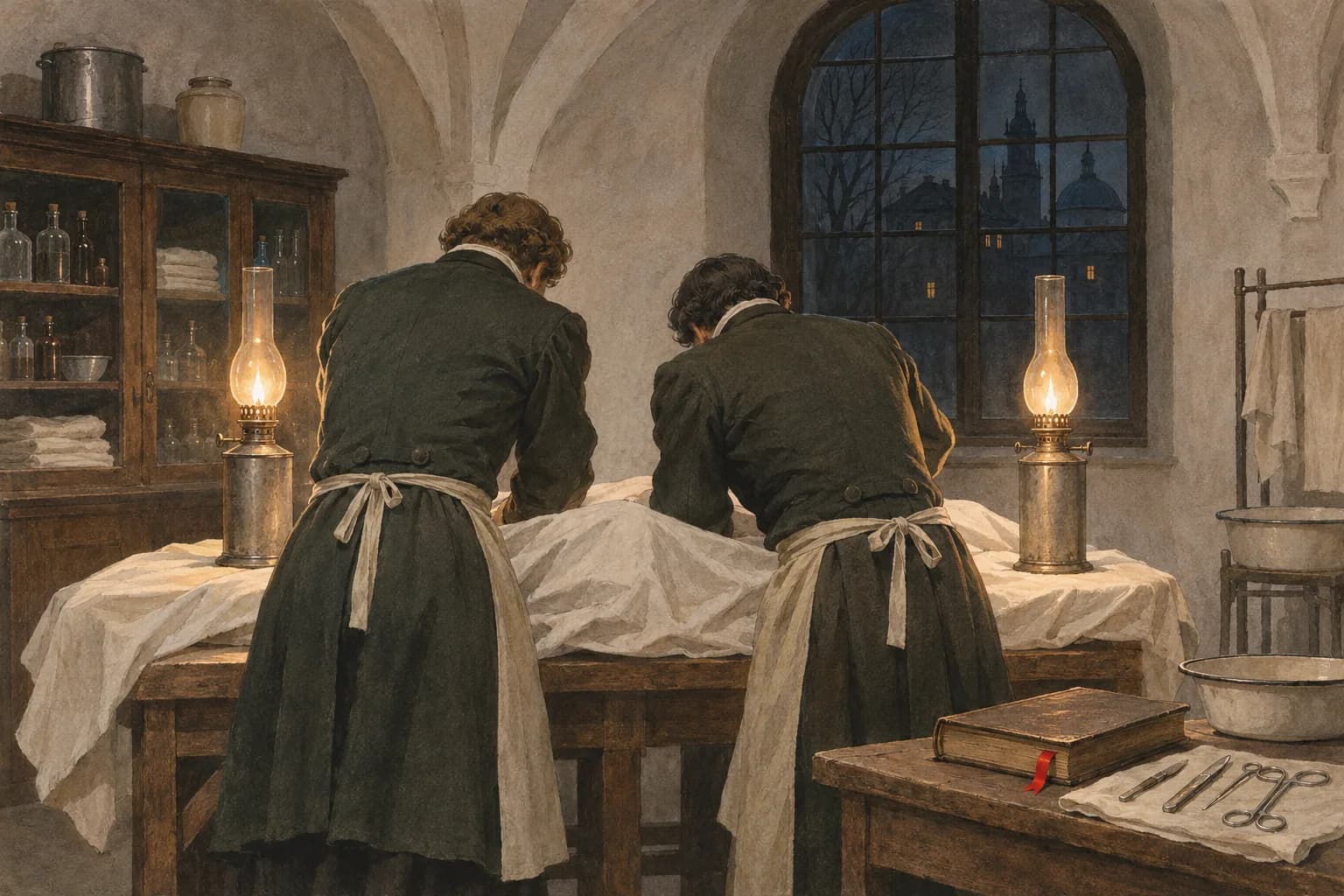
Ignacy Łukasiewicz refined crude oil and built a lamp that lit a nighttime surgery in 1853.
Read →Marian Rejewski cracked the German cipher in 1932, seven years before the war broke out. Without that work the British would have been starting from scratch.
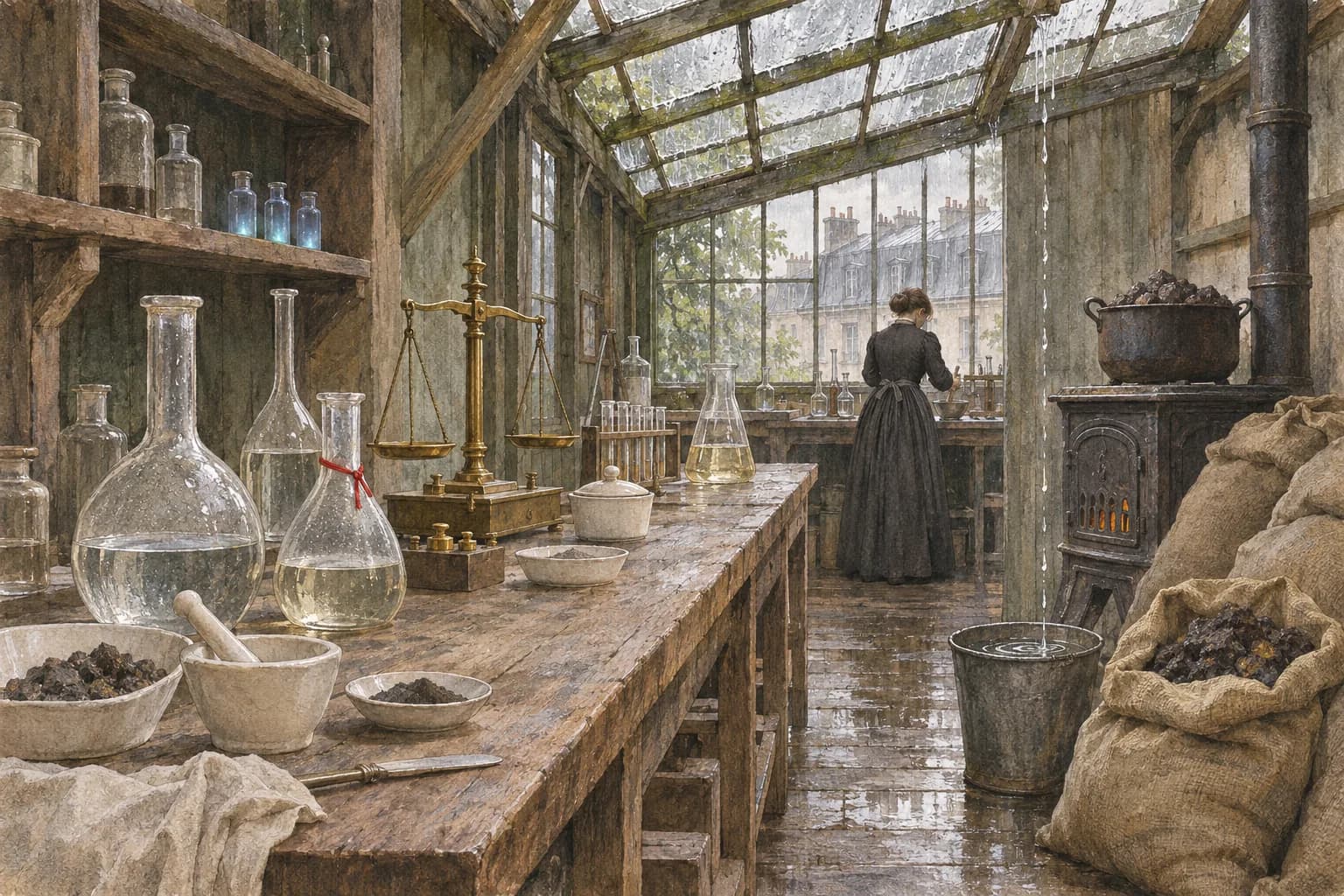
Marie Skłodowska-Curie discovered polonium in 1898 and named it after a country that was then missing from the map.
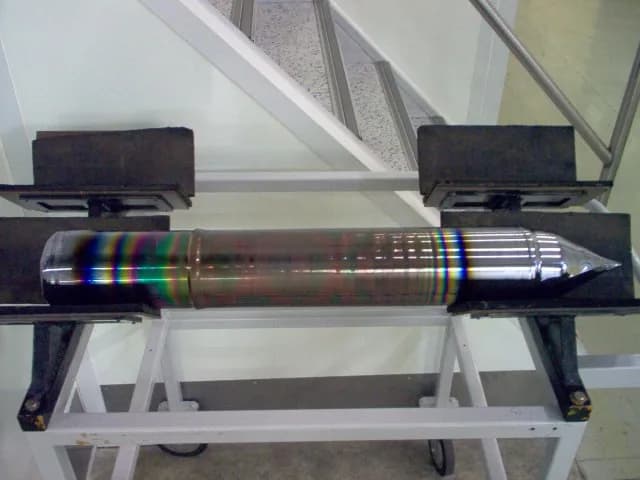
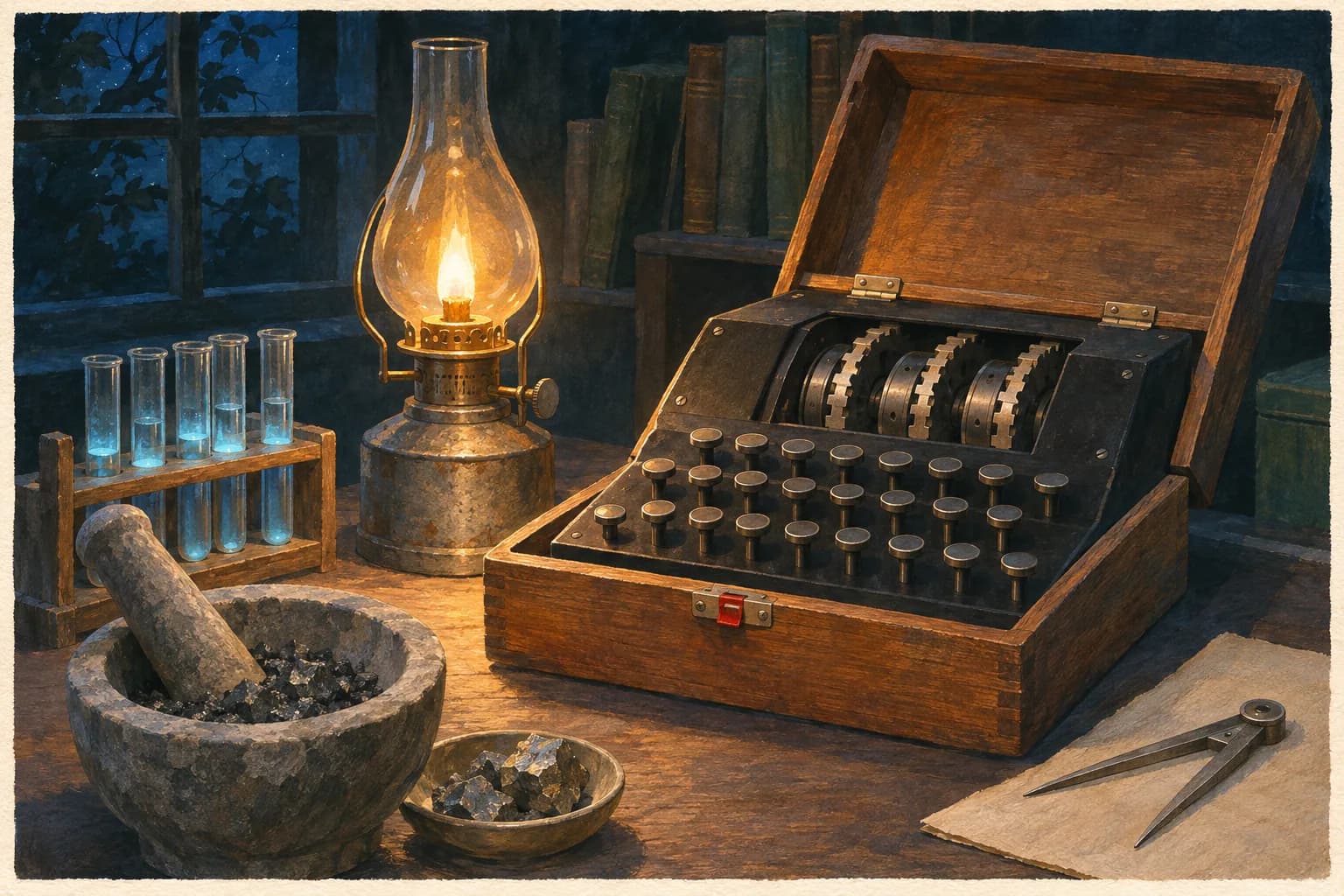
Pull a thread of metal too fast and it breaks. A scientist from Kcynia turned that observation into a measurement. Today the same idea supplies the silicon crystals that wafer makers slice for chip factories.
Almost eighty years separate the lighting of the Lviv kerosene lamp from the breaking of Enigma. In between, Marie Curie discovered polonium in Paris and Jan Czochralski, born in Kcynia, measured crystal growth in Berlin. Łukasiewicz worked as a pharmacist in Austrian-ruled Galicia. Skłodowska left Russian-ruled Warsaw because women could not attend university there. By the time Rejewski joined the Cipher Bureau, Poland had regained its independence.
Each story shows a different kind of ingenuity. Łukasiewicz was a practical man who turned a pharmacy lab into a workshop and an invention into an industry. Marie Skłodowska-Curie did basic research that reshaped physics and chemistry and won her two Nobel Prizes. Czochralski turned the breaking point of a metal thread into a measurement. Rejewski brought abstract algebra, the theory of permutations, to a military intelligence problem.
The four stories begin with the kerosene lamp of 1853, polonium in 1898, Czochralski’s experiment in 1916 and the breaking of Enigma in 1932. Each has a timeline and places where you can follow the story today.
A stone obelisk stands in the middle of the Bóbrka oilfield. Łukasiewicz paid for it in 1872 to mark the start of oil production eighteen years earlier. That puts the first oil wells at Bóbrka in 1854. The lamps at the hospital in Lviv were already burning the year before.
For polonium, you can read the discovery as its authors announced it. Turn to page 175 of volume 127 of the Paris journal Comptes rendus. The short paper carries Marie and Pierre Curie’s names. Henri Becquerel presented it to the Academy of Sciences. Readers could see both the proposed name and the doubts the authors still had about their finding.
Even the keyboard drawings survive from the Enigma story. In the French technical records, device A is the Polish version of Enigma and device B is the cyclometer. The Enigma Cipher Centre in Poznań has made scans from the French defence archives available so readers can see which parts belonged to which machine.
Railway bearings occupied Czochralski long before electronics companies took an interest in his crystals. Tin was in short supply, and a bearing alloy that could do without it had an immediate market. In 1924 he developed a lead-based alloy known as metal B. His German patent followed two years later. By the time crystal pulling found a use in electronics, the railway invention had already earned him money.
The AVA factory in Warsaw is remembered for its copies of Enigma. It also built radio sets and developed a Polish cipher machine called Lacida. Early in the occupation, a surviving AVA radio helped the Polish underground make contact with London. The same workshop had made equipment for sending messages, keeping them secret and reading them.
At 8 Śniadeckich Street, look for the stone outside the Polish Academy of Sciences’ Institute of Mathematics. The inscriptions in Polish and English, unveiled in August 2014, name the Cipher Bureau team. The dates span 1932 to 1939, recognizing the years of work it took to keep reading Enigma as the machine and its operating rules changed.
A short walk away, at the entrance to the main hall of the Warsaw University of Technology, another plaque carries the same IEEE Milestone emblem. In 2019 the Polish and German sections of this international engineering association jointly sponsored the recognition of Czochralski’s method. Berlin was where he did the experiment. Warsaw was where he later taught and continued studying how metals solidify.
A hand pump sits alongside Kazimierz Prószyński’s movie camera in Britain’s Science Museum Group collection. Before filming, the operator pumped air into the camera. Once the shot began, the compressed air drove the mechanism that advanced the film. That freed the operator’s hands to hold the camera and adjust the focus, even when filming from an airplane.
Prószyński patented the Aeroscope in 1910. The example in the museum was made in London two years later. A separate compartment held up to 122 meters of 35 mm film. Newsreel crews used cameras like this one. Pumping up the camera ahead of time meant that when something worth filming happened, the operator could lift it straight into position.
Łukasiewicz left the most behind, in the Subcarpathian region of southeastern Poland. At Bóbrka near Krosno an open-air museum of the oil industry stands on the site of a mine founded in 1854 that still produces oil. In Krosno, the Subcarpathian Museum (Muzeum Podkarpackie) holds a copy of the prototype lamp and one of the finest collections of kerosene lamps in Europe. Lviv, where the first lamp was lit, is today in Ukraine; it has monuments to both Łukasiewicz and his partner Jan Zeh.
Marie Curie was born in Warsaw, at 16 Freta Street in the New Town, where a museum devoted to her has been open since 1967. On Wawelska Street, in front of the former Radium Institute she founded in 1932, stands a statue of her erected in 1935.
The Enigma story leads to Poznań in western Poland. In front of the Imperial Castle (Zamek Cesarski), where the secret cryptology course was held before the war, stands a monument to the three codebreakers, and next door, at Święty Marcin 78, the Enigma Cipher Centre (Centrum Szyfrów Enigma) opened in 2021. In Bydgoszcz, Rejewski’s hometown, a bronze statue of him sitting on a bench has stood since 2005.
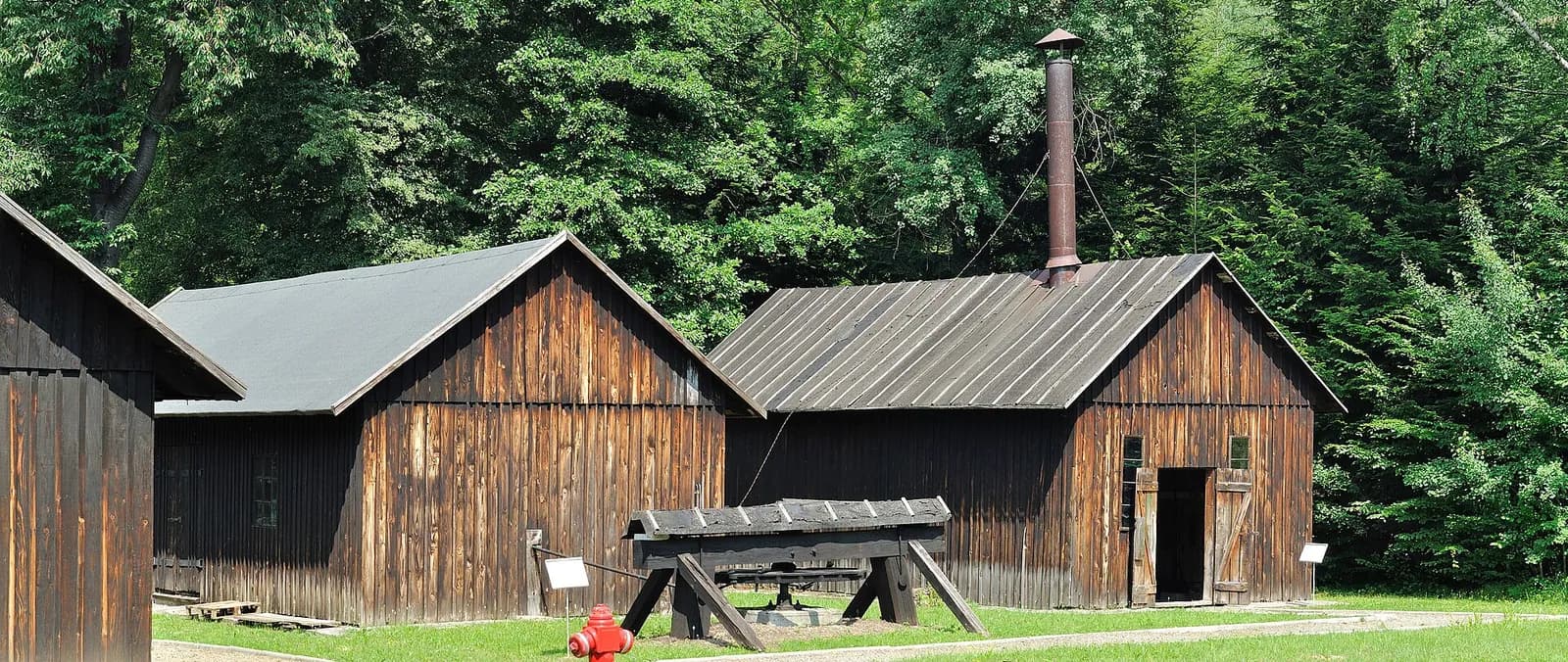
Allow a day for Bóbrka and Krosno, especially if you want to explore the open-air oilfield museum. Warsaw and Poznań each make a half-day outing. Kcynia lends itself to a walk. Check museum opening hours and ticket prices before setting out.
Łukasiewicz’s lamp launched the oil industry in Galicia. Rzeszów University of Technology is named after him, and so is the Łukasiewicz Research Network, a group of several dozen Polish research institutes formed in 2019. Polonium is element 84 on the periodic table, and the element curium was later named in honor of Marie and Pierre Curie. Czochralski’s name lives on in the initials CZ, which wafer makers use for his crystal-pulling process.
The Polish methods for breaking Enigma, handed to the Allies in July 1939, gave the British at Bletchley Park their starting point. Alan Turing’s codebreaking machine, the bombe, took its name from the Polish bomba. Until the fall of France in June 1940, 17% of the Enigma keys found by the Allies were solved at PC Bruno near Paris, where the Polish team worked.
Examples include Łukasiewicz’s kerosene lamp (1853), Marie and Pierre Curie’s discovery of polonium (1898), Czochralski’s method for measuring crystal growth (1916) and Rejewski’s breaking of Enigma (1932).
Ignacy Łukasiewicz, a pharmacist in Lviv (then Lwów). In 1853 he and Jan Zeh distilled kerosene from crude oil, and a local tinsmith, Adam Bratkowski, built a lamp to his design.
Polish mathematician Marian Rejewski of the Polish Cipher Bureau, at the end of 1932. He developed the methods for finding the daily keys with Jerzy Różycki and Henryk Zygalski.
Marie Curie named it after Polonia, the Latin name for Poland. In 1898 Poland did not exist as a state, and the name was meant to remind the world of that.
At Bóbrka near Krosno in southeastern Poland. It was founded in 1854, still produces oil and is home to the Ignacy Łukasiewicz Museum of the Oil and Gas Industry.
Two: in physics in 1903 and in chemistry in 1911. She is the only person to win Nobel Prizes in two different sciences.