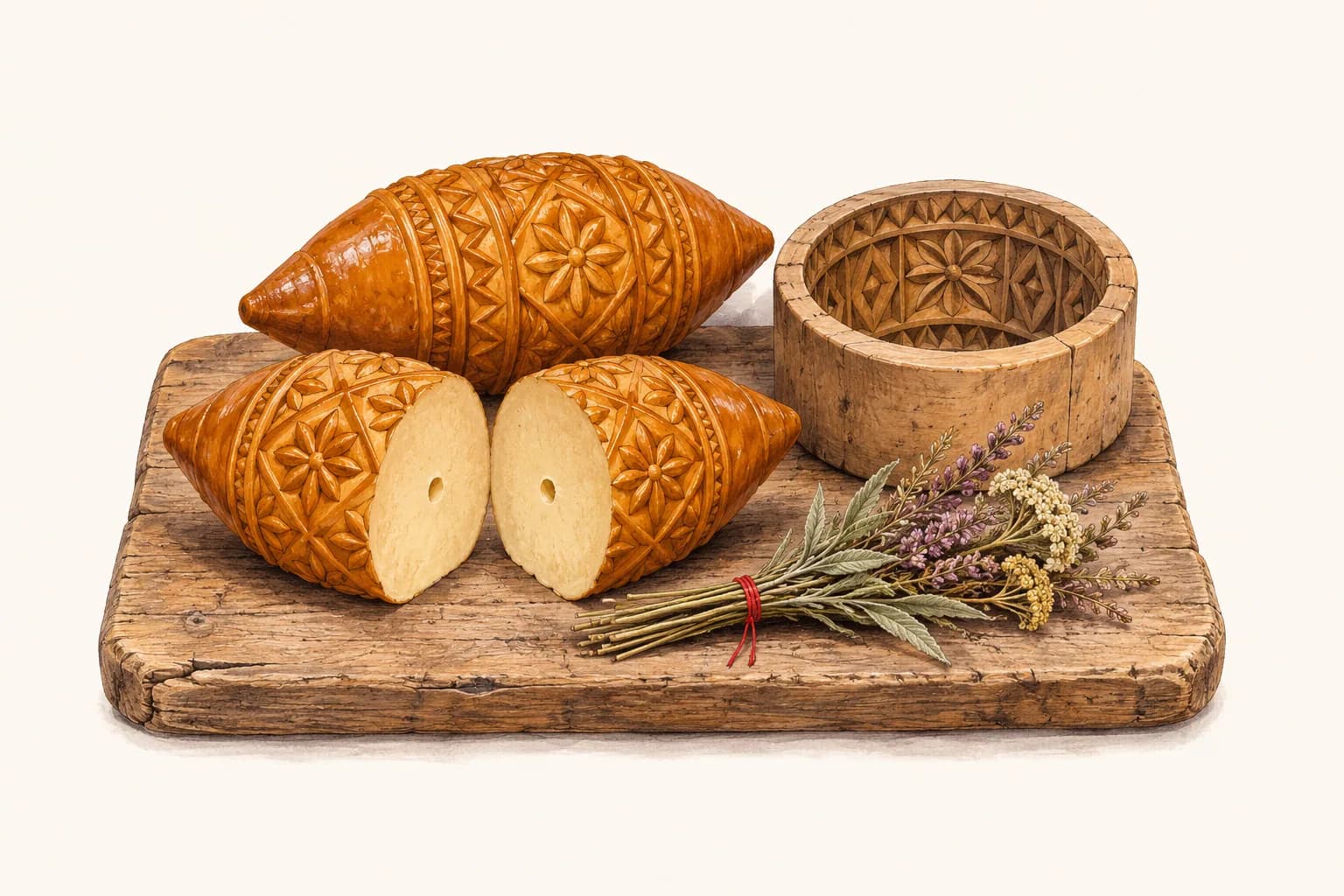
Oscypek, a cheese made of sheep's milk and smoke
This smoked cheese from Podhale, the highland region below the Tatras, is protected by the EU. Genuine oscypek is made only while the sheep are out grazing.
The country you know. Things you don’t expect.
Apples from Grójec, cheese smoked in mountain huts, poppy seed croissants in Poznań and gingerbread from carved wooden molds in Toruń.
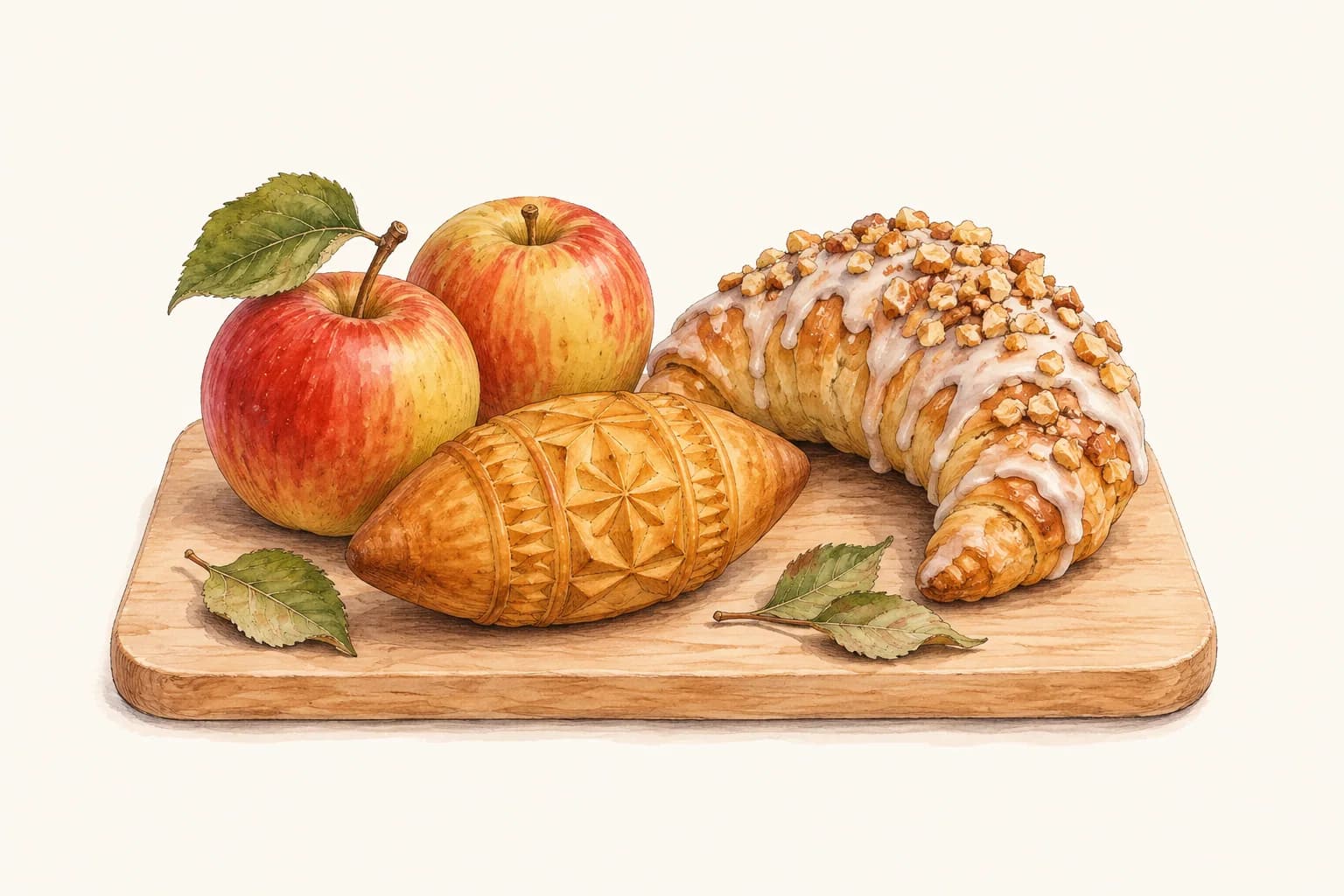
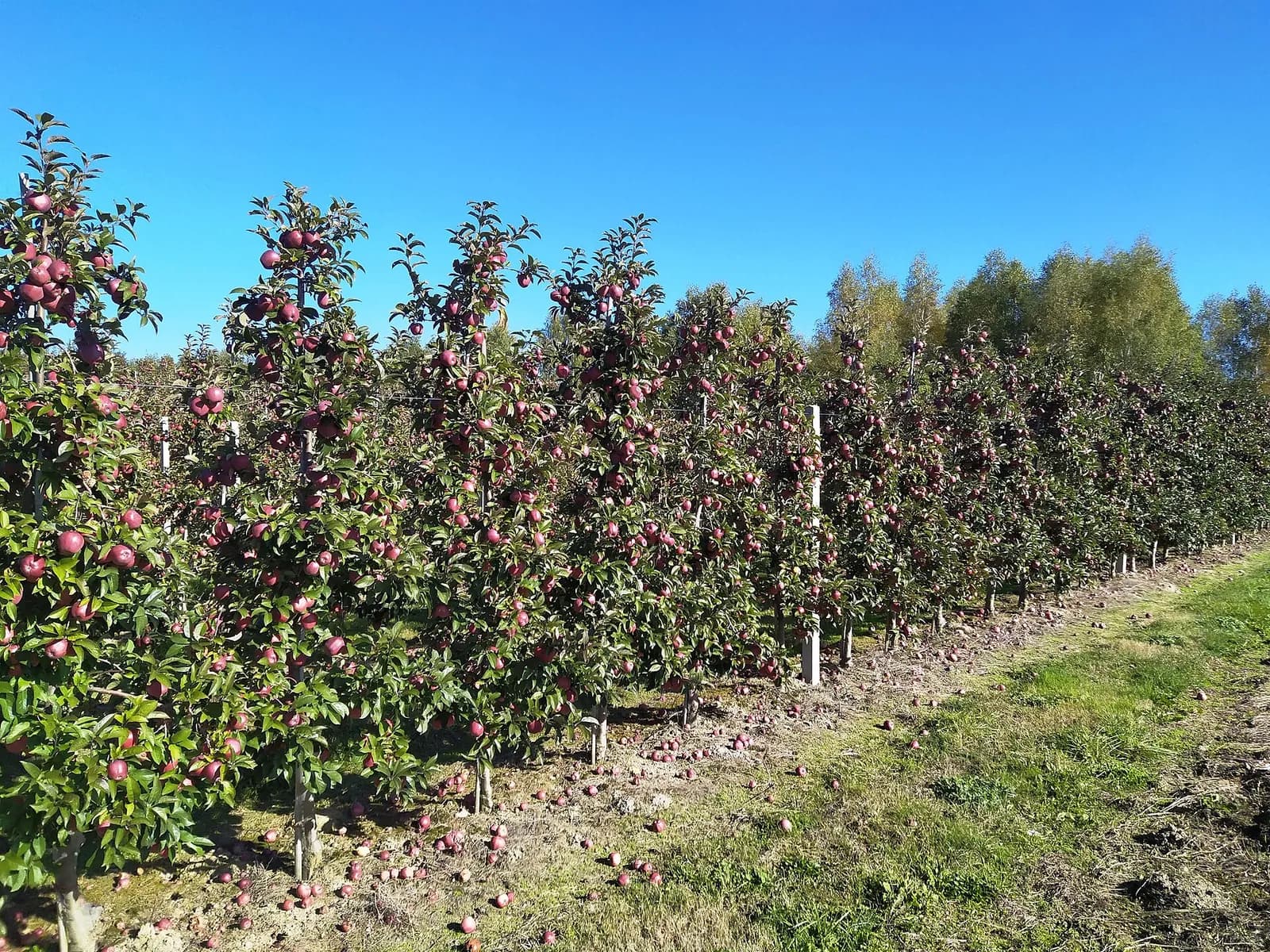
Poland is the largest apple producer in the European Union and one of the largest in the world.
Read →This smoked cheese from Podhale, the highland region below the Tatras, is protected by the EU. Genuine oscypek is made only while the sheep are out grazing.
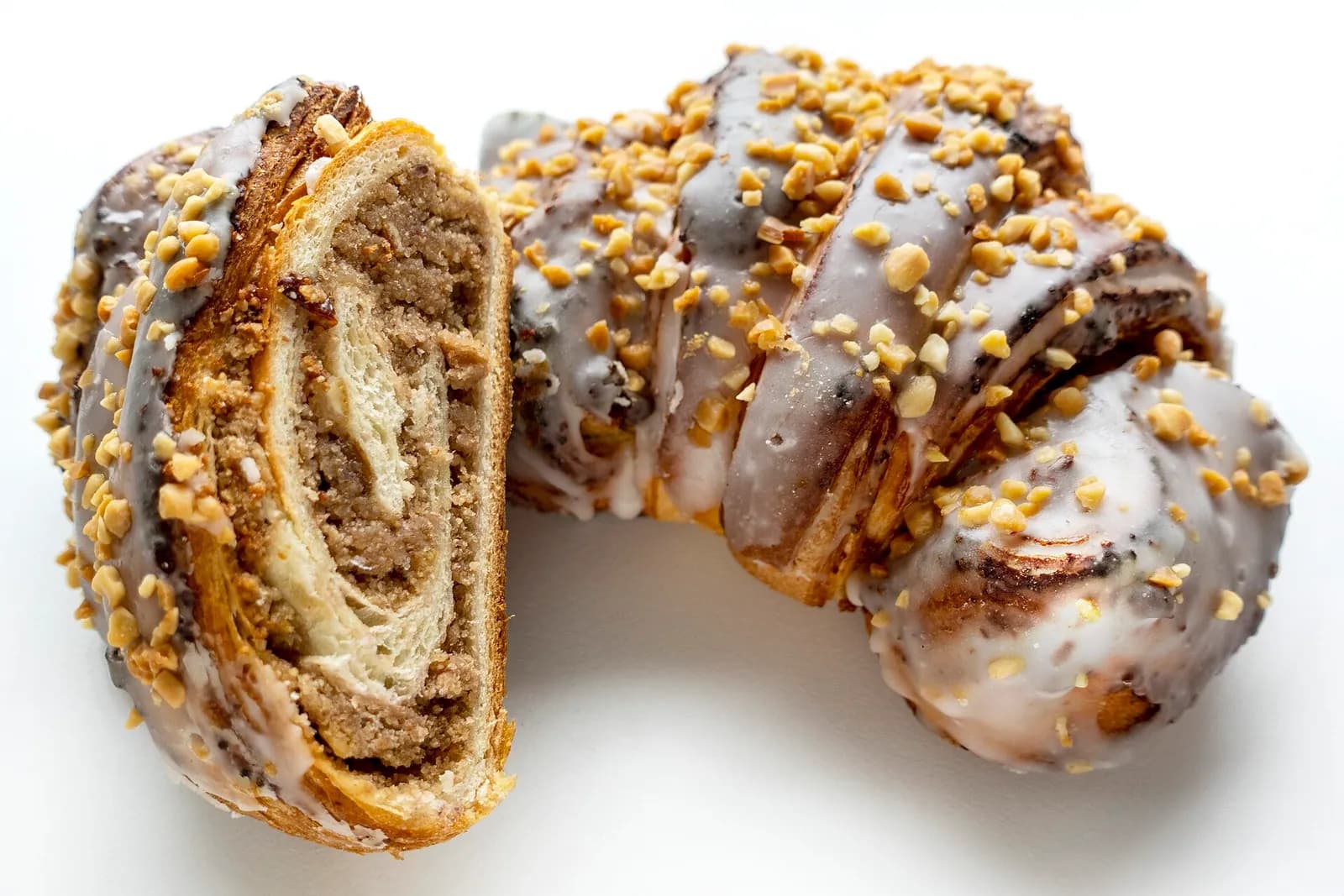
On November 11, St. Martin's Day, Poznań celebrates the name day of Święty Marcin Street. The star of the day is a croissant filled with white poppy seeds.
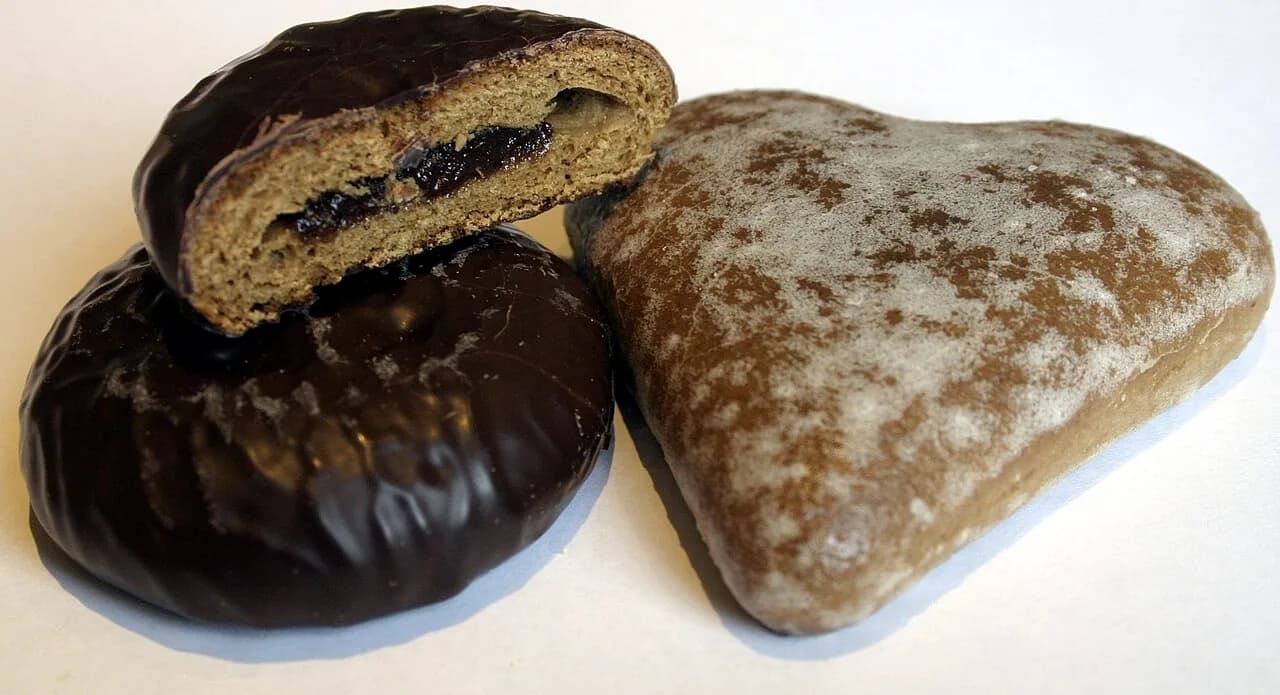
In the 1500s only four bakers in Toruń were allowed to make gingerbread. Three centuries later the city was shipping it as far as Japan and Hawaii.
The Polish agriculture ministry’s October 2026 list includes 51 Polish names registered in the European Union, from honeys and sausages to a vodka flavored with bison grass. The first was bryndza podhalańska, a soft sheep's cheese, in 2007. The second, in February 2008, was oscypek. Poznań's St. Martin's croissant followed that fall, and Grójec apples in 2011.
Two EU schemes link a product’s name to its place of origin. A Protected Designation of Origin (PDO) means every stage, from raw material to finished product, happens in the defined region. Oscypek is a PDO: the milk, the hut and the smoke all have to come from the Polish highlands. A Protected Geographical Indication (PGI) requires at least one stage to happen there. The croissant and the Grójec apples are PGIs.
In practice it means a name that may only go on products that meet the official specification. A cheese smoked in Kraków from cow's milk cannot be sold as oscypek, and a croissant baked in Warsaw is not a St. Martin's croissant, even if it is filled with white poppy seeds.
In March 2025 Poland added the culture of Toruń gingerbread to its national inventory of intangible cultural heritage. The entry follows a skill as it passes from one pair of hands to the next. Someone has to carve the wooden block, another person blends the spices, and a baker can show an apprentice how to turn out a figure with its fine detail intact. Family bakeries and museums in Toruń both help pass on that knowledge.
Poland’s agriculture ministry keeps a different list of traditional foods. Look up the dried fruit used for Christmas Eve in Greater Poland and you can read which apples, pears and plums households set aside for December. That entry records a regional custom. The rules governing who may sell cheese under the protected name oscypek come from a separate EU registration.
In Poznań it came down to portion size. When the St. Martin's croissant first entered the EU register, it had to weigh at least 200 g (7 oz). People were buying the croissants on ordinary days too, and customers were asking for a smaller portion. In 2013 the European Commission lowered the minimum to 150 g and dropped the measurements in centimeters. Bakers could make a smaller croissant, with the same crescent shape and white poppy seed filling.
Around Grójec it was the list of apples that changed. In 2023 growers gained recognition for varieties including Kosztela, a familiar sight in orchards a century ago, and the more recent Chopin. Apples bearing the same protected name can look quite different. An Idared needs a red blush over at least 55% of its skin. For Kosztela there is no minimum blush at all.
Oscypek is made in the south, in shepherds' huts in the Tatras, the Podhale highlands, the Gorce range and parts of the Beskids. Grójec apples grow on the plain about 40 km (25 miles) south of Warsaw. The St. Martin's croissant is baked in Poznań, in western Poland, and across 26 counties of the Wielkopolska (Greater Poland) region. For gingerbread, follow the Vistula to Toruń, a trading city on the old route between Gdańsk and Lviv.
Each region has more protected foods. Next to oscypek, the highlands have bryndza, the small animal-shaped redykołka cheese and Podhale lamb. In Małopolska (Lesser Poland) there are also Łącko apples and smoked apples and plums from the village of Sechna. Greater Poland adds a fried cheese, a white parboiled sausage and the thin wafers of Kalisz.
Polish food has a calendar, and it pays to know it before you travel. Genuine oscypek is made only from May to September, while the sheep are up on the mountain pastures. The orchards around Grójec bloom in spring and are harvested from late summer into October. Croissants are baked all year, but their day is November 11. Two weeks later, on St. Catherine’s Day, Toruń bakers traditionally began making the scalloped gingerbreads called katarzynki for the weeks leading up to Christmas.
The name suska sechlońska points to the village of Sechna in the Laskowa district of southern Poland. Inside a local drying house, the plums rest on a rack of smooth wooden rods about 1.8 meters above the fire. The gap lets warm air and smoke rise through the fruit. As the plums lose moisture, they take on the flavor of the smoke.
The specification for the protected name even gives the depth of the plums on the rack, from 20 to 40 cm. Once a day the grower turns them with a special shovel. A thinner layer dries sooner and a thicker one takes longer. A batch usually spends four to six days in the drying house.
Among the provisions for meatless days in the Sieniawski family’s kitchen accounts is a honey cake called miodownik. Historians at the Wilanów Palace Museum explain that cooks used it with fish and meat. Crumbled gingerbread seasoned a dish with spices and gave the sauce body. A piece of cake could go into a traveler’s provisions or stay in the kitchen alongside the seasonings.
In Greater Poland a household could start making its Christmas Eve drink months before putting any water on to boil. Cooks sliced Antonówka apples, cut Klapsa pears into quarters or eighths and dried prune plums whole, stones and all. In winter they simmered the dried fruit to make kompot. The mix was known as susz wigilijny, a Christmas Eve ingredient whose preparation began in the orchard season.
Behind oscypek is the pastoral culture of the Vlachs, shepherds who migrated along the arc of the Carpathians. Behind Grójec apples are 19th-century manor orchards and peasant plots that turned into an industry in the 20th century. Behind the croissant is Poznań's St. Martin's feast and confectioners who were already advertising their croissants in the newspapers in 1852.
St. Martin's Day links the shepherds with the bakers of Poznań. In 1416 the villagers of Ochotnica in the Gorce Mountains were obliged to pay a tribute in sheep and cheese around November 11. Six centuries later the same day belongs to the croissant in Poznań. The gingerbread bakers of Toruń had a calendar and a guild of their own, and customers who ordered their wares from across the ocean.
The Polish agriculture ministry’s October 2026 list includes 51 Polish names registered in the EU as Protected Designations of Origin, Protected Geographical Indications or Traditional Specialities Guaranteed.
Bryndza podhalańska, a soft salted sheep's cheese from the Tatra foothills, registered in June 2007. Oscypek followed in February 2008.
For a Protected Designation of Origin (PDO), every stage of production must take place in the defined region. For a Protected Geographical Indication (PGI), at least one stage must take place there.
From May to September, while the sheep graze on the mountain pastures and the shepherds' huts are making cheese.
It is St. Martin's Day, the feast of the patron of a Poznań parish and of the city's main street. Newspaper ads show Poznań confectioners selling croissants for the day since 1852.