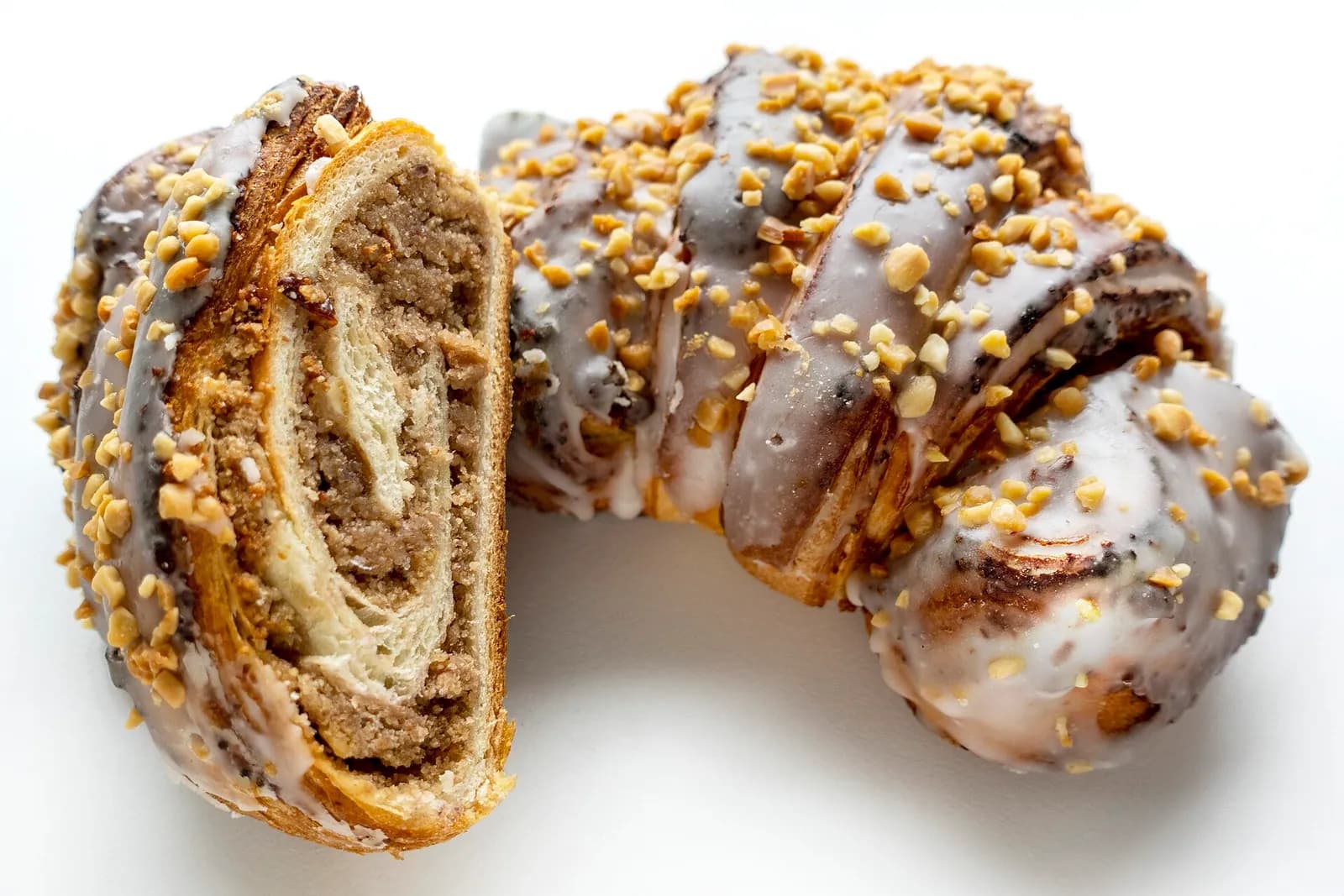
How did Toruń gingerbread reach Hawaii?
Show on mapIn the 1500s only four bakers in Toruń were allowed to make gingerbread. Three centuries later the city was shipping it as far as Japan and Hawaii.
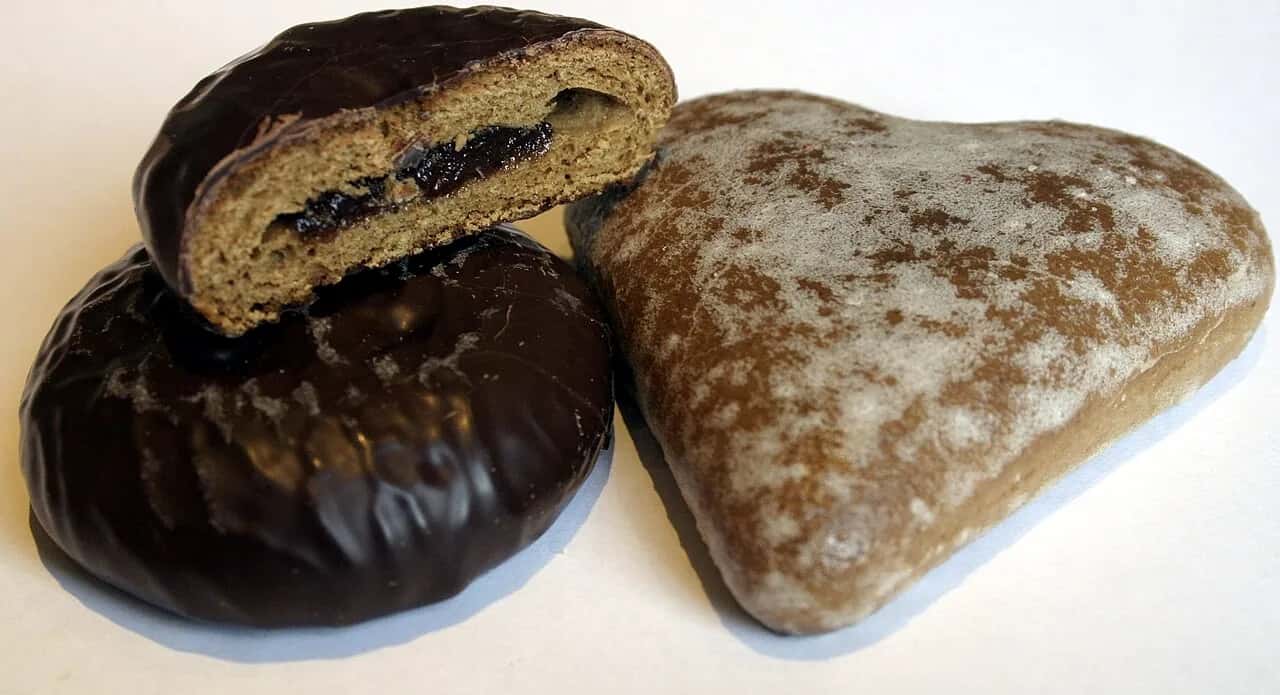
By the late nineteenth century Toruń was exporting more than 75 metric tons of gingerbread a year. The State Archives in Toruń list customers as far afield as London, Paris, Japan and Hawaii. Three centuries earlier the city had allowed just four bakers to make it.
Carved blocks, guild papers and even the wrappers survive. One block preserves the cut of a dress. The beekeepers’ accounts tell us who supplied the honey. A wrapper records how many biscuits a customer took home. Each object brings a different part of the trade into view.
How did pepper and cloves reach a bakery on the Vistula?
Two ingredients came from close to home. The regions of Chełmno and Kuyavia supplied grain for flour, and local beekeepers provided honey. Toruń’s archives preserve records of honey deliveries and beekeepers’ accounts spanning 1435 to 1597. A clue to the third ingredient survives in the Polish name. Piernik comes from pierny, an old word meaning peppery.
Toruń stood on a trading route between Lviv and Gdańsk. Merchants put ginger, cinnamon, pepper and cloves within reach of a baker on the Vistula. A batch of dough brought together the harvest of nearby fields and ingredients that had traveled thousands of miles. In time the city’s merchants would find distant buyers for the finished biscuits too.
Who was allowed to bake gingerbread?
A baker named Mikołaj Czan turns up in a late fourteenth-century record. The Living Museum of Gingerbread suggests that he may have made spiced cakes alongside his bread. The evidence is clearer for Symeon Neisser. When his death was recorded in 1564, he was specifically identified as a gingerbread baker.
Toruń’s gingerbread makers belonged to the bakers’ guild. In 1584 the city limited the trade to four bakers. A family recipe and a sound oven would take you only so far if you hoped to open a fifth shop. The city archives have digitized later guild statutes, including entries from 1632. Another document singles out one craftsman. In 1743 the city council issued a certificate of birth to Johann Weese, a gingerbread baker whose surname would eventually be painted across factory packaging.
How do you carve the folds of a dress into a biscuit?
Every ridge on the finished dress began as a hollow in a block of wood. A woodcarver or a master baker cut the design in reverse. A baker pressed in the dough and lifted out the figure. Some blocks had a separate image on each face. Others came in sets for building three-dimensional pieces. A gingerbread carriage made a fitting gift for newlyweds.
One block in the Toruń museum shows a lady with a fan on one side and a fish on the other. Its 1926 inventory entry mistakenly described it as carved on one side only. A later record said a Toruń resident had handed it in in 1945. Curators spotted a familiar flaw in the wood in a photograph of a 1941 exhibition. They checked the dimensions against the old inventory and established that the museum had owned the block before the war.
What can a recipe tell you when it hardly measures anything?
An anonymous manuscript that historians date to the second half of the seventeenth century at the latest describes little cakes made in the Toruń style. The baker could start with as much honey as desired, but had to test its thickness on a plate. Coarsely crushed spices and flour went into the heated honey. The dough then needed about half an hour of pounding in a mortar or with a wooden paddle on a table. The writer was more particular about the work of the baker’s arms than the blend of spices.
A printed recipe appeared in 1725 in a medical handbook, Compendium medicum auctum. It named rye flour, cardamom, anise and lemon peel. The baker brushed the cakes with beer before baking, glazed them with honey and beer afterward and returned them to the oven. The manuscript and the printed book give us two quite different things a cook might make under the Toruń name.
How did a local bakery find customers overseas?
Herrmann Thomas started his bakery with three workers in 1857. His son Oskar took it over in 1885 and expanded it. Offices and sales rooms faced the New Town Market Square. Behind them were storerooms, a supply of honey and separate bakeries for the scalloped biscuits called katarzynki and for glazed gingerbread. The firm had about 75 kinds of baked goods and 15 sales representatives. A customer could choose from the Toruń range without ever setting foot in the market square.
The Weese family, a rival firm, turned the package itself into a view of the city. One surviving wrapper holds a quarter dozen biscuits, just three pieces. It shows the Old Town Market Square with the statue of Copernicus. The city arms appear alongside the company name. For someone abroad the package might be the only glimpse they ever had of the place that baked the biscuits.
What can you still see and make in the old factory?
The Museum of Toruń Gingerbread opened in 2015 inside the former Weese factory at 4 Strumykowa Street. There are carved wooden molds and reconstructed shops where you can compare old packaging. There is even a Polish Żuk delivery van. After looking at carriages pressed into dough, you can sit behind the wheel of the kind of vehicle that later took gingerbread out on its rounds.
There are still bakers to learn from. In 2026 the museum invited master confectioner Adam Pokojski to teach there. He is the third generation of a Toruń baking family whose shop dates back to 1932. A block in a glass case lets you see how fine a line the carver could cut. Pressing dough into a mold yourself gives you a feel for how much pressure it takes to bring that line out on the biscuit.
From workshop to market
- 1564The city records the death of gingerbread baker Symeon Neisser.
- 1584City rules limit the trade to four gingerbread bakers.
- 1857Herrmann Thomas sets up his own business.
- 2015The Museum of Toruń Gingerbread opens in the former Weese factory.
Questions and answers
What are katarzynki?
A Toruń gingerbread biscuit with six rounded lobes. Bakers traditionally began making them on November 25, St. Catherine’s Day. Several competing legends account for the shape.
Where can I see original gingerbread molds?
The Museum of Toruń Gingerbread at 4 Strumykowa Street displays historic wooden molds from the District Museum’s collection.
Is the recipe from 1725 the earliest one?
It is an early printed recipe. Historians have also published a handwritten recipe for Toruń-style gingerbread that dates at the latest to the second half of the seventeenth century.
Sources
- State Archives in Toruń, honey accounts and records of the gingerbread trade (in Polish) (opens in a new tab)
- Living Museum of Gingerbread, bakers, ingredients and katarzynki (opens in a new tab)
- Toruń culinary history reader, with the manuscript recipe on p. 100 (in Polish) (opens in a new tab)
- District Museum in Toruń, identifying the lady-and-fish mold (in Polish) (opens in a new tab)
- District Museum in Toruń, Herrmann Thomas’s factory (in Polish) (opens in a new tab)
- Teresa Tylicka on the Weese wrappers in the Copernicus Library, District Museum yearbook, p. 12 (in Polish) (opens in a new tab)
- Museum of Toruń Gingerbread, visiting the former factory (opens in a new tab)
- District Museum in Toruń, the craftspeople teaching the 2026 workshops (in Polish) (opens in a new tab)