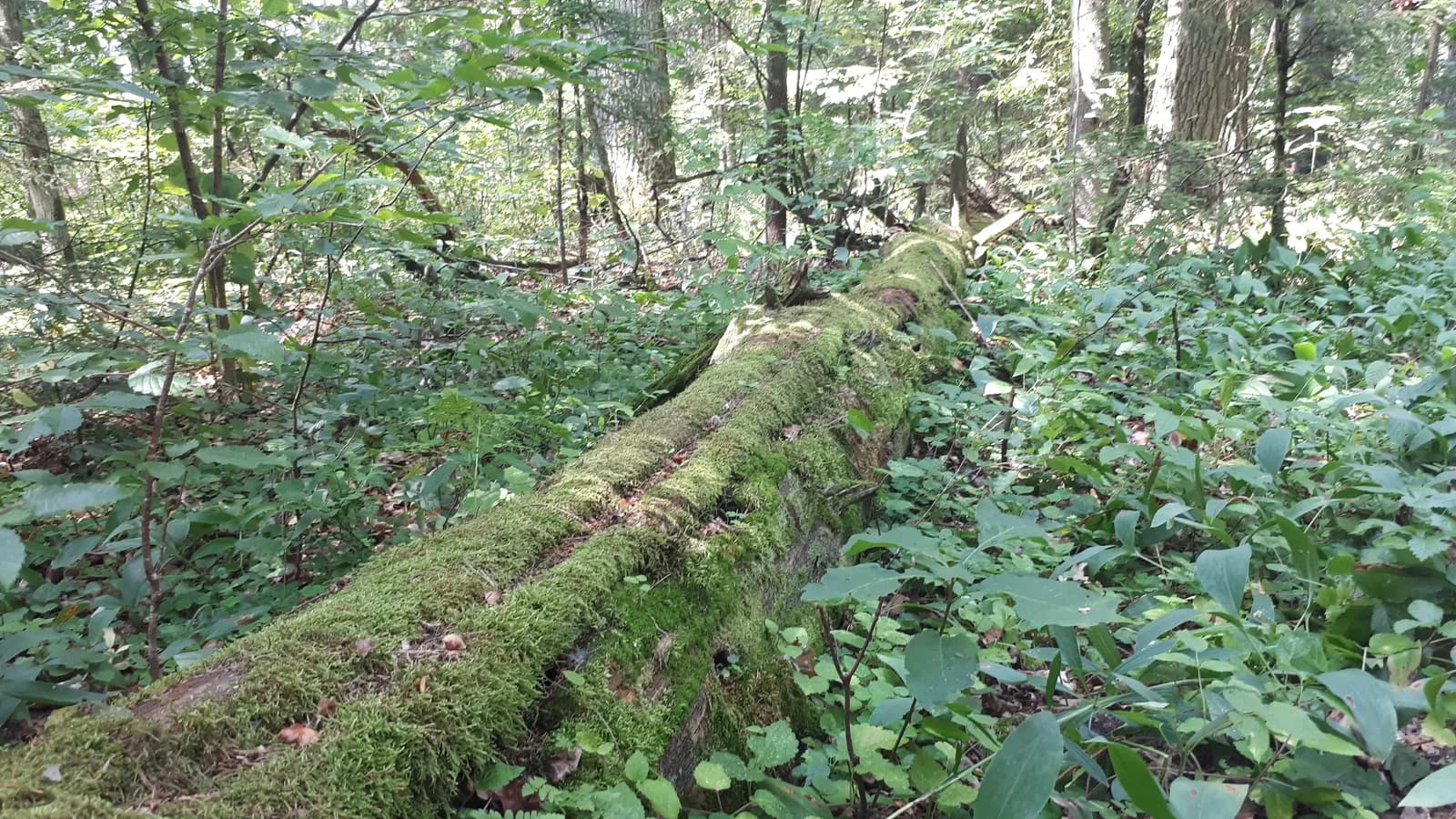
Białowieża Forest, the last of Europe's lowland primeval forests
A remnant of the forest that covered Europe's lowlands for thousands of years, and Poland's first natural site on the UNESCO list.
The country you know. Things you don’t expect.
Forests cover almost one hectare in three in Poland today. In 1945 they covered one in five. In the east, bison roam Białowieża Forest. Across the country in the west, rows of pines bend low over the ground in the Crooked Forest.
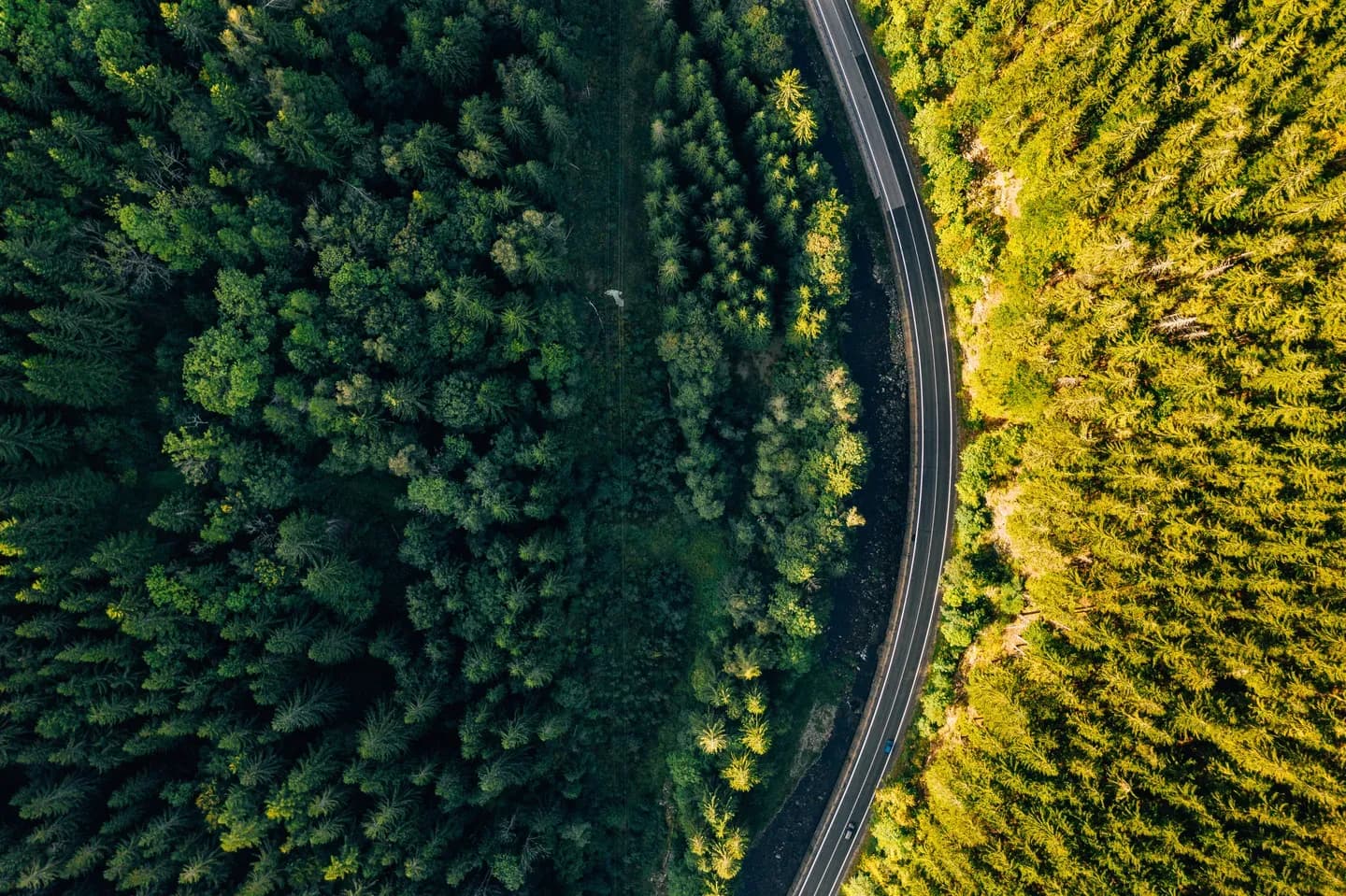
Forest cover rose from 20.8% of Poland in 1945 to 29.6% in 2025. Where did the new forests grow, and how do surveyors measure them?
Read →A remnant of the forest that covered Europe's lowlands for thousands of years, and Poland's first natural site on the UNESCO list.
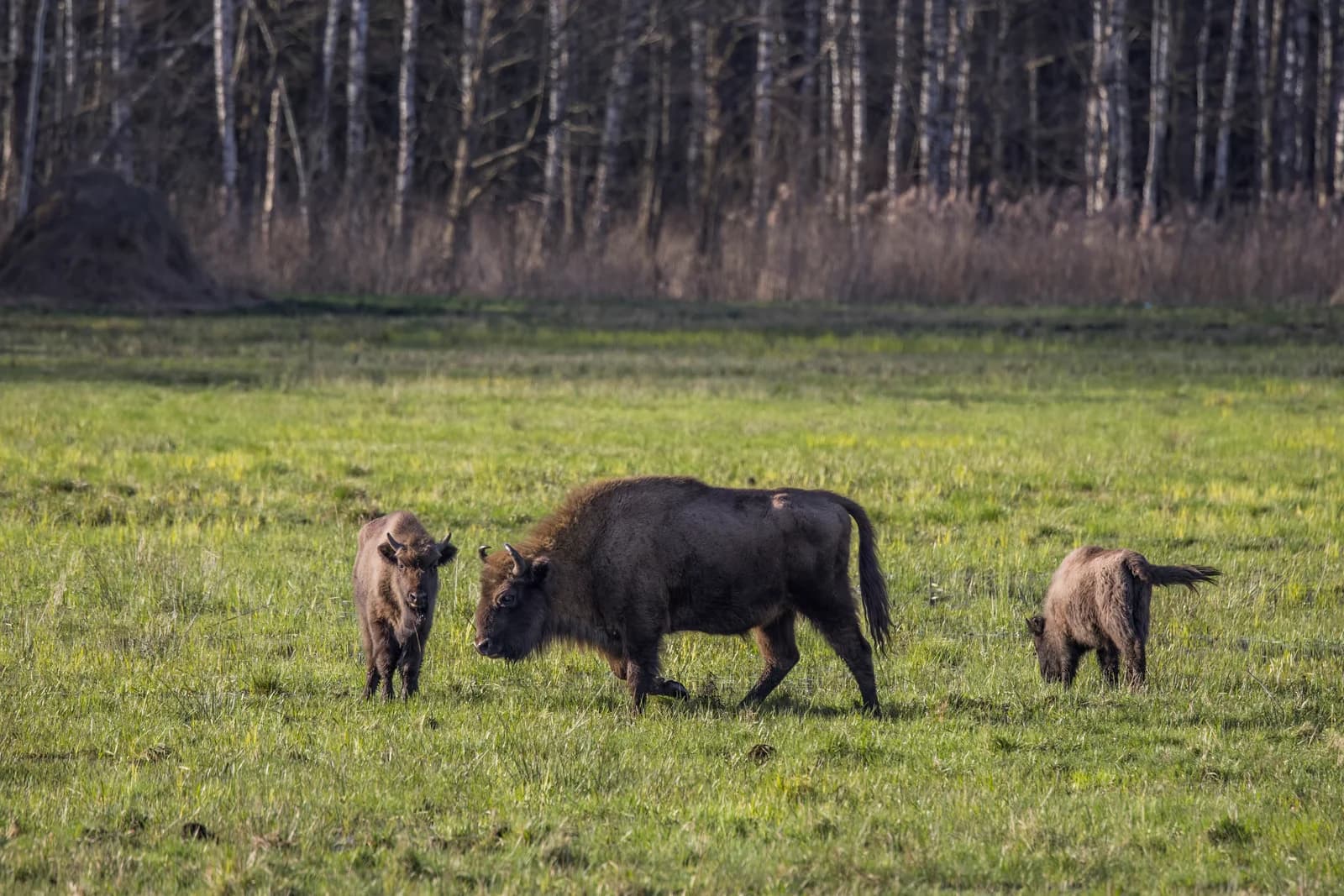
A hundred years ago not a single European bison lived in the wild. The species was rebuilt from just over a dozen zoo animals.
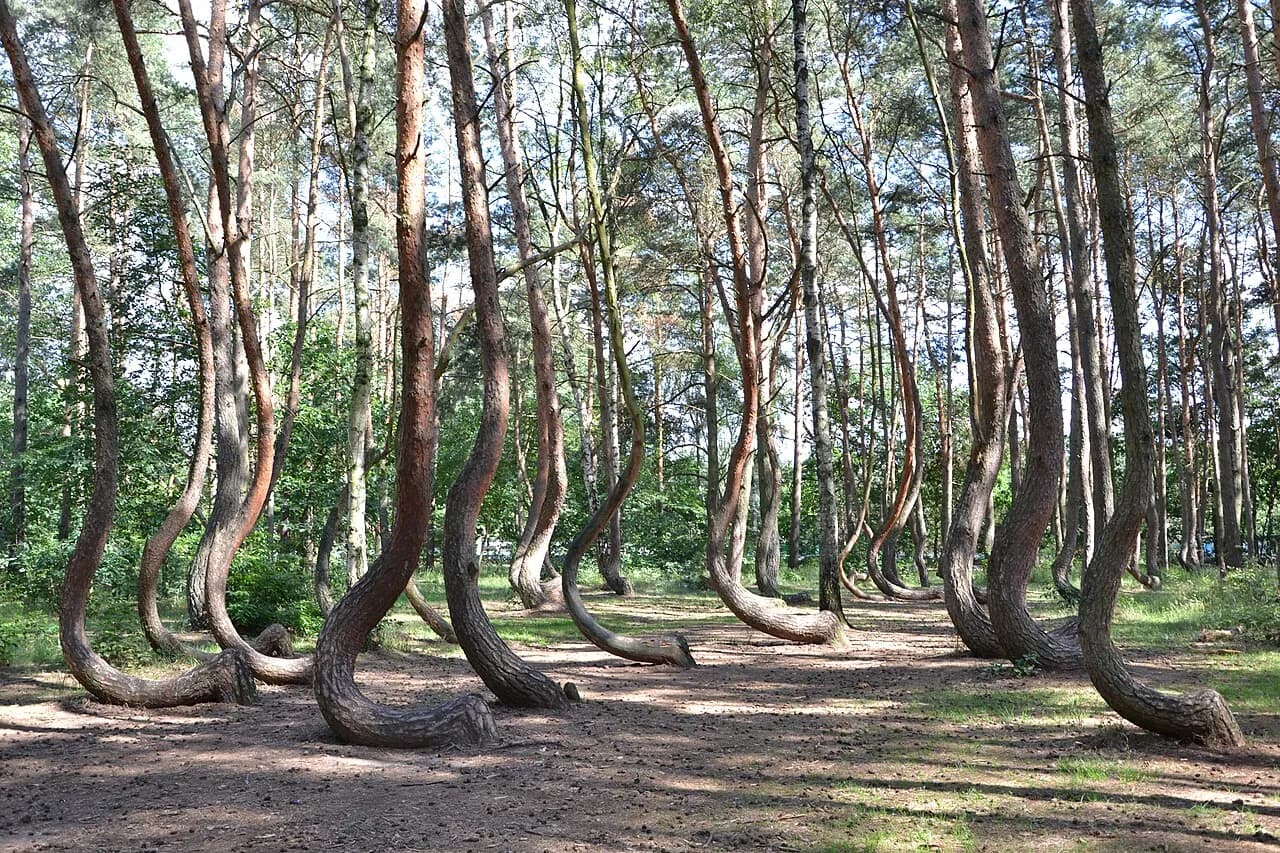
Near Gryfino, pine trunks turn almost at right angles just above the ground, then grow straight up again. A survey in 1971 recorded 22 rows of them. What was all that curved timber for?
At the end of 2025 forests covered 9,290.8 thousand hectares of Poland, or 29.6% of the country. That works out at 0.249 ha per person, roughly one soccer field for every three people. Just after World War II, forest covered a little over a fifth of the country (20.8%).
A Polish forest is above all a pine forest. Scots pine dominates 59.1% of the forest area, far ahead of oak (8.0%), birch (6.5%), beech (6.4%) and alder (5.9%). Broadleaved stands now make up 31.2% of the forests, up from just 13% in 1945.
The forests are also getting older and denser. The average stand is 62 years old, and about 2.7 billion m³ of timber is standing on the stump, three times as much as just after the war. Our forest cover story explains how that happened.
The most wooded region is Lubuskie (Lubusz) province in the west, where forest covers 49.5% of the land, almost half. Next come Podkarpackie in the southeast (38.4%) and Pomorskie on the Baltic coast (34.2%). Łódzkie in the center has the least, at 21.4%.
The big forest blocks sit where the soil is sandy and poor for farming: the Tuchola Forest (Bory Tucholskie), the Notecka Forest, the Lower Silesian Forest, and the Augustów and Solska forests. The east keeps forests of a near-natural character, led by Białowieża, while the mountains carry beech, fir and spruce.
Most forests are public: 80.9% of the area, and 77.1% of all forests are run by Lasy Państwowe, the State Forests. Private woods account for 19.1%, mostly in the Mazovia and Lublin regions. More than two fifths of them (42.3%) are classed as protective forest, guarding water, soil or wildlife. The strictest protection is in national parks, where forest land covers 197.3 thousand ha, or 62.8% of their area, and in seven parks forest covers more than 90% of the land.
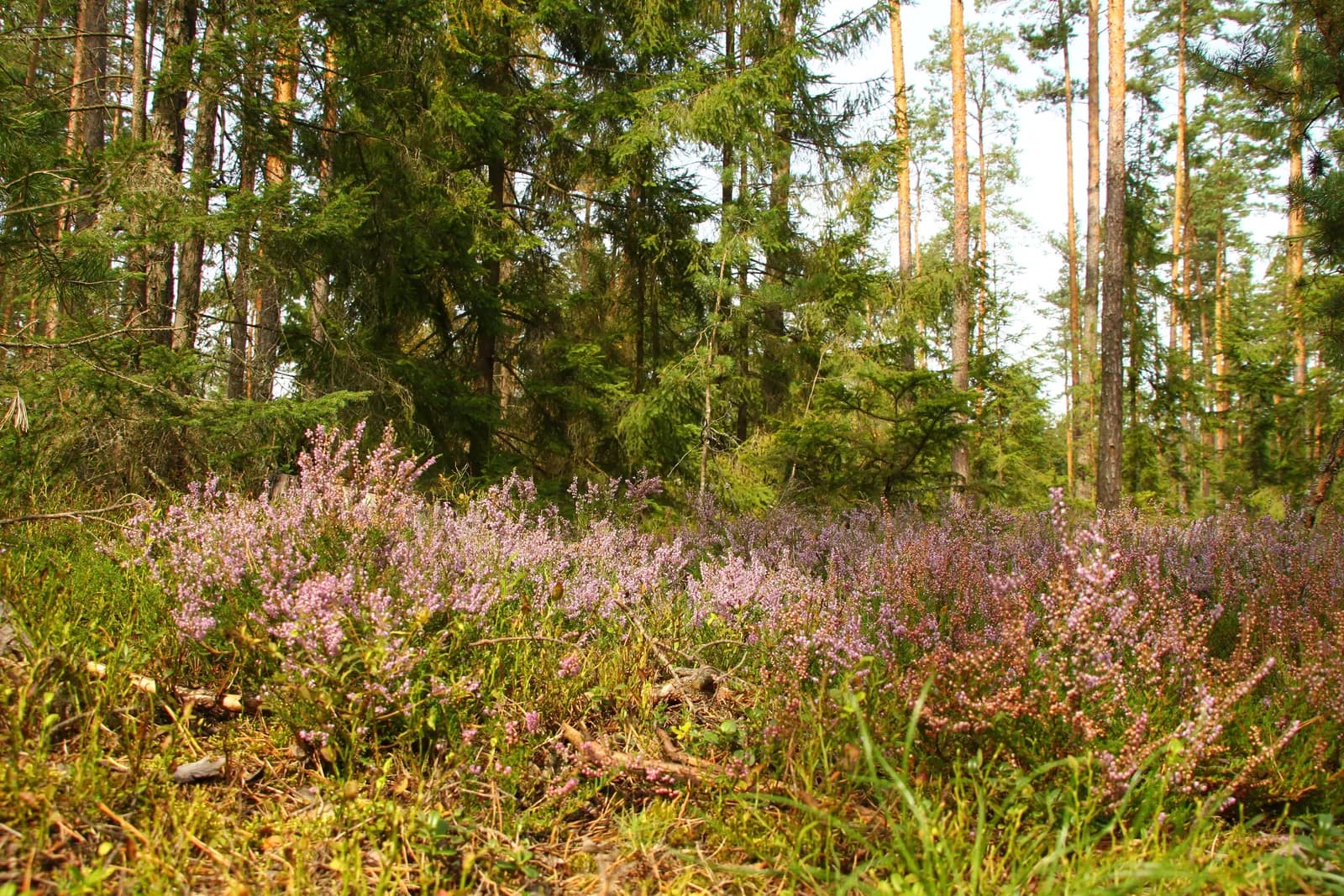
By law, state-owned forests are open to everyone. You can walk, cycle on forest roads and pick mushrooms and berries for your own use. Owners of private forests may close them, but only by putting up a sign.
Since 2021 foresters in 425 forest districts have marked out areas where you can legally spend the night in the woods, with a tent or a hammock. The State Forests' online map (Bank Danych o Lasach) shows where they are.
At a forest crossroads you may spot a low concrete post with a different number on each face. The numbers identify the adjoining blocks of woodland, known as compartments (oddziały). Where four compartments meet, you can read all four numbers on one post. The Sulęcin Forest District explains how to recognize the pattern on the ground. Across the lowlands the blocks often form a regular grid. In the mountains their boundaries are less regular.
Before a walk, download the district map in mBDL, the Polish Forest Data Bank’s mobile app. Even without an internet connection, you can match the numbers on the post to the ones on the map and pinpoint the junction. You can also mark your starting point. If you get home wondering what grew along the way, open the online stand description for that patch of woodland. It lists the trees and shrubs recorded there.
In the Sudetes, old ditches carry water out of the peatland near Zieleniec. Two roads cause a different problem. Built up over the years with layers of stone and timber, they interrupt the flow of water across the bog. Water drains away too easily in one place and meets a barrier in another, all within the same reserve.
A 2021 restoration project called for small barriers across the ditches, including those in the part of the bog called Topielisko. Raising the water in a ditch slows drainage from the peat beside it. At road crossings the plans called for culverts and stretches of timber roadway that let water pass underneath. Researchers would track the response by surveying the wetland’s vegetation and insects before and after the work.
On July 4, 2002, a windstorm damaged over 12,000 hectares of woodland in the Pisz Forest District alone. In places it snapped individual trees. Elsewhere it opened gaps covering several hectares. Crews cleared fallen timber and planted trees including pine, birch and oak. At Szast, another part of the same forest, you can see what happened when the timber stayed where it fell.
In 2003 an area at Szast was set aside to recover on its own. Upturned roots and broken trunks lay where the storm had left them, and a new generation of trees began growing in the gaps. In August 2005 Dorota Dobrowolska of the Forest Research Institute examined 65 sample plots at Szast. She found four tree species regenerating naturally, with Scots pine the most common. Planted pines put on the most growth, but the self-sown pines were healthy across all the stands she studied.
In April 2007 tree beekeepers from Bashkiria came to Wigry National Park in northeastern Poland. Beside the Las trail in Krzywe they carved a hive into a living pine. For two more hives they hollowed out cut logs, a job they could do on the ground. They hung one log beside the trail in Krzywe and the other on the Puszcza trail in Wysoki Most.
In May and June the park recorded swarms moving into both the living pine and one of the logs. The bees had found the cavities on their own. Park staff thought the swarms had probably come from nearby apiaries.
The first story shows how Poland gained over 2.5 million hectares of forest in 80 years and how the mix of trees changed. The second takes you to the oldest part of the reserve in Białowieża Forest, where successive generations of trees have seeded themselves, grown tall and fallen since 1921.
The third follows the recovery of the European bison. The living population descends from just twelve founders, and roughly one in four bison lives in Poland. The fourth crosses Poland to the Crooked Forest near Gryfino. The bends at the foot of its pines may be traces of someone’s work. Measuring the rows has proved much easier than recovering the intentions of whoever planted them.
According to Statistics Poland (GUS), forests covered 29.6% of the country at the end of 2025, or 9,290.8 thousand hectares. In 1945 the figure was 20.8%.
Lubuskie province in the west, where 49.5% of the land is forest. Łódzkie in central Poland has the least, at 21.4% (GUS data for 2024).
Scots pine. It is the dominant species on 59.1% of the forest area because it thrives on the poor, sandy soils common in Poland.
State forests are open to everyone, except young plantations under 4 m, wildlife refuges and areas signed as closed. Private owners can close their woods with a sign.
Yes, in areas designated under the State Forests program "Zanocuj w lesie" ("Spend the night in the forest") in 425 forest districts. Groups of up to 9 can stay up to 2 nights without notifying the foresters.
In the wild, the best bets are the Białowieża Forest and the Bieszczady Mountains, especially at winter feeding sites. For a guaranteed sighting, visit a show enclosure such as the Bison Show Reserve near Białowieża.