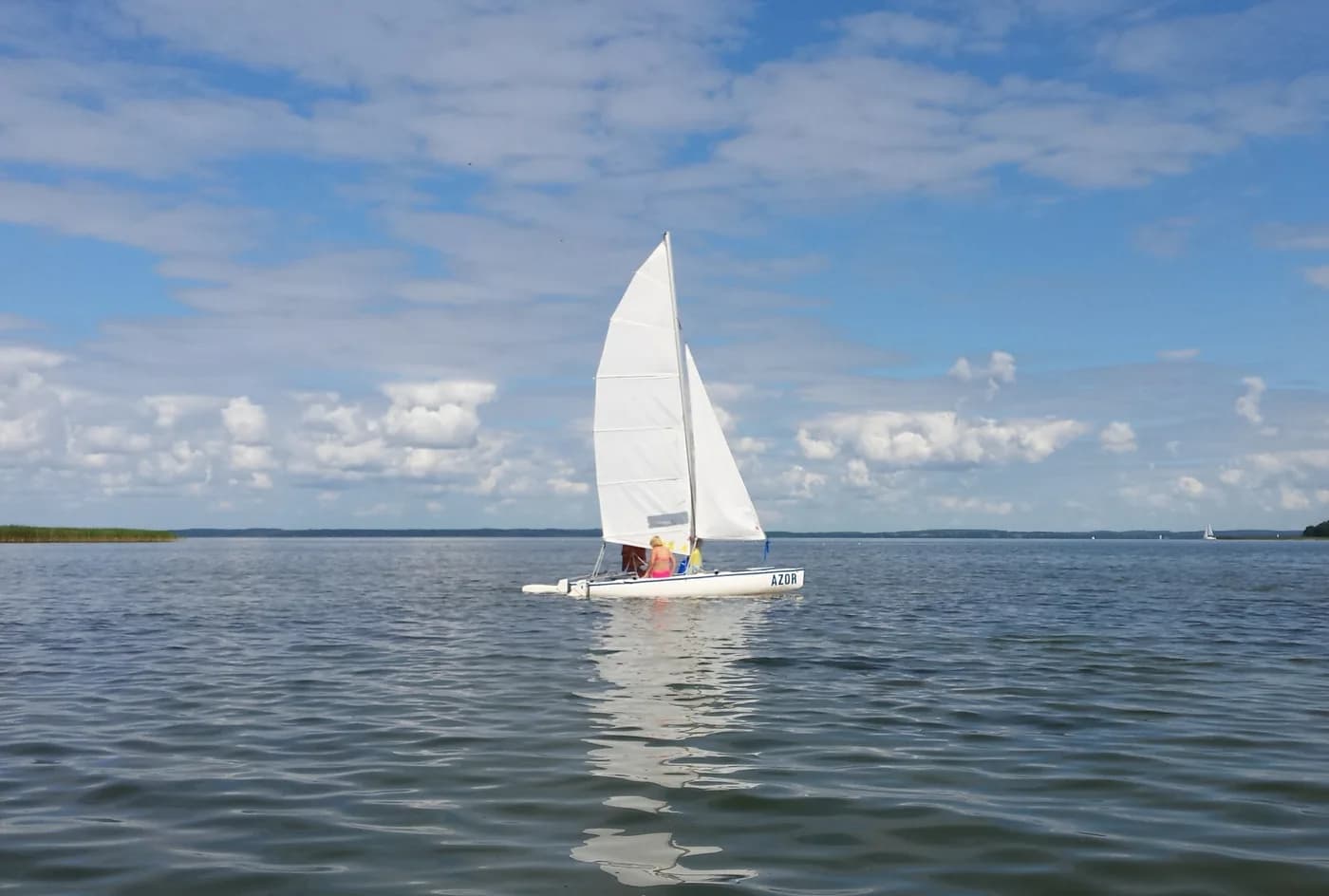
Śniardwy, the Masurian sea
Poland's largest lake covers more than 113 km². In a strong wind its waves can catch out even seasoned sailors.
The country you know. Things you don’t expect.
Sand on the move by the Baltic, sails on Lake Śniardwy, rafts beneath the Pieniny cliffs and migrating birds over the Milicz Ponds. Four places to spend a weekend outdoors.
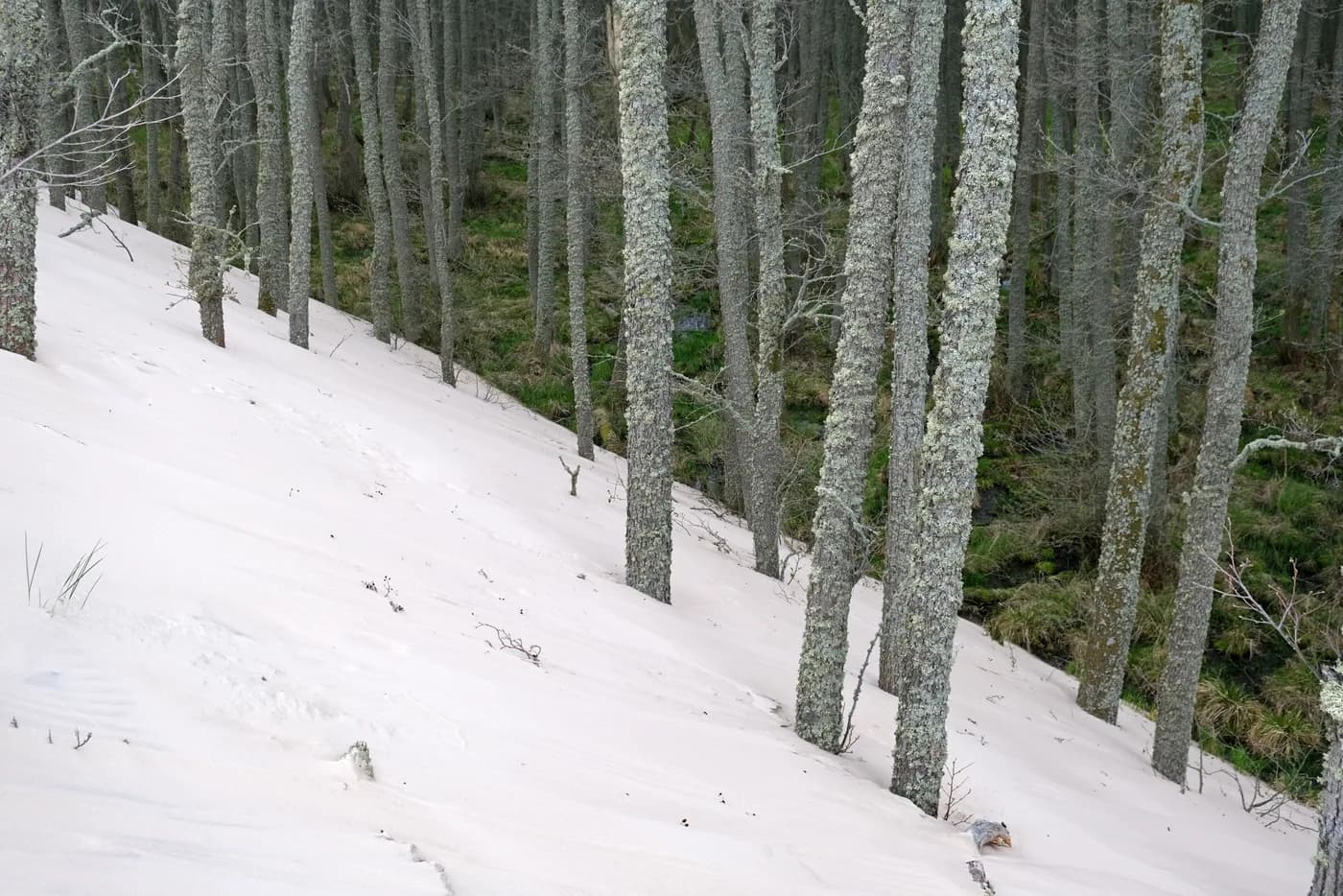
In Słowiński National Park the sand moves several meters a year, burying pines as it goes. The white in the photo is sand, not snow.
Read →Poland's largest lake covers more than 113 km². In a strong wind its waves can catch out even seasoned sailors.
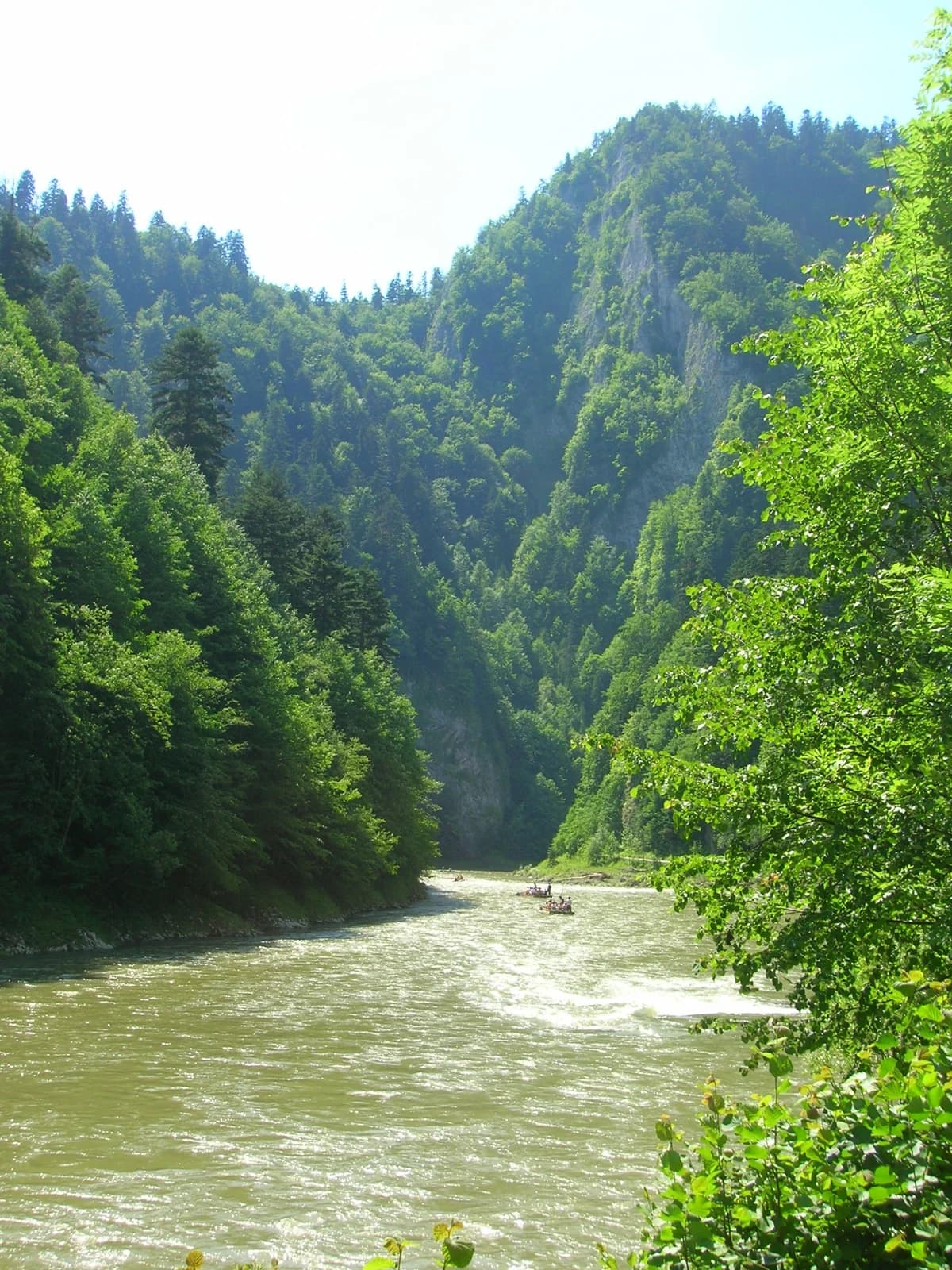
The Dunajec forces its way through the Pieniny Mountains in a gorge with seven bends. The best way to see it is from a traditional wooden raft.
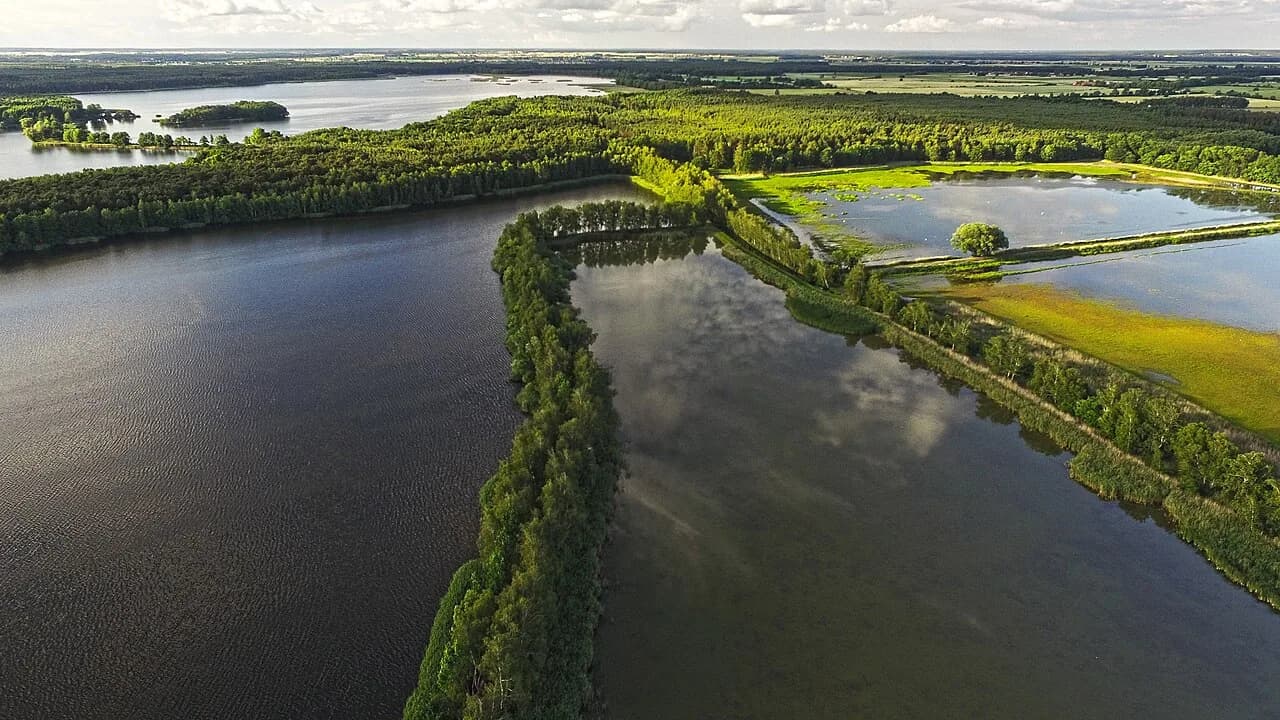
As fish farmers lower the water for the autumn carp harvest, watch from the bank. Waders feed on the newly exposed mud, and great egrets fish the shallows.
This section collects places that change in front of their visitors. The Łącka Dune (Wydma Łącka) moves several meters a year and buries a forest as it goes. Lake Śniardwy can turn a calm surface into steep, breaking waves in very little time. And the Dunajec River has spent ages cutting through the limestone of the Pieniny Mountains, where it still marks the border with Slovakia.
A different force shaped each one. On the Baltic coast it is the wind, carrying sea sand inland. The Masurian lakes fill hollows left by the last ice sheet, and their size and shallowness decide how the water behaves. In the Pieniny the work was done by a river that kept its course while the mountains rose around it.
At the Milicz Ponds, people help shape the view. Fish farmers can lower one pond while its neighbor stays full. In autumn migrating birds land on the newly exposed mud. Come back to the same bank a few days later and there may be a different flock feeding there.
The Łącka Dune is in the far north, on the Łeba Spit in Słowiński National Park, between the resort towns of Łeba and Rowy in the Pomeranian region. The nearest town is Łeba, served by a seasonal train from Lębork and a year-round bus from Słupsk.
Lake Śniardwy lies in the northeast, in the Great Masurian Lakes district of the Warmia-Masuria region, between Mikołajki and Pisz. The best viewpoints are the villages of Niedźwiedzi Róg and Nowe Guty. By water, the lake connects with Lake Mikołajskie and, through the Jegliński Canal, with Lake Roś.
The Dunajec Gorge is in the south, in the Lesser Poland (Małopolska) region on the Slovak border. Rafts set off from Sromowce Wyżne-Kąty or Sromowce Niżne and land in Szczawnica or Krościenko nad Dunajcem. On a clear day the viewing platforms on Trzy Korony and Sokolica look across to the Tatra Mountains.
The Barycz Valley lies north of Wrocław. Start around Milicz for the fishponds. Ruda Milicka is by the Stawno complex, while Ruda Sułowska has its own group of ponds and a walking trail along the banks.
Each place has its season. In Słowiński National Park, entry tickets apply on selected trails from May 1 to September 30, while the dunes move fastest in fall and winter, when storm winds blow. In spring and late fall you may have the dune nearly to yourself.
In Masuria the sailing season is what matters. That is when the storm-warning lamps, in place since 2011, flash along the lakes. On the Dunajec, the raftsmen work from April 1 to October 31, and from November 1 to March 31 the gorge is closed to all river traffic.
For a loop with a different view on the way back, start at the ruined church of St. Nicholas in Stara Łeba. The 15.1 km trail takes in the Łącka Dune, with nearly half the walk on the beach and the return leg through coastal pine woods. Allow time for the loose sand and a stop on the crest.
For birdwatching, take the 7.3 km Okolice Łuknajna trail. It crosses former wetlands drained for hay meadows and pasture. The towers overlooking Lake Łuknajno are a good place to look for molting mute swans. A tower facing Śniardwy looks out over open water. Near the abandoned settlement of Osa, old fruit trees still mark the spot where people lived.
For a view up at the cliffs, follow the red-marked Pieniny Road from Szczawnica. A path branches off toward Leśnica where a stream joins the Dunajec. Stay by the river for views of Sokolica on the way to the Red Monastery. Allow about three hours for the 10 km walk and plan the return journey separately.
For a shorter walk, try the 5 km Ruda Sułowska trail. It takes you between the fishponds on earth banks lined with old oaks.
From Czorsztyn toward Trzy Korony, the blue trail follows an old village road through the long clearing at Majerz. Before Osice Pass, look for the shepherd’s hut on the western side of the pasture. A photograph from around 1930, published by Pieniny National Park, shows the hut of the day with two men outside it, the head shepherd Wolski from Hałuszowa and the owner of Czorsztyn, Marian Drohojowski.
Beside the trail, look at how low the plants grow. Sheep pick out the plants they like, leave prickly ones standing and tread down the soil. White clover thrives here because it tolerates grazing. The flock also shapes the pasture while it rests. The shepherds move the sheep pen from place to place so the droppings fertilize a different patch each time.
In the Barycz Valley you can ride the embankment of an old narrow-gauge railway from Gruszeczka through Sułów Milicki and Milicz to Grabownica. Look for the old rolling stock at Sułów and at the former stations in Milicz. Trains were running between Żmigród and Milicz by 1894. The last ran in 1991. For a short ride, pick a stretch near the ponds and leave time to stop by the water.
The Masurian Landscape Park’s circuit around Śniardwy is a much longer ride at 88 km. It takes in Niedźwiedzi Róg, Karwik, Nowe Guty and Łuknajno. The route includes the ferry at Wierzba. Check that it is running on the day you plan to ride. Some stretches are on dirt or sand, and two share national roads with traffic. For a morning of birdwatching, it is easier to explore just one shore.
At Czołpino on the Baltic coast, the national park museum occupies a lighthouse keepers’ settlement built in 1871. Alongside the two-story house stood a barn and farm buildings. Seeing the whole yard gives a sense of what it took to live by a lighthouse on this spit. Inside, the exhibition traces the influence of the sea on the people, plants and animals of coastal Pomerania.
At the fisheries museum in Ruda Sułowska, start outdoors with the tools used to work the ponds, then head to the Fisherman’s House for the history of the farm. One stop is a holding tank called a płuczka. The tank holds harvested fish in a continuous flow of oxygen-rich water before they go to market.
On the Łeba Spit and in Masuria, UNESCO recognizes the landscape. Słowiński National Park is a biosphere reserve. In Masuria the original reserve covered Lake Łuknajno in 1976. Today's Masurian Lakes Biosphere Reserve also takes in Śniardwy. In the Pieniny, a living tradition has its own designation. In 2023 Poland added rafting on the Dunajec to its national list of intangible cultural heritage.
They also share a history of conservation. Pieniny National Park, together with a Slovak reserve created in July 1932, formed Europe's first cross-border nature park. Keep that in mind on the trail: every one of these places has park rules, and the paths are marked so that dunes, reed beds and rock grasslands survive the next season too.
The Milicz Fishponds became a Ramsar wetland in 1995. The protected area includes the meadows, woods and marshes around the ponds.
For a weekend outdoors, try the dunes near Łeba, Lake Śniardwy in Masuria, the Dunajec Gorge in the Pieniny or the Milicz Ponds in the Barycz Valley. Pack binoculars for the ponds, especially during autumn migration.
Poland's largest moving dunes are on the Łeba Spit in Słowiński National Park, between Łeba and Rowy on the Baltic coast. The best known is the Łącka Dune, about 42 meters above sea level.
Poland's largest lake is Śniardwy in Masuria, at about 113.4 km² (44 square miles). Mamry comes second but is deeper.
The rafting season runs from April 1 to October 31, every day except Easter Sunday and Corpus Christi.
It depends on the park. Słowiński National Park charges for selected trails from May 1 to September 30, while Pieniny National Park charges for the Trzy Korony and Sokolica viewing platforms and for the river trail.