The kerosene lamp first lit up in Lviv
Show on mapIgnacy Łukasiewicz refined crude oil and built a lamp that lit a nighttime surgery in 1853.
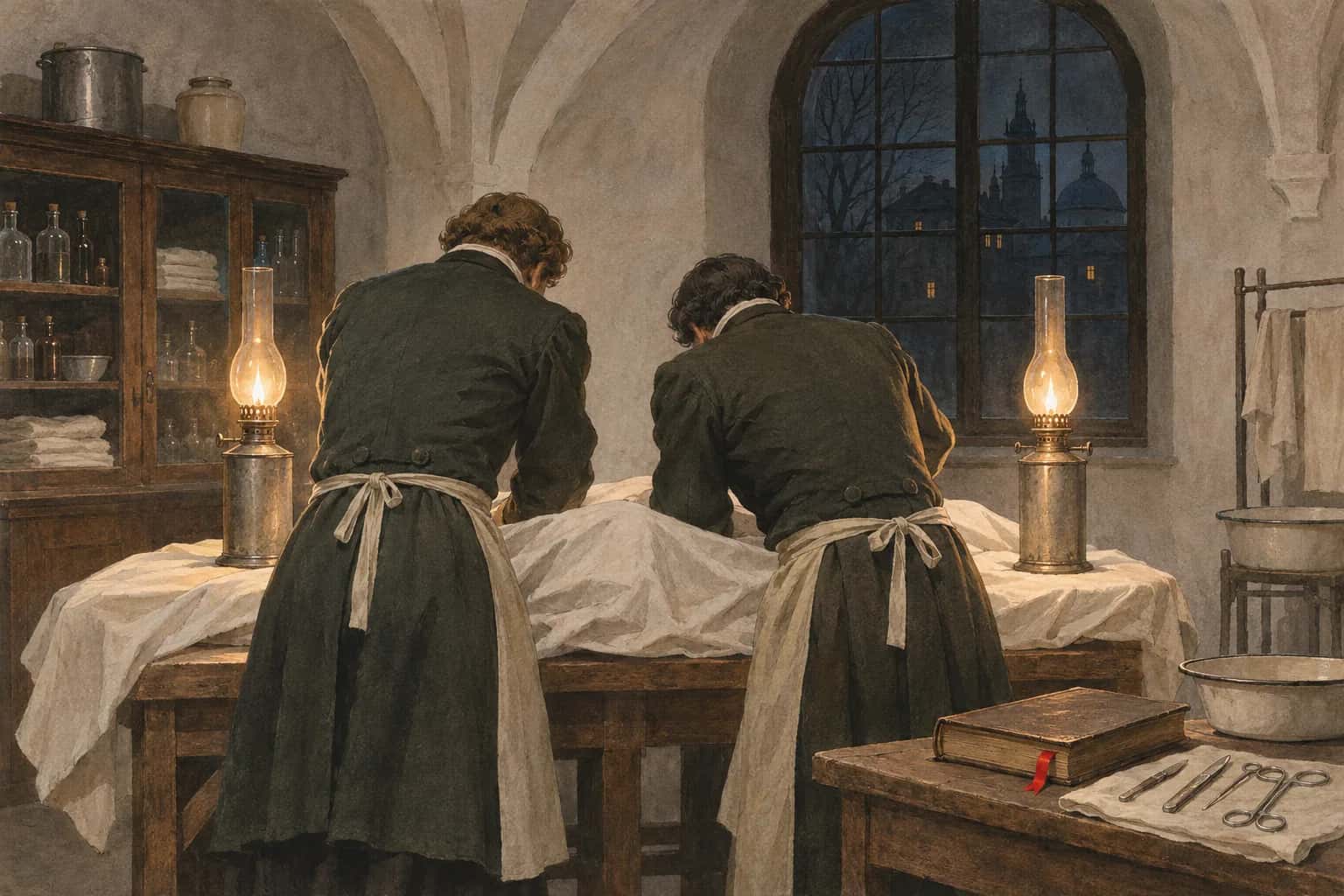
On the night of July 31, 1853, surgeons at the general hospital on Łyczakowska Street in Lwów (today Lviv, Ukraine) carried out an emergency operation under a new kind of light. The lamps burned kerosene, a liquid that had been distilled from crude oil a few months earlier in the back room of a pharmacy called Under the Golden Star. In Poland that night is remembered as the symbolic birth of the oil industry.
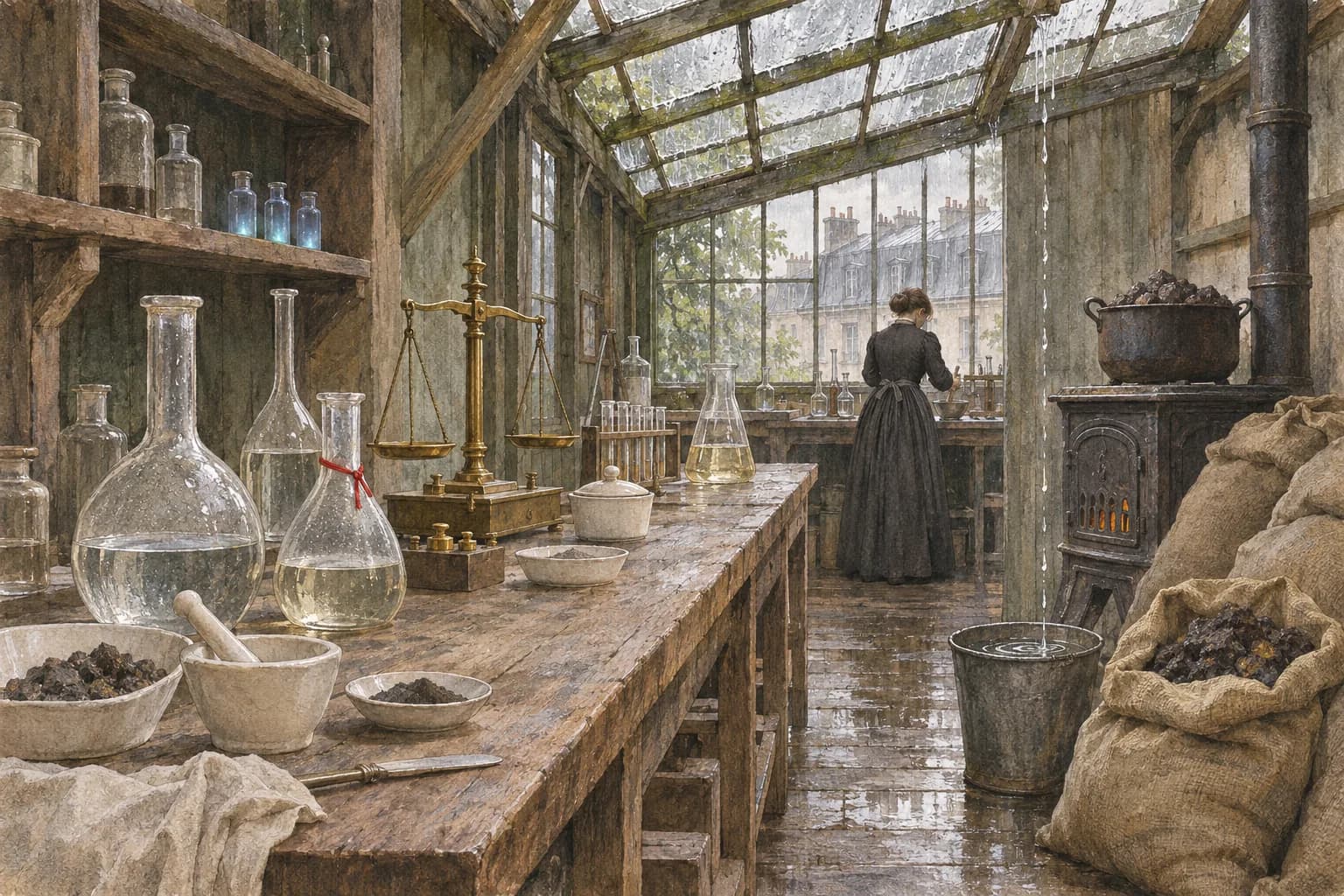
Crude oil had been seeping out of the ground in the Carpathian foothills for centuries. Peasants greased cart axles with it and dosed sick cattle, but nobody knew how to turn it into a fuel that burned brightly, without soot and without the risk of an explosion. Two pharmacists in Lwów worked it out: Ignacy Łukasiewicz and Jan Zeh.
The lamp was only the start. A year later Łukasiewicz co-founded an oil mine at Bóbrka near Krosno that still produces oil today, then refineries, schools and relief funds for workers. An industry grew out of a pharmacy.
Who was Ignacy Łukasiewicz, the inventor of the kerosene lamp?
Ignacy Łukasiewicz was born in March 1822 in Zaduszniki near Mielec, in the Austrian-ruled part of partitioned Poland known as Galicia; sources give either March 8 or March 23. His family soon moved to Rzeszów. When his father died in 1836, the 14-year-old left school and became an apprentice at a pharmacy in Łańcut.
The pharmacy was his chemistry school and also a base for conspiracy. In 1845 he joined an underground democratic society that was preparing an uprising against the partitioning powers. On February 19, 1846 he was arrested in his Rzeszów pharmacy. He spent almost two years in prison in Lwów and was released on December 27, 1847 for lack of evidence, but banned from leaving the city.
In August 1848 he was hired by Piotr Mikolasch, owner of one of the best pharmacies in Galicia, Under the Golden Star (Pod Złotą Gwiazdą). Mikolasch helped him get permission to study: Łukasiewicz began pharmacy in Kraków and received his master's degree in pharmacy in Vienna on July 30, 1852. Then he went back to Lwów and to the lab behind the shop.
How did they turn crude oil into kerosene?
In the fall of 1852 a few barrels of crude oil reached Mikolasch's pharmacy from traders in Drohobych. The owner hoped for a new medicine and put two assistants on the job: Łukasiewicz and Jan Zeh, a fellow pharmacist from Łańcut. When it became clear there was no medicine in it, Mikolasch lost interest. His assistants kept going.
Around the turn of 1853 they obtained kerosene by fractional distillation. The trick was to cut off both ends: the lightest parts of the oil caught fire too easily and could explode, the heaviest ones gave off soot. The middle cut, cleaned with concentrated sulfuric acid, burned steadily and safely.
They were not the first to make such a liquid. In 1846 the Canadian Abraham Gesner produced lamp fuel from coal and asphalt, and the Polish chemist Filip Walter had studied oil distillates. The Lwów pharmacists were the first to turn kerosene from crude oil into an everyday lighting product. On May 27, 1853 Zeh applied for an Austrian privilege, an early form of patent, for processing crude oil, and received it on December 2, 1853.
- Heat the crude oil and collect the vapors in successive temperature ranges (fractional distillation).
- Discard the lightest fractions, which raises the flash point so the fuel does not explode in a lamp.
- Separate the heavy hydrocarbons that made the flame smoke.
- Refine the rest with concentrated sulfuric acid to remove impurities.
How did the first kerosene lamp work?
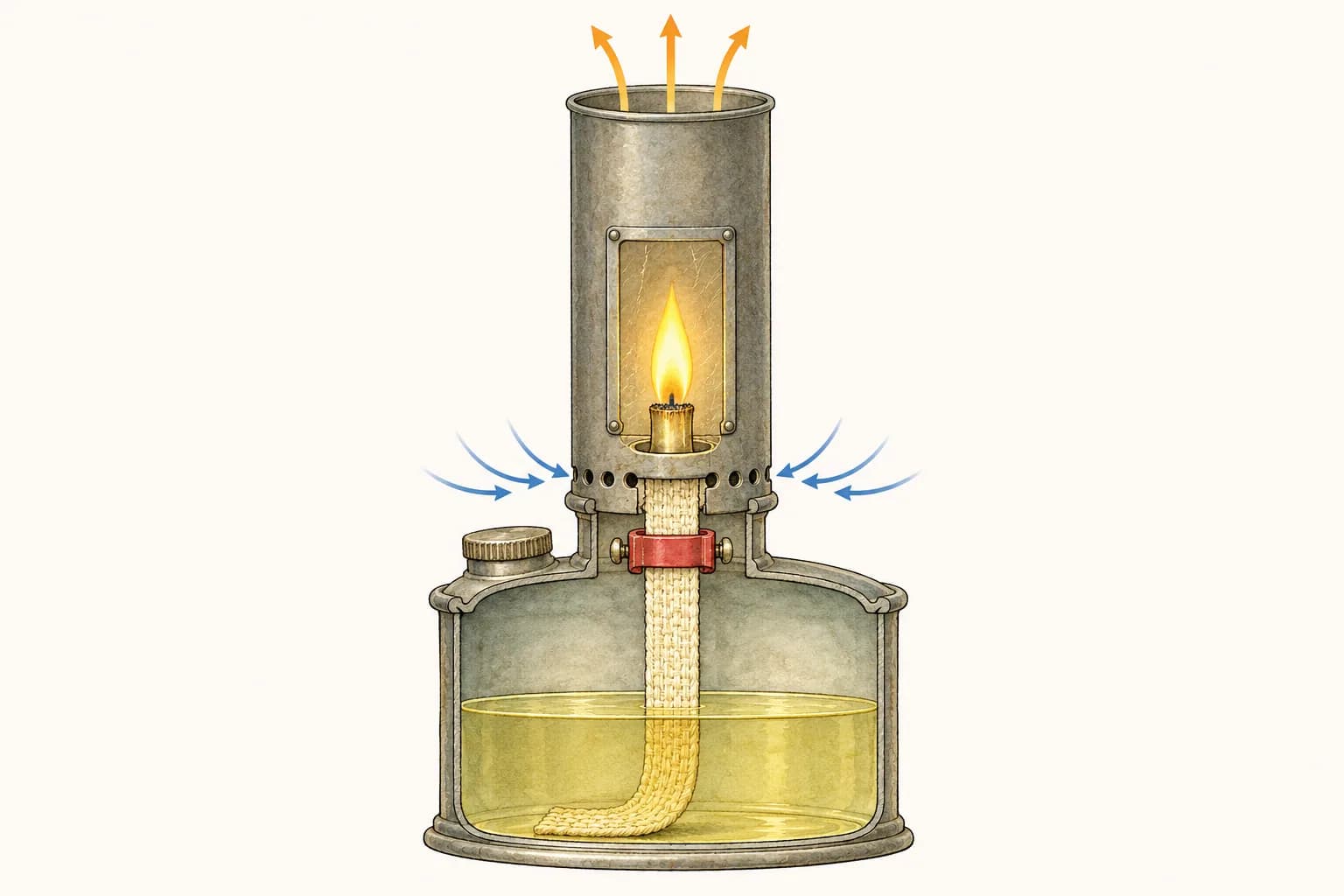
Kerosene needed a lamp, and the oil lamps of the day were no good: filled with kerosene, their reservoirs could crack. So Łukasiewicz designed his own, and a Lwów tinsmith, Adam Bratkowski, built it.
The design was heavy and simple. At the bottom sat a cylindrical tin reservoir for the fuel, sturdy enough to guard against an explosion. A wick dipped into it and drew the kerosene upward by capillary action. The flame was shielded by a metal tube with a small mica window and holes that let air in.
In March 1853 the first kerosene lamp shone in the window of Mikolasch's pharmacy. It gave about 10–15 candlepower, so the design kept improving. Kerosene lamps came into general use in 1860–1865 and for half a century were the cheapest light in people's homes, until the electric bulb replaced them.
What happened in Lviv on July 31, 1853?
In the summer of 1853 the improved lamps were installed at the general hospital in Lwów's Łyczaków district. On the night of July 31 doctors performed an emergency operation by their light; biographies of Jan Zeh name the surgeon as Dr. Zaorski. For the first time kerosene lighting did more than brighten a shop window.
The date became a symbol. In 2003, for the 150th anniversary of the oil and gas industry, the National Bank of Poland issued gold and silver coins with Łukasiewicz's portrait and the date “31 VII 1853,” plus a circulating 2-złoty coin showing the lamp and a refinery.
A year later kerosene moved outdoors. In early 1854 Łukasiewicz moved to Gorlice to be closer to the oil fields, and a kerosene street lamp was lit there in the Zawodzie district. Polish sources call it the first in the world; English-language sources usually say the first in Europe.
What marks the spot where Gorlice lit its street lamp?
When the town councillors of Gorlice lit their lamp in 1854, they gave kerosene a very different job from lighting a hospital. The lamp lit a crossroads in the Zawodzie district. If you visit the corner of Węgierska and Kościuszki streets looking for an old lamp post, it is easy to walk past. The landmark is a roadside shrine with a seated figure of Christ.
The figure at the junction is a copy of a sculpture dated 1593. The original belongs to the town’s regional museum on Wąska Street. On the wall behind the shrine, a mural painted in 2016 commemorates the lighting of the lamp. One street corner brings together a sixteenth-century carving, nineteenth-century street lighting and the town’s present-day memory of the event.
Bóbrka: the oldest working oil mine in the world
In 1854 Łukasiewicz, Tytus Trzecieski and Karol Klobassa-Zrencki founded an oil mine at Bóbrka near Krosno. There were no drilling rigs yet: the oil was bailed out of hand-dug pits. Between 1854 and 1880 more than 60 were dug, from a few meters to about 150 meters (490 feet) deep.
Two survive. The Franek pit was dug by hand around 1860 to a depth of 20 meters (66 feet). The Janina pit was dug by hand to 95 meters and then deepened with a hand-operated drill to 156 meters (512 feet). According to the museum, Janina still produces oil.
For comparison, Edwin Drake's well at Titusville, Pennsylvania, usually treated as the start of the American oil industry, was drilled in 1859, five years after Bóbrka. In the middle of the site stands a stone obelisk that Łukasiewicz put up in 1872 to mark the mine's founding. In 2018 the mine was declared a Monument of History, Poland's highest heritage status.
How did kerosene reach the shops?
In 1855 oil began flowing into a hand-dug well named Wojciech at Bóbrka in quantities that justified opening a distillery. It went up the following year at Ulaszowice, near Jasło. Supplying lamps beyond a single hospital took both a steady source of crude oil and a place to refine it.
Each partner brought something different to the business. Tytus Trzecieski put up the money, Karol Klobassa-Zrencki provided the land and Łukasiewicz ran the operation. In 1861 they settled their partnership terms by word of mouth. Ten years later Łukasiewicz gave up his one-third share and stayed on as director. He bought crude oil from his partners for his own refinery and sold its products through shops in Tarnów, Kraków and Warsaw.
Why did an oilfield need a forge and a machine shop?
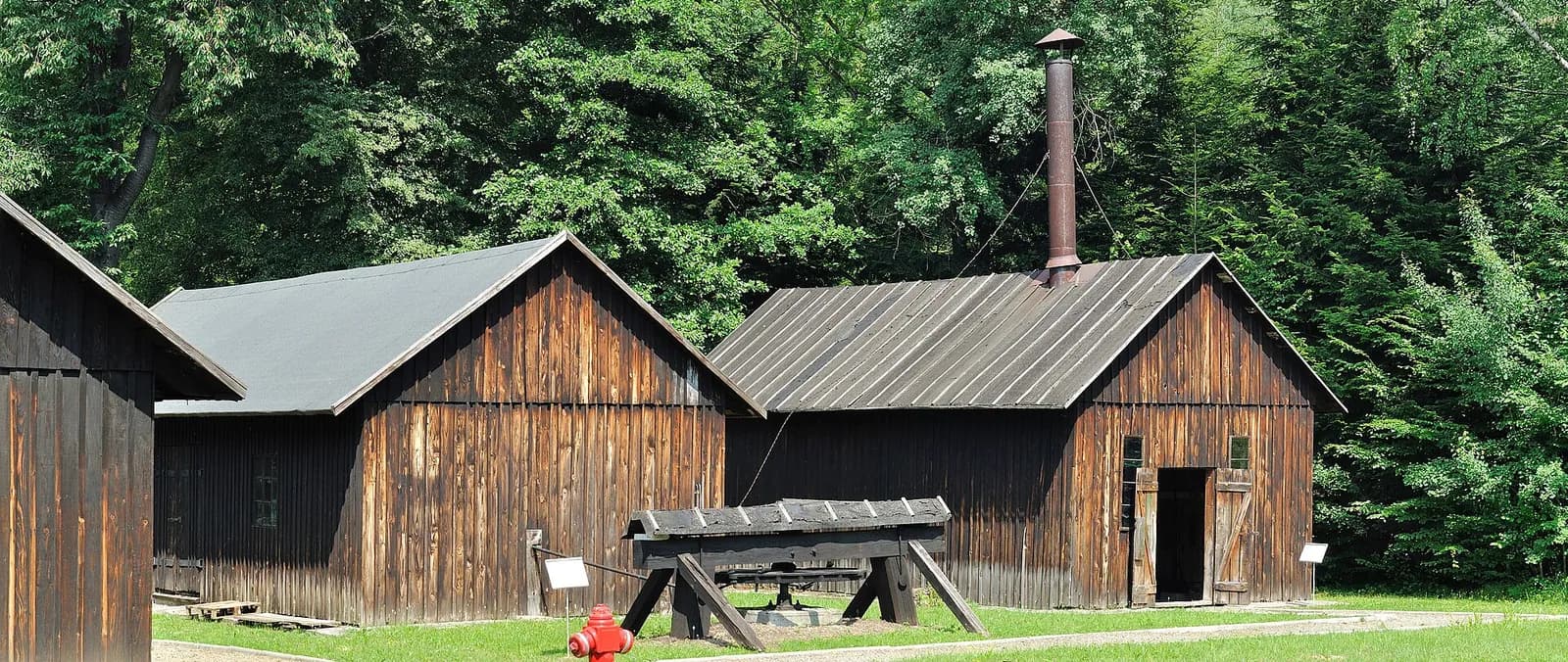
Tools broke, pump seals wore out and drilling a fresh well required working equipment. Bóbrka’s wooden forge, built in 1856, still has its two brick hearths. The smith could feed the fire with air from a leather bellows. The example preserved in the museum dates from nearly forty years after the forge was built.
In the machine shop built in 1864, look for a press that shaped leather seals for pumps working deep in the wells. There is a lathe and a drill there too. At first, workers in an adjoining shed supplied the power by hand, and a common drive transmitted it to the machines. A steam engine later took over. Getting fuel into a glass lamp took people who could work leather and iron as well as people who understood oil.
What did Łukasiewicz leave behind?
Łukasiewicz did not keep his invention to one company. He urged landowners to open mines around Gorlice, Jasło and Krosno, built refineries, and in 1865 bought the village of Chorkówka and set up a modern refinery there. He became one of the richest men in Galicia.
He spent the money on others too: roads, schools and hospitals, a campaign against drunkenness, relief and pension funds for workers. In 1877 he organized an oil congress in Lwów and founded the National Oil Society. He sat in the Galician regional parliament. He died of pneumonia on January 7, 1882 in Chorkówka and was buried in nearby Zręcin, next to a church he had paid for.
Rzeszów University of Technology has carried his name since 1974, and the Łukasiewicz Research Network, a group of several dozen institutes, since 2019. The Polish parliament declared 2022 the Year of Ignacy Łukasiewicz. A copy of his prototype lamp and one of the finest collections of kerosene lamps in Europe are at the Subcarpathian Museum in Krosno.
Timeline
- 1822Ignacy Łukasiewicz is born in Zaduszniki near Mielec.
- 1846Arrested for an independence plot; almost two years in prison in Lwów follow.
- 1852Master's degree in pharmacy in Vienna; back to Mikolasch's pharmacy.
- Winter 1852–1853Łukasiewicz and Zeh distill kerosene from crude oil.
- March 1853The first kerosene lamp shines in the window of the Under the Golden Star pharmacy.
- July 31, 1853A nighttime operation by kerosene light at the Lwów hospital.
- 1854The Bóbrka oil mine opens; a kerosene street lamp is lit in Gorlice.
- 1865Łukasiewicz buys Chorkówka and builds a refinery there.
- January 7, 1882Łukasiewicz dies in Chorkówka.
Practical info
- Where
- Ignacy Łukasiewicz Museum of the Oil and Gas Industry, ul. Kopalniana 35, Bóbrka, near Krosno in southeastern Poland.
- Best time
- Most of the exhibits are outdoors among the trees, so spring to fall is the most pleasant. The museum closes on some public holidays.
- Getting there
- By car from Krosno is easiest. Bóbrka lies on the Petroleum Trail (Szlak Naftowy), a route linking oil heritage sites across southern Poland.
- Tickets
- Check current prices, hours and guided tours on the official site, bobrka.pl.
- On site
- The Franek and Janina pits, the 1872 obelisk, an 1856 forge, historic drilling rigs and the Łukasiewicz House with a pharmacy display and a lamp collection.
- Nearby
- The Subcarpathian Museum in Krosno, with a copy of the prototype lamp and a large collection of kerosene lamps.
Questions and answers
Who invented the kerosene lamp?
The practical kerosene lamp was built in 1853 in Lwów (now Lviv) to a design by Polish pharmacist Ignacy Łukasiewicz. A tinsmith, Adam Bratkowski, made it, and Łukasiewicz distilled the fuel from crude oil with Jan Zeh.
When was the first kerosene lamp lit?
In March 1853, in the window of the Under the Golden Star pharmacy in Lwów. On July 31, 1853 improved lamps lit an emergency operation at the city hospital.
Where was the first oil well in the world?
Poland claims the first oil mine: Bóbrka near Krosno, founded in 1854 with hand-dug pits. The well usually credited as the first in the United States, Drake Well in Pennsylvania, dates from 1859.
Is the Bóbrka oil mine still working?
Yes. Oil is still produced on the museum grounds, including from the Janina pit, deepened in the 19th century to 156 meters (512 feet).
What is the difference between kerosene and crude oil?
Crude oil is the raw material from the ground, a mix of many hydrocarbons. Kerosene is one fraction of it, separated by distillation and refining; it burns brightly without soot, which made it ideal for lamps.
Where can I see Łukasiewicz's lamp?
A copy of the prototype is at the Subcarpathian Museum in Krosno, which also has a large collection of kerosene lamps. The Bóbrka museum shows lamps and other items linked to Łukasiewicz.
Sources
- Wikipedia: Ignacy Łukasiewicz (in Polish) (opens in a new tab)
- Bóbrka museum: about the museum (opens in a new tab)
- Town of Gorlice, the street lamp, shrine and mural in Zawodzie (in Polish) (opens in a new tab)
- Bóbrka museum, the machine shop built in 1864 (in Polish) (opens in a new tab)
- Bóbrka museum: the oilfield, its partners and the distillery (opens in a new tab)
- Bóbrka museum: the obelisk commissioned by Łukasiewicz (opens in a new tab)
- Subcarpathian Museum in Krosno (in Polish) (opens in a new tab)
- Wikipedia: Ignacy Łukasiewicz (opens in a new tab)
- Wikipedia: Kerosene lamp (in Polish) (opens in a new tab)
- Wikipedia: Jan Zeh (in Polish) (opens in a new tab)
- Wikipedia: Drake Well (opens in a new tab)