Tinder fungus, the mushroom that carried an ember
Show on mapIt looks like a gray hoof on a beech trunk. Its soft flesh once caught sparks, and researchers found 204 species of tiny animals in brackets from three Polish parks.
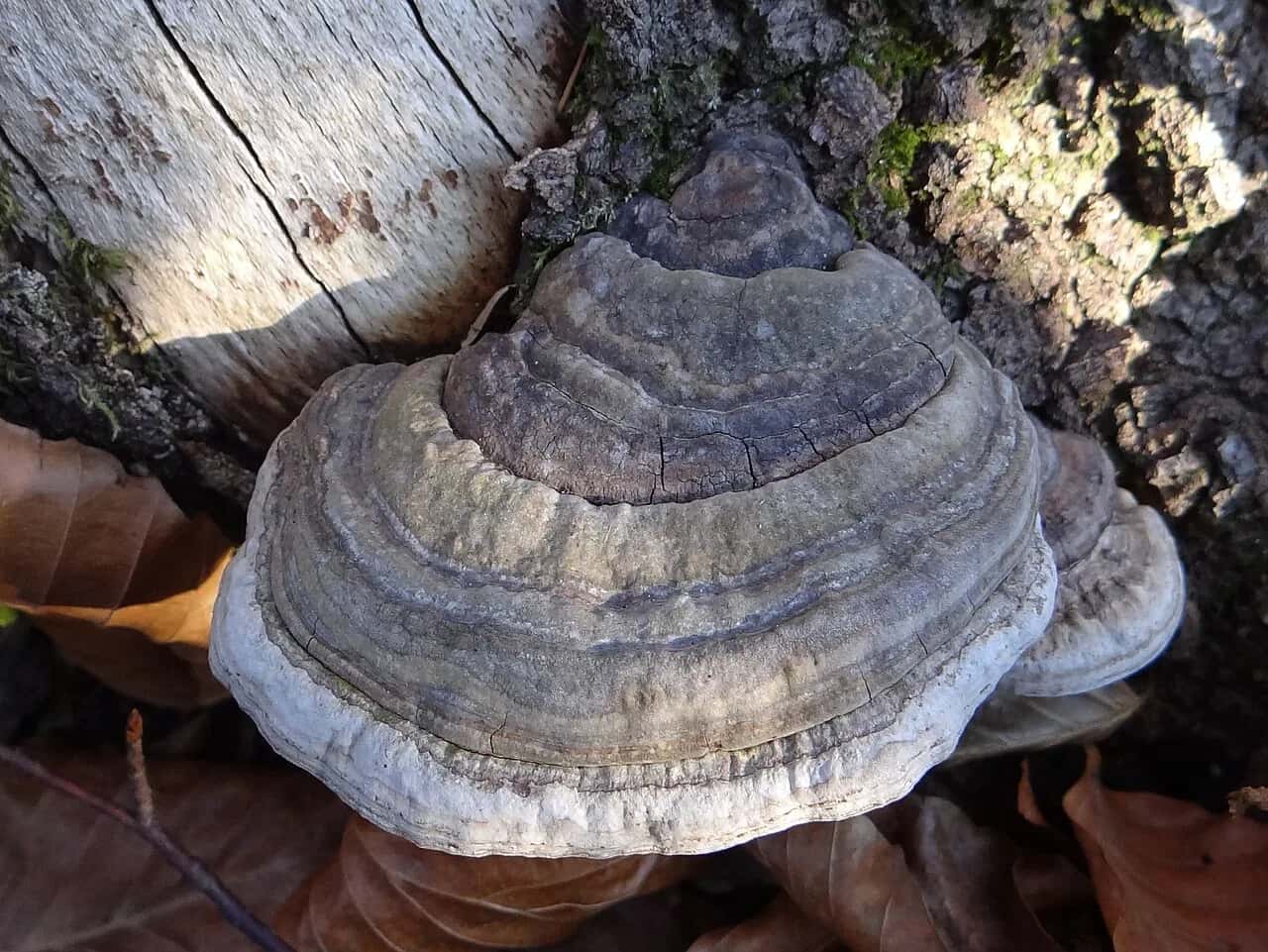
Seen from the side, it looks like a horse’s hoof fastened to a tree. From above you see an ash-gray, ridged crust. Underneath are thousands of tiny openings. A tinder fungus (Fomes fomentarius) can keep its bracket on the trunk for years, long enough for generations of small animals to live inside.
People found a use for the soft layer hidden under that shell. Fashioned into tinder, it could catch a spark and carry a glowing ember. In Poland the fungus has a history stretching from a peat deposit near Kraków to the church door on Holy Saturday. The evidence from those two places tells different parts of the story.
What is happening in the wood behind the hoof?
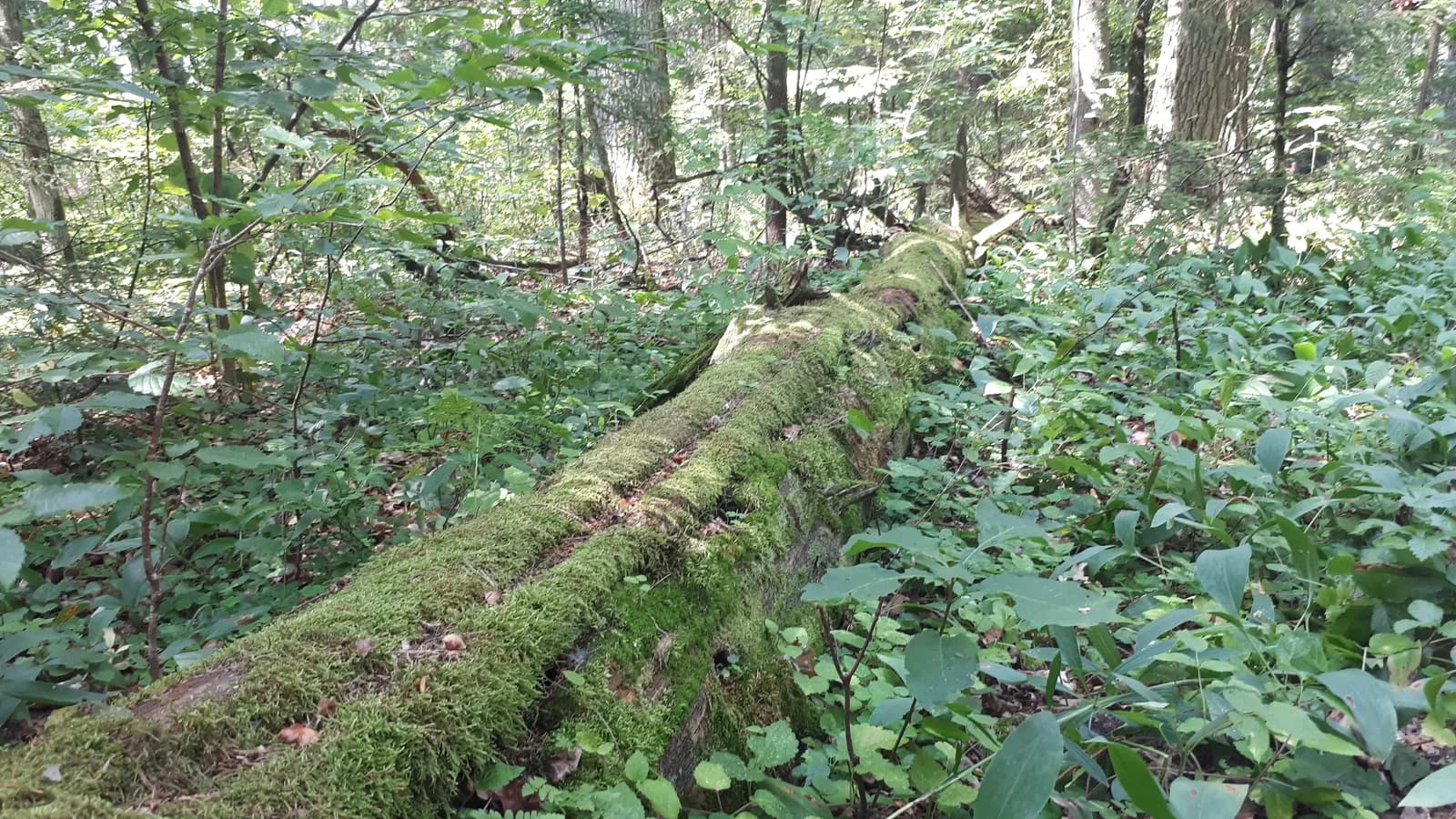
On a weakened beech or birch, the bracket is the part of the fungus you can see from a distance. Inside the trunk, fungal threads break down the wood, including its cellulose and lignin. Foresters call this process white rot. When the tree falls, the fungus can go on feeding on the dead wood for years.
Sometimes the bracket itself records the fall. The old part faces sideways, turned along with the trunk, while fresh growth takes a new direction. The spore-bearing tubes once again open toward the ground. That bend tells you something about what happened to the tree. The ridges on the crust are harder to read because several bursts of growth can occur in a single year.
How can a woody bracket yield something as soft as suede?
A cross section reveals three parts. First there is the hard outer crust, then a light, fibrous middle layer. Below that are parallel tubes whose openings dot the underside. The yellow-brown flesh in the middle was the part craftspeople worked into amadou, a suede-like material supple enough for hats and gloves.
In 2023 materials researchers examined the layers using microscopy and X-ray tomography. All three are built from fungal threads called hyphae. In the crust the threads are tightly bound together. In the soft middle they form a looser mesh, and below it they make up the tube walls. Someone selecting the flesh for tinder was picking out one of three materials grown by a single fungus.
Who lives inside a tinder bracket?
Researchers collected 20 brackets apiece from Białowieża, Bieszczady and Karkonosze national parks. From those 60 brackets they recovered 9,821 invertebrates belonging to 204 species. The inhabitants included spiders, pseudoscorpions and springtails. The most numerous group of all were tiny creatures called oribatid mites.
The oribatid mites alone accounted for 106 species. One of them, Carabodes femoralis, made up more than half of all the animals counted. The woodlands differed, too. Brackets from the Bieszczady Mountains yielded 115 species, the highest total in the study. The Karkonosze sample yielded 88, the lowest. Two gray brackets that look much the same can shelter quite different communities.
What did the peat preserve at Podłęże?
At the edge of a former settlement at Podłęże near Kraków, archaeologists found two well-preserved brackets in peat. One was tinder fungus and the other a red-belted conk. The associated settlement layers date to the middle of the first millennium BC, in the Early Iron Age. The top of the tinder bracket showed signs that part of it had been detached.
Karol Dzięgielewski and his colleagues thought the location and the mark on the bracket pointed to human involvement. The host trees could have grown there too, since sparse riverside woodland could have spread over the bog in a drier period. The team considered tinder one possible use for the fragment. The mark alone cannot tell us what anyone eventually did with it.
How did an ember travel from church to kitchen?
In parts of Małopolska, families brought home fire blessed outside the church on Holy Saturday. Danuta Cetera, a curator at the Ethnographic Museum in Tarnów, recalled that people carried the ember home in a bracket fungus they had prepared beforehand. The fungus kept the ember alive for the walk, and the family lit the stove with it in the hope of a prosperous year.
The old Polish words tell us something precise about the custom but less about the species. Hubka was tinder, usually made from Fomes fomentarius, though other bracket fungi also served. A witness describing a huba ogniowa, a bracket for carrying fire, was naming an object by its use. Without a specimen, it is hard to assign a Latin name to the mushroom in any one family’s account.
Questions and answers
Can you tell the age of a tinder bracket from its ridges?
Counting the ridges gives no reliable age in years. A bracket lives for several years and can go through several periods of growth in a single season.
Which part of the fungus supplied the tinder?
The fibrous flesh between the outer crust and the tubes. It could be worked into a soft material that caught a spark.
Did researchers find 204 species in one bracket?
The count of 204 invertebrate species was for the entire sample of 60 brackets from three Polish national parks.
Sources
- Baltic Forestry, invertebrates in tinder fungus in Polish national parks (opens in a new tab)
- Swiss Federal Research Institute WSL, tinder fungus biology and wood decay (in French) (opens in a new tab)
- Pylkkänen et al. (2023), structure and properties of the three bracket layers (opens in a new tab)
- Dzięgielewski et al. (2021), brackets from Podłęże in the AGH University research catalogue (opens in a new tab)
- Andrzej Szczepkowski, bracket fungi in folk culture, Białowieża National Park (in Polish) (opens in a new tab)
- Tarnów Tourist Information Centre, curator Danuta Cetera on Holy Saturday customs (in Polish) (opens in a new tab)