The parasol mushroom, and the most common mistake Polish foragers make
A sliding ring and a base with no sac set the parasol apart from the death cap. The stem pattern is not enough, and young specimens are best left in the woods.
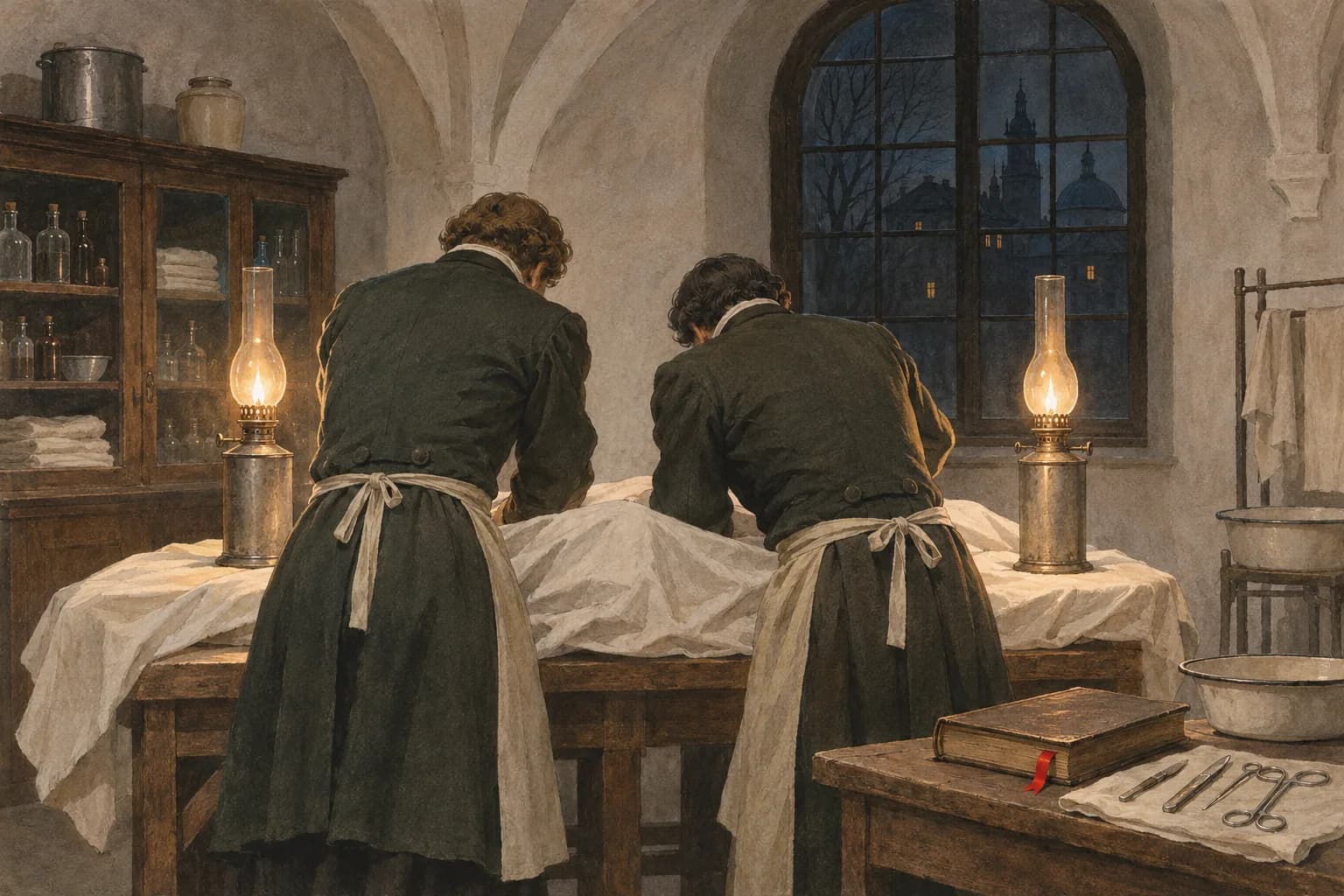
In 2005, 14 people poisoned by death caps were admitted to the toxicology clinic in Kraków. Two died. Doctors noted that most had picked the mushrooms as parasols or field mushrooms. Two years later, in another series of patients, almost one in three said they had been picking parasols.
The parasol mushroom, kania or czubajka kania in Polish (Macrolepiota procera), is one of the most prized wild mushrooms in Poland and one of the easiest to recognize when fully grown. The trouble starts with young specimens, which do not yet show the features that separate them from deadly Amanitas.
Here is how to recognize a parasol, which mushrooms it gets confused with, where and when to look, whether it can be sold, and what Polish research has found about metals in its caps.
What does a parasol mushroom look like?
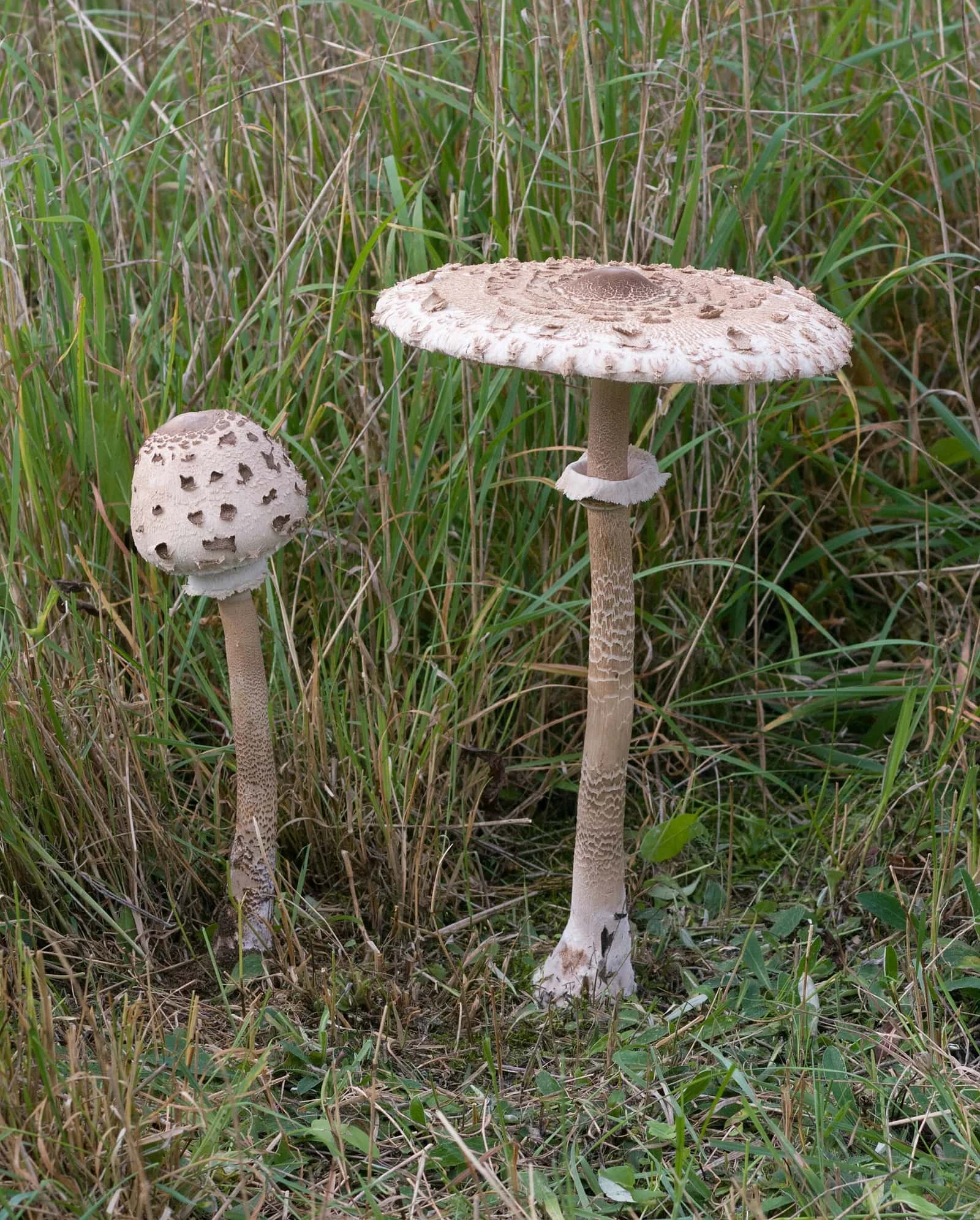
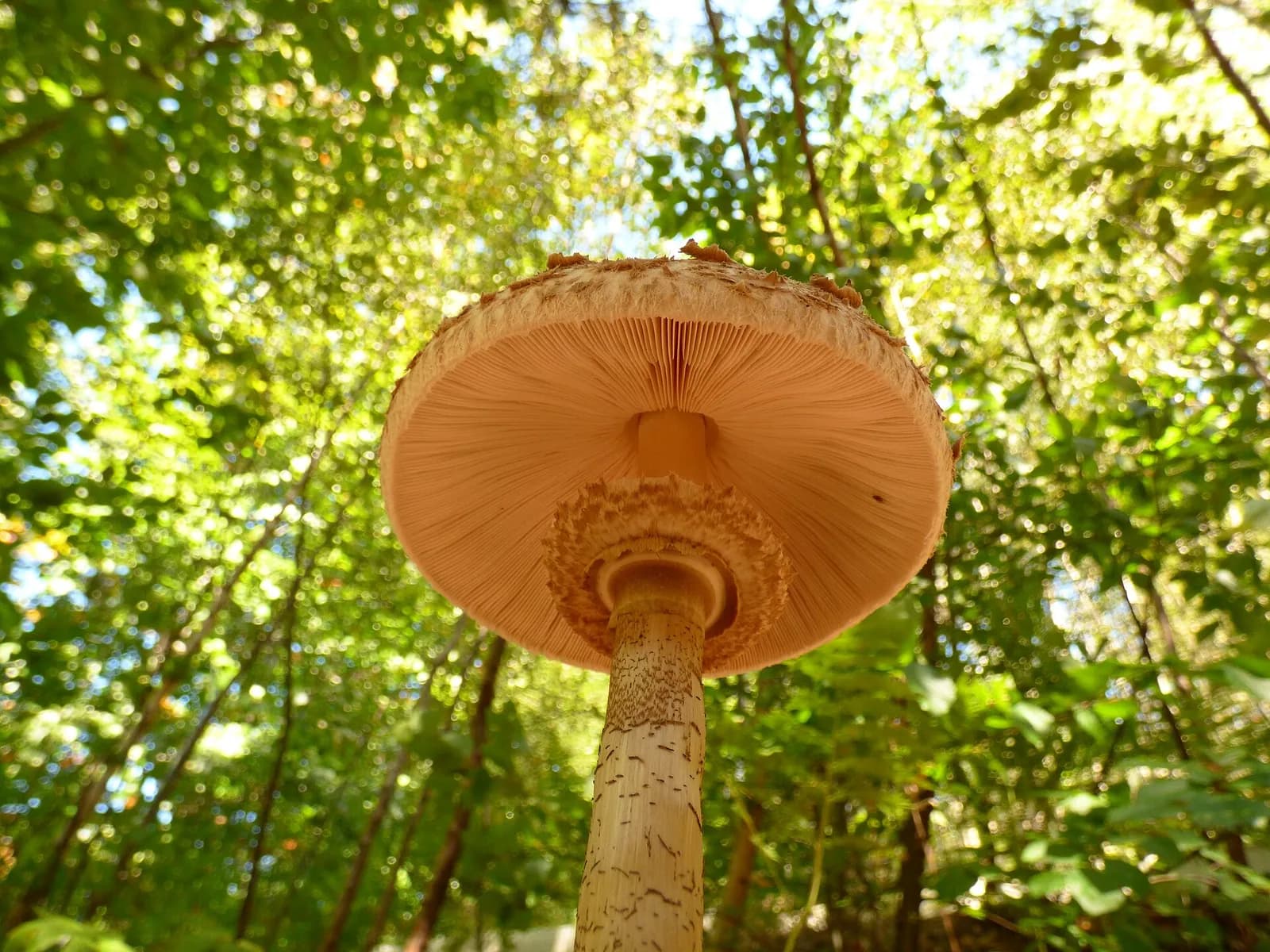
A mature parasol is big. The cap is usually 10–25 cm across, and the stem up to 30 cm tall and 1–1.5 cm thick. Young specimens have a closed cap; mature ones open out like an umbrella, with a bump in the middle. Grey-brown scales cover the surface.
Polish sanitary inspectors stress checking several features together, because none is enough on its own.
- cap with brown scales and a central bump
- gills white or cream, broad and free, not attached to the stem
- stem with a darker scaly pattern forming bands like snakeskin
- thick double ring that slides up and down the stem
- swollen, bulbous stem base with no sac (volva)
- white flesh that does not change color when cut
- white or very pale cream spore print
Parasol vs death cap: the ring and the sac
Polish sanitary inspectors name two features that settle the question in mature mushrooms. The parasol’s ring slides, and its bulbous base has no sac. The death cap’s ring is fixed to the stem, and the stem sits in a membranous sac. To check, you have to twist out the whole mushroom, base included.
The stem pattern does not help. The Poznań sanitary station describes the death cap’s stem as having “a zigzag pattern like snakeskin”, much like a parasol. The white destroying angels, in turn, are mistaken for young parasols. A feature-by-feature comparison is in our story on the death cap.
What happens if a death cap ends up in the basket instead?
The Gdańsk sanitary station points out that small, immature mushrooms have not yet developed the features used to identify adults. Young Amanitas can be wrapped in a white veil, and the white destroying angels are easily taken for young parasols. The Jasło station warns that a single medium-sized death cap can kill two people.
The poison gives no early warning. According to sanitary stations, the first symptoms appear after 6–24 hours, often only after 8–12. A false recovery lasting many hours follows, and death can come after 4–16 days. Cooking and drying do not destroy the toxins. Anyone who has vomiting or diarrhea after eating wild mushrooms should see a doctor at once and bring the leftovers.
Dapperlings and the shaggy parasol: lesser-known look-alikes
The second group of dangerous look-alikes are the dapperlings, small mushrooms of the genus Lepiota. Polish sanitary inspectors list them among the deadly poisonous species. They are confused with young parasols and contain the same toxin as the death cap. One example is the stinking dapperling (Lepiota cristata); the Polish medical site Medycyna Praktyczna names several other amatoxin-bearing Lepiota species.
The third look-alike is the shaggy parasol (Chlorophyllum rhacodes). Its stem lacks the snakeskin pattern, and its flesh turns red when cut. Polish sanitary stations tell it apart by gills that stain red. The British guide First Nature notes that it has caused serious illness in some people.
In Italy, doctors described a series of poisonings among people who believed they were eating parasols, or who ate mushrooms raw. The culprit turned out to be a relative, Chlorophyllum molybdites. It is one more reason not to eat any mushroom whose species you are not sure of.
Where and when does the parasol mushroom grow?
Parasols like light and warmth. They grow most often in clearings and grass at the forest edge, in open woodland, in meadows and in gardens. Polish researchers who collected them at 16 lowland sites describe the species as preferring light, warm places.
In the Polish forager’s calendar parasols are an autumn mushroom, picked alongside porcini, bay boletes and saffron milk caps. British guides give a season of July to November.
Can you eat and sell parasol mushrooms? Cap, stem and certificate
The parasol is edible, but only the cap is eaten. The stem is hard and fibrous. The Poznań sanitary station says so, and so does Jerzy Falandysz’s research team, which analyzed edible caps and inedible stems separately. Poland’s Ministry of Health also warns against eating mushrooms raw, as this can cause digestive upsets and poisoning.
The parasol is item 10 on Poland’s official list of mushrooms that may be sold, with no special conditions. Wild mushrooms, however, may be sold to consumers only in shops and at markets, with a certificate from a qualified mushroom inspector. Roadside sales do not meet these conditions.
How much heavy metal does the parasol accumulate?
The parasol has been studied for years by Jerzy Falandysz’s research team. In a 2012 paper they analyzed 141 fruit bodies from 11 sites in northern Poland. They found that cadmium, mercury and lead in the caps gave cause for concern for anyone eating 300–500 g of caps a day, frequently, throughout the season.
A 2017 paper, based on samples from 16 lowland sites, concluded that even in unpolluted areas the caps carry elevated levels of these metals, but that occasional meals are safe. The practical lesson: the parasol is a mushroom for an occasional meal, not for eating every day for weeks.
How to pick parasol mushrooms safely
The rules are simple, but they apply to every mushroom, not just the first one in the basket.
- pick only mature fruit bodies that show every feature: scaly cap with a bump, sliding ring and a base with no sac
- twist out the whole mushroom with the base of the stem; do not cut it off above the ground
- leave young, closed specimens and small look-alikes in the forest; they may be dapperlings or Amanitas
- do not eat parasols every day all season
- if in doubt, show your haul to a mushroom inspector at a sanitary station; checks for personal use are free
Questions and answers
How do you identify a parasol mushroom?
By its large cap with brown scales and a central bump, white free gills, a thick ring that slides on the stem and a bulbous base with no sac. The flesh is white and does not change color.
How is a parasol different from a death cap?
The parasol has a sliding ring and no sac at the base. The death cap has a ring fixed to the stem and a bulb in a membranous sac. Either can have a patterned stem.
Can you eat the stem of a parasol mushroom?
No. The stem is hard and fibrous; only the cap is eaten.
Can you eat parasol mushrooms raw?
Poland’s Ministry of Health warns that wild mushrooms should not be eaten raw, as this can cause digestive upsets and poisoning.
When is parasol mushroom season?
In Poland parasols are picked mainly in autumn. British guides give July to November.
Can parasol mushrooms be sold in Poland?
Yes, they are on the official list. Wild mushrooms may be sold only in shops and markets with a mushroom inspector’s certificate.
What can be mistaken for a parasol mushroom?
The death cap and white Amanitas, poisonous dapperlings (Lepiota), and the shaggy parasol, whose flesh turns red when cut.
Sources
- Poznań sanitary station: the most common mushroom mix-ups (in Polish) (opens in a new tab)
- Gomółka et al., death cap poisonings, Przegląd Lekarski (2010, in Polish) (opens in a new tab)
- Ministry of Health regulation on mushrooms allowed for sale, consolidated text 2026 (in Polish) (opens in a new tab)
- Chief Sanitary Inspectorate: poisonous mushrooms and their look-alikes (in Polish) (opens in a new tab)
- Sanitary inspection: deadly poisonous mushrooms, including dapperlings (in Polish) (opens in a new tab)
- Golub-Dobrzyń sanitary station: mushroom mix-ups (in Polish) (opens in a new tab)
- Medycyna Praktyczna: poisonous mushrooms (in Polish) (opens in a new tab)
- Groszek et al., death cap poisonings in 2005, Przegląd Lekarski (2006, in Polish) (opens in a new tab)
- Gucia, Falandysz et al., metals in parasol mushrooms from northern Poland, Environ Sci Pollut Res (2012) (opens in a new tab)
- Falandysz et al., cadmium, mercury and lead in parasol mushrooms, Environ Sci Pollut Res (2017) (opens in a new tab)
- First Nature: Macrolepiota procera (opens in a new tab)
- First Nature: Chlorophyllum rhacodes (opens in a new tab)
- M. Kuo, MushroomExpert: Macrolepiota procera (opens in a new tab)
- Annali dell’Istituto Superiore di Sanità (2022): Chlorophyllum molybdites poisonings in Italy (opens in a new tab)
- Ministry of Health: safe mushroom picking (in Polish) (opens in a new tab)