Poland’s great forests, from Tuchola to Białowieża
The Tuchola, Notecka, Knyszyn, Białowieża and Kampinos forests. None has an official boundary, which is why the same forest has different areas in different sources.
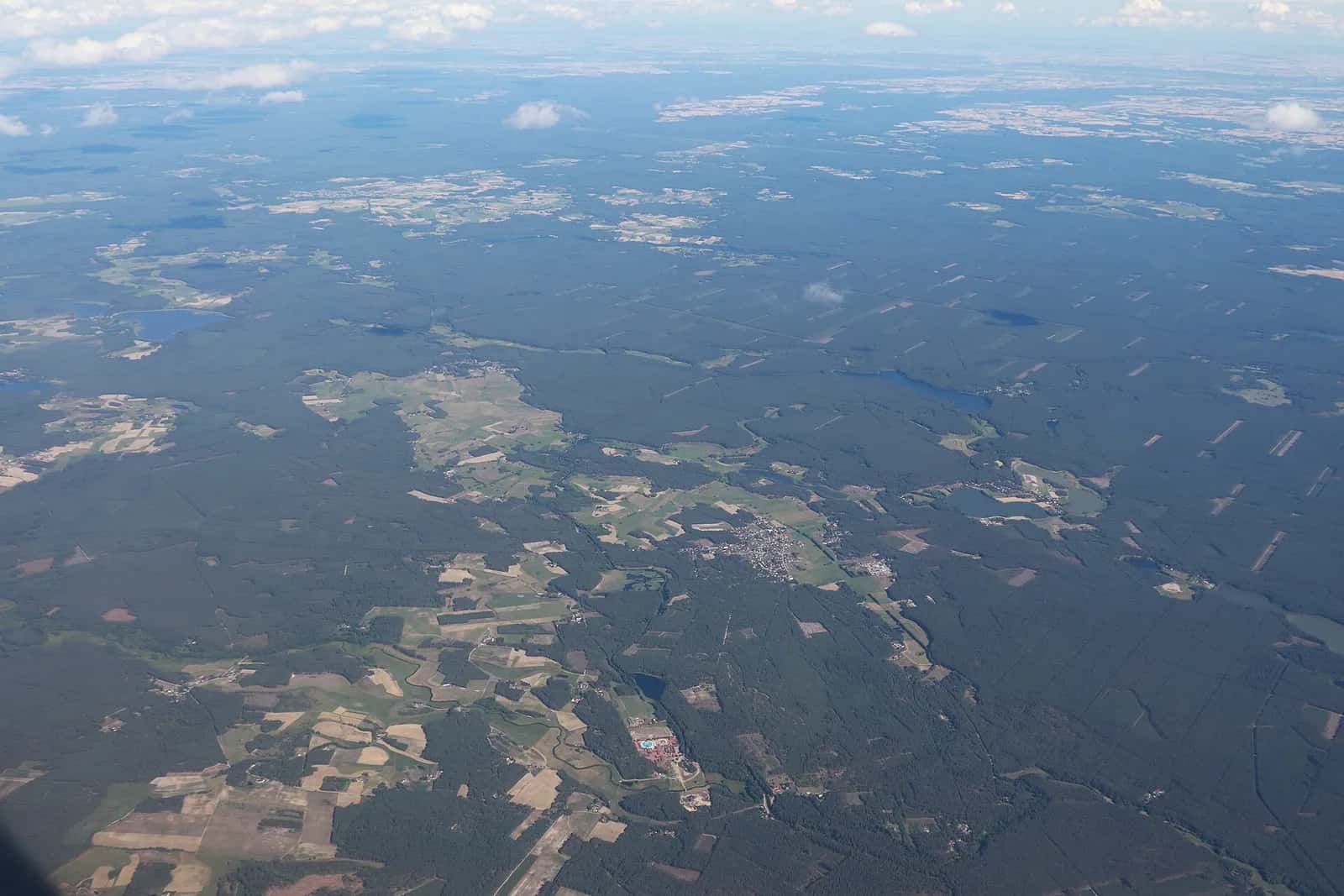
The standard Polish dictionary gives the word “puszcza” two meanings: a large forest with no trace of human activity, or simply a large wooded area. In the first sense Poland has almost none left. In the second it has dozens, from the Beech Forest outside Szczecin to the Białowieża Forest on the Belarusian border.
In 2021 the geographer R. Zielony counted 80 to 100 large forest areas in Poland, each over 100 km². Some are called puszcza, others bory (pine forests) or lasy (woods), with the second part of the name usually giving the location. None has an official boundary, which is why the same forest can have quite different areas in different sources.
Below are the largest and best-known of them, with figures from Statistics Poland and from Zielony’s peer-reviewed study. For each we say what a figure refers to: the whole forest, a national park or a Natura 2000 site.
What is a puszcza, and how many are there in Poland?
The word survives in place names whatever the forest looks like today. The Notecka Forest is 95% pine-dominated stands, while the Białowieża Forest keeps stretches where no tree has been felled since 1921.
Zielony notes that the names of large forests mostly have two parts. The first is puszcza, bory or lasy; the second names a river, town or region. The State Forests have never set official boundaries for these complexes, so published areas may refer to forest districts, national parks, landscape parks or Natura 2000 sites, and often come from surveys done in the 1960s and 1970s.
What is the largest forest in Poland? The Tuchola Forest
According to Zielony, the largest continuous forest area in Poland is the Tuchola Forest (Bory Tucholskie) in Pomerania and Kuyavia. The whole area covers about 5,700 km², of which 3,522 km² is forest. Pine dominates stands on 94% of the area.
Several layers of protection overlap here. Bory Tucholskie National Park covers 4,613 ha, surrounded by the Tuchola (36,769 ha), Zabory (34,026 ha), Wdzydze (17,832 ha) and Wda (19,177 ha) landscape parks. Since 2010 the area has been a UNESCO biosphere reserve of 410,500 ha, the largest in Poland, and its Natura 2000 bird area covers 322,536 ha.
The Notecka Forest: Poland’s most pine-dominated
Between the Noteć and Warta rivers in western Poland lies the Notecka Forest. It covers about 1,550 km², 1,226 km² of it forest. Zielony finds the highest share of pine-dominated stands of any Polish puszcza here: 95%.
The State Forests manage it as a 143,408 ha Promotional Forest Complex, and its Natura 2000 bird area covers 178,256 ha. It is one reason why Lubuskie province has the highest forest cover in Poland, 49.5%.
The eastern forests: Białowieża, Knyszyn and Augustów
Podlaskie province in the northeast holds three forests quite unlike the pine woods of the west. Zielony puts the Polish part of the Białowieża Forest at about 800 km², 602 km² of it forest. It is the most mixed of the big forests: pine dominates 28% of the area, spruce 25% and oak 14%. Białowieża National Park covers 10,517 ha, and the UNESCO site on both sides of the border 141,885 ha.
The Knyszyn Forest, between Białystok and Sokółka, covers about 1,690 km², including 1,080 km² of forest, and is 72% pine. It is protected as the Knyszyn Forest Landscape Park, 72,860 ha. At the end of 2025, according to preliminary park figures, 503 free-living European bison lived there.
The Augustów Forest runs across the borders into Belarus and Lithuania. Its Natura 2000 bird area covers 134,378 ha and its habitat site 107,069 ha. Part of it lies in Wigry National Park (15,091 ha). In 2018 seven bison from the Borecka Forest were released here to found a new free-living herd.
The Kampinos Forest: a puszcza on Warsaw’s doorstep
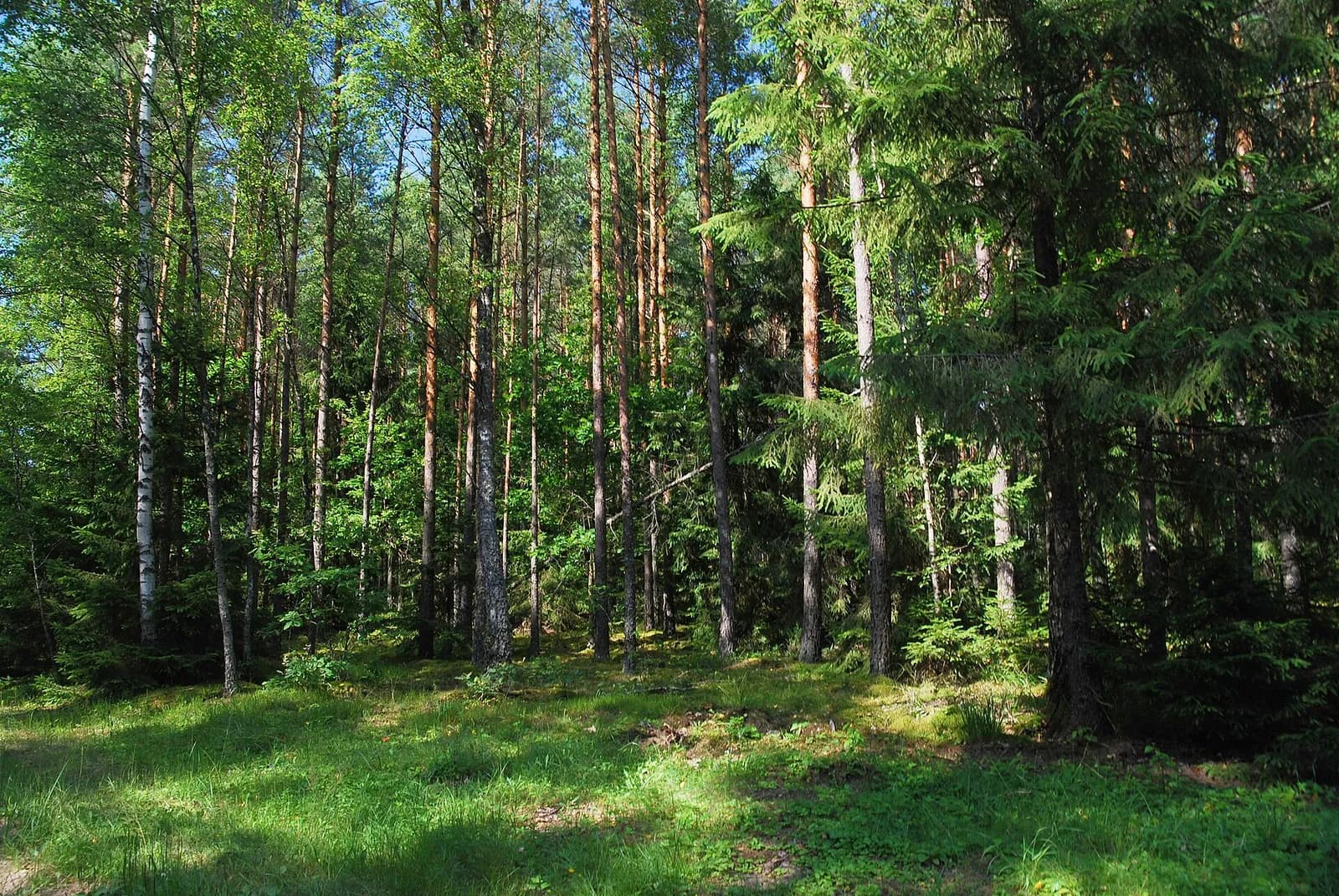
The Kampinos Forest begins just beyond the Warsaw city limits. Depending on where you draw its boundary, it covers 520 to 770 km². Pine dominates 70% of the forest.
Kampinos National Park covers 38,544 ha. Since 2000 the forest has been a UNESCO biosphere reserve of 70,604 ha, and its Natura 2000 site covers 37,640 ha.
Other Polish forests, from Pisz to the Beech Forest
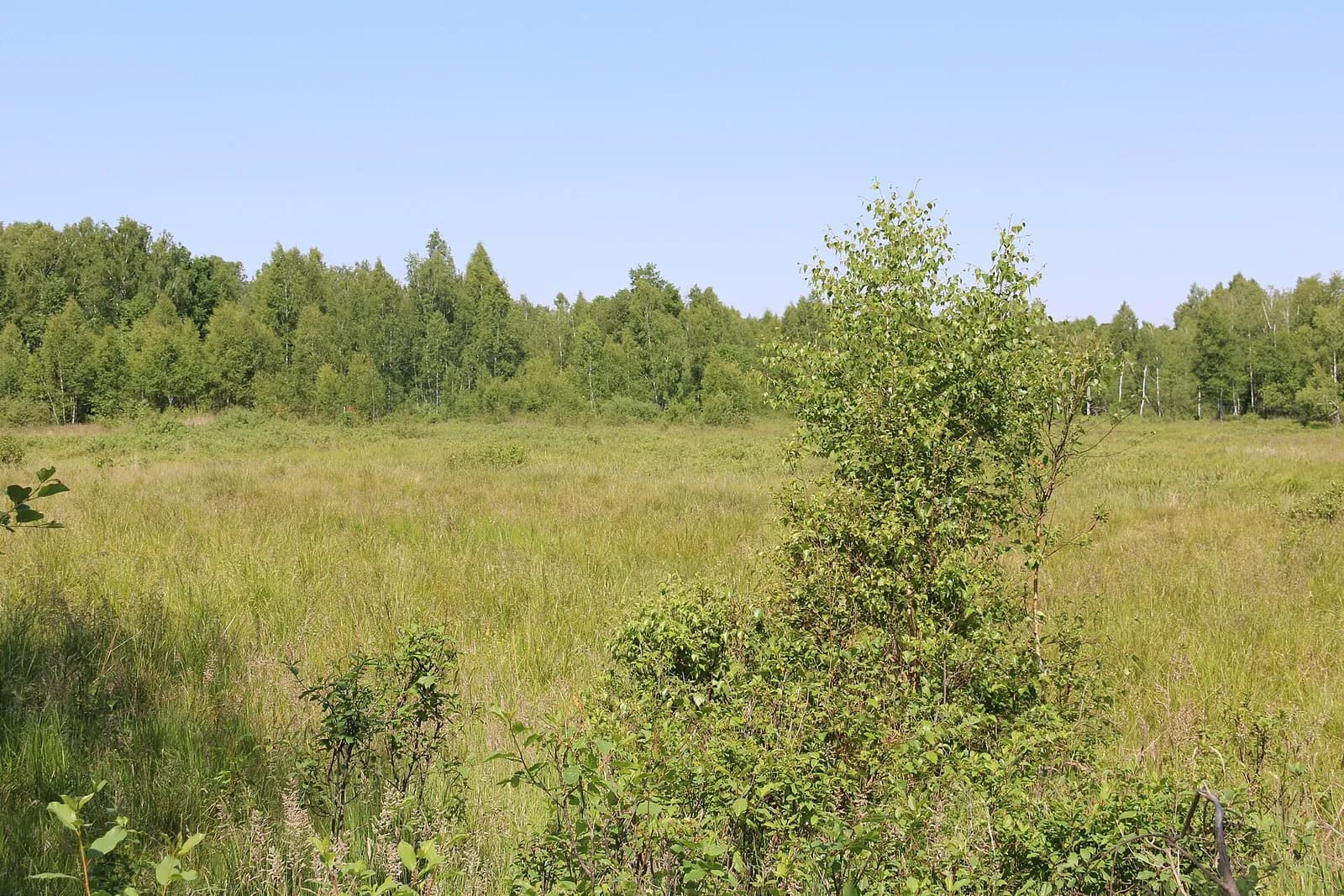
The remaining large forests are less famous but also protected. For each one below we give an area that has an official size: a national park, a landscape park, a Natura 2000 site or a State Forests Promotional Forest Complex.
- Lower Silesian Forest (Bory Dolnośląskie): Natura 2000 bird area 172,093 ha
- Pisz Forest (Masuria): Natura 2000 bird area 172,802 ha; Masurian Landscape Park 56,258 ha
- Drawa Forest (West Pomerania and neighbors): Drawa National Park 11,342 ha; bird area 190,279 ha
- Sandomierz Forest: Natura 2000 bird area 129,304 ha
- Solska Forest (Lublin and Podkarpackie): landscape park 28,895 ha, part of the Roztocze biosphere reserve
- Świętokrzyska Forest: Promotional Forest Complex 77,187 ha; Świętokrzyski National Park 7,695 ha
- Kozienice Forest: landscape park 26,234 ha; Promotional Forest Complex 30,408 ha
- Romincka Forest: about 160 km², matching its landscape park (14,865 ha); spruce dominates 46% of it
- Niepołomice Forest near Kraków: Promotional Forest Complex 10,978 ha
- Beech Forest (Puszcza Bukowa) near Szczecin: landscape park 9,096 ha
Why do forest areas differ from source to source?
Take Białowieża. The national park gives the Polish part of the forest as 62,500 ha. Zielony gives about 800 km², or 80,000 ha, of which forest covers 602 km². The UNESCO site in Poland covers 59,576 ha and the Natura 2000 site 63,148 ha. All of these are correct; they simply describe different boundaries: the geographical area, the forest itself, or the land under a particular kind of protection.
When comparing forests, compare like with like. In this story the figures for whole forests come from Zielony, who measured them all with one method, and the figures for protected areas come from Statistics Poland’s 2025 environment report and forestry yearbook.
Visiting Polish forests: the rules in brief
Most of these forests are state-owned and, under the Forest Act, open to everyone. You can walk, cycle on forest roads, pick mushrooms for your own use and, in designated areas, sleep in the woods under the “Zanocuj w lesie” program. National parks and nature reserves have stricter rules: stay on marked trails, and do not pick mushrooms except where the park director allows it.
Before you go, check the State Forests’ map of temporary closures, since forest districts close woods when the fire risk is high or after storms. For ancient trees worth a detour, see our story on the oldest trees in Poland.
Questions and answers
What does puszcza mean?
A large forest with no trace of human activity or, more loosely, any large wooded area. In place names the word survives whatever the forest looks like today.
What is the largest forest in Poland?
The Tuchola Forest (Bory Tucholskie): about 5,700 km², including 3,522 km² of forest. Among forests called puszcza, the Notecka and Knyszyn forests are the largest.
How many primeval forests are there in Poland?
There is no official list. The geographer R. Zielony counts 80–100 large forest areas of more than 100 km²; some are called puszcza, others bory or lasy. Only parts of Białowieża keep a truly natural character.
Which forest is next to Warsaw?
The Kampinos Forest. Kampinos National Park covers 38,544 ha, and the forest has been a UNESCO biosphere reserve since 2000.
Which Polish forests have European bison?
Free-living herds live in the Białowieża, Knyszyn, Borecka, Augustów and Romincka forests, as well as in the Bieszczady, the Janów Forests and several places in western Poland.
Why do sources give different areas for the same forest?
Polish forests have no official boundaries. Figures may describe the whole area, the forest itself, a national park or a Natura 2000 site.
Sources
- R. Zielony, Large forest areas in Poland, Przegląd Geograficzny (2021, in Polish) (opens in a new tab)
- Statistics Poland: Environment 2025 (in Polish) (opens in a new tab)
- Statistics Poland: Statistical Yearbook of Forestry 2025 (opens in a new tab)
- PWN Polish dictionary: puszcza (opens in a new tab)
- Ministry of Climate and Environment: Białowieża Forest on the UNESCO list (in Polish) (opens in a new tab)
- Białowieża National Park: natural values (in Polish) (opens in a new tab)
- Białowieża National Park: bison from A to Z (in Polish) (opens in a new tab)
- Ministry of Climate and Environment: new bison herd in the Augustów Forest (in Polish) (opens in a new tab)
- Nature Conservation Act, consolidated text 2026 (in Polish) (opens in a new tab)
- State Forests map of temporary entry bans (opens in a new tab)