The Kraków ring bread once baked only in Lent
The earliest record of Kraków’s ring bread is in Queen Jadwiga’s accounts. For centuries only chosen bakers could make it, and from 1802 they drew lots for the right.
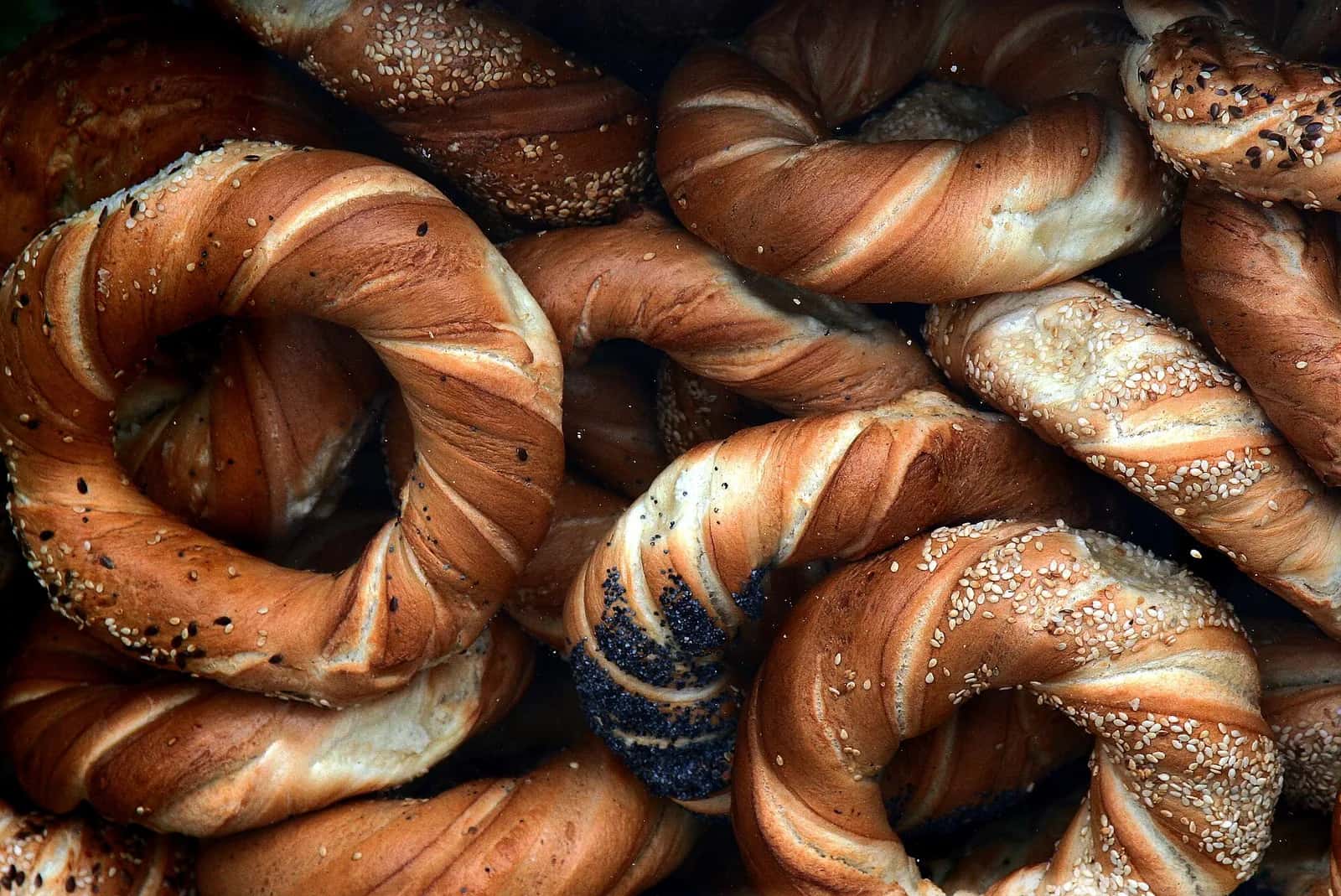
The accounts of King Władysław Jagiełło and Queen Jadwiga record a small purchase on March 2, 1394: one grosz for obwarzanki for the queen. It is the earliest known mention of Kraków’s ring bread. More than six centuries later, the same bread is sold from street carts all over central Kraków.
An obwarzanek krakowski is a ring twisted from two or three ropes of dough and dipped in hot water before baking. The name comes from that dip: obwarzać means to scald. Since 2010 it has been a Protected Geographical Indication in the European Union, which means a genuine one must be made in Kraków or in the neighboring counties of Kraków and Wieliczka.
For centuries not every baker was allowed to make it. Obwarzanki could be baked only in Lent, then only by appointed masters, and from 1802 by bakers chosen by drawing lots. Today a handful of Kraków bakeries hold the certificate.
What is an obwarzanek krakowski?
The specification registered in the EU is precise. The ring is oval with a hole in the middle, less often a perfect circle. It measures 12–17 cm (about 5–7 inches) across, the twist is 2–4 cm thick, and it weighs 80–120 g (3–4 oz). Its surface is made of spiral-twisted ropes of dough, round or oval in cross-section.
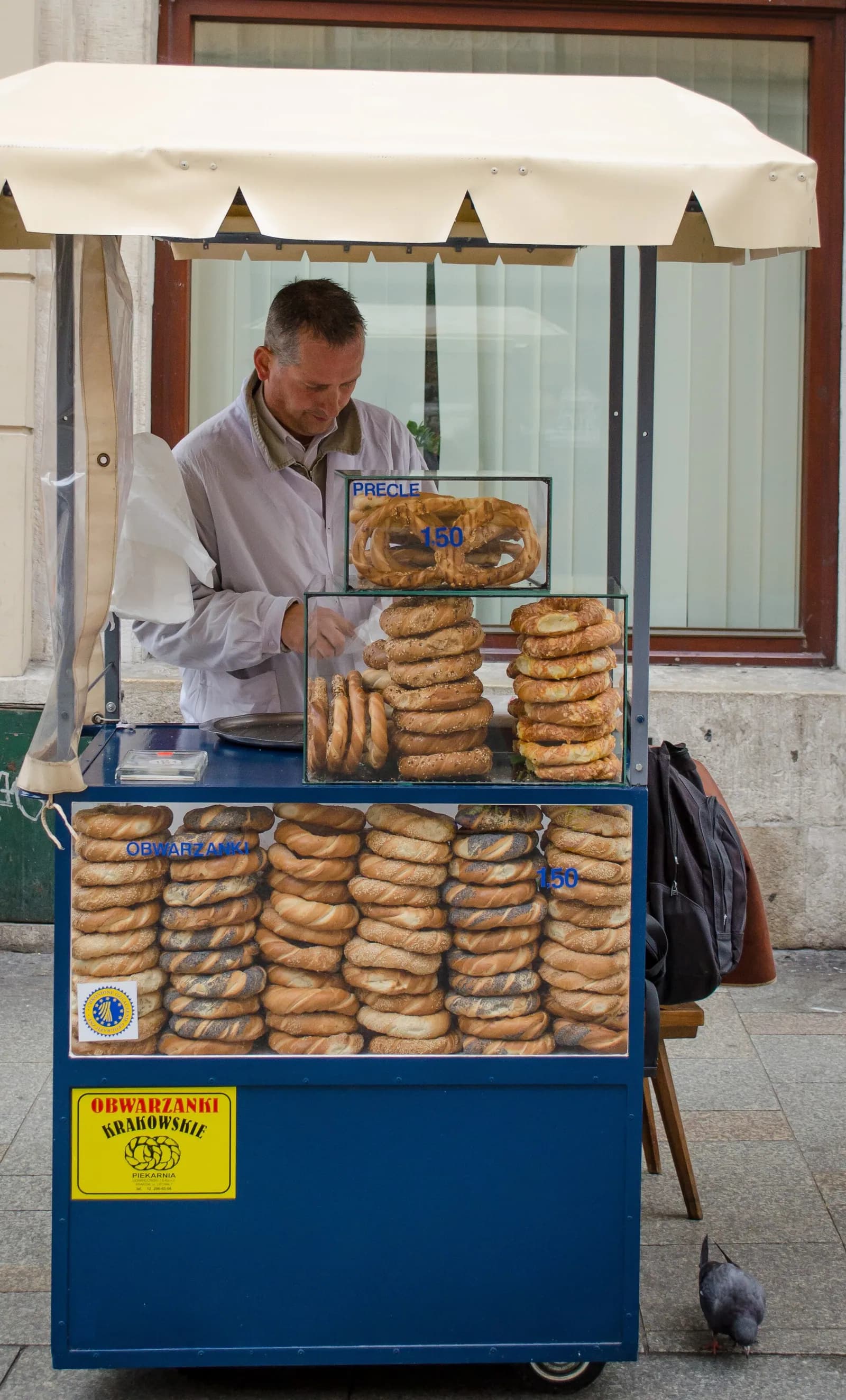
The color runs from light gold to dark gold and light brown, with a clear shine. The crust is crisp and the crumb pale, soft and slightly moist. The taste is mildly sweet, typical of bread scalded in water before baking. Toppings may include salt, sesame, poppy seeds, nigella, herbs, paprika, caraway, pepper, cheese or onion, and the specification allows others.
An obwarzanek stays fresh for only a few hours, which is why it reaches the sellers still warm. It may be sold without packaging or a label. Only cooled rings may be bagged, because a warm one sealed in plastic loses its crunch and turns rubbery.
How is an obwarzanek made?
The base is wheat flour, and up to 30% of it may be rye. For every 100 kg of flour the recipe calls for 2–3 kg of fat, 2–4 kg of sugar, 1–2 kg of yeast, 1–1.5 kg of salt and 40–48 liters of water. A baker may add a trace of honey to the boiling water.
The dough is mixed in a single stage. It rises for a few minutes in summer and up to an hour in winter. It is then cut into small pieces, rolled and cut into ropes that bakers call sulki. Two or three of these are twisted together, wound around the hand into a ring and pressed against the table. Shaping by hand means every ring comes out slightly different.
All five stages, from dough to oven, must take place inside the defined area. Together they are what makes an obwarzanek more than a round bread roll.
- A yeast dough of wheat flour, with up to 30% rye flour.
- Shaping: two or three ropes twisted into a spiral and coiled into a ring.
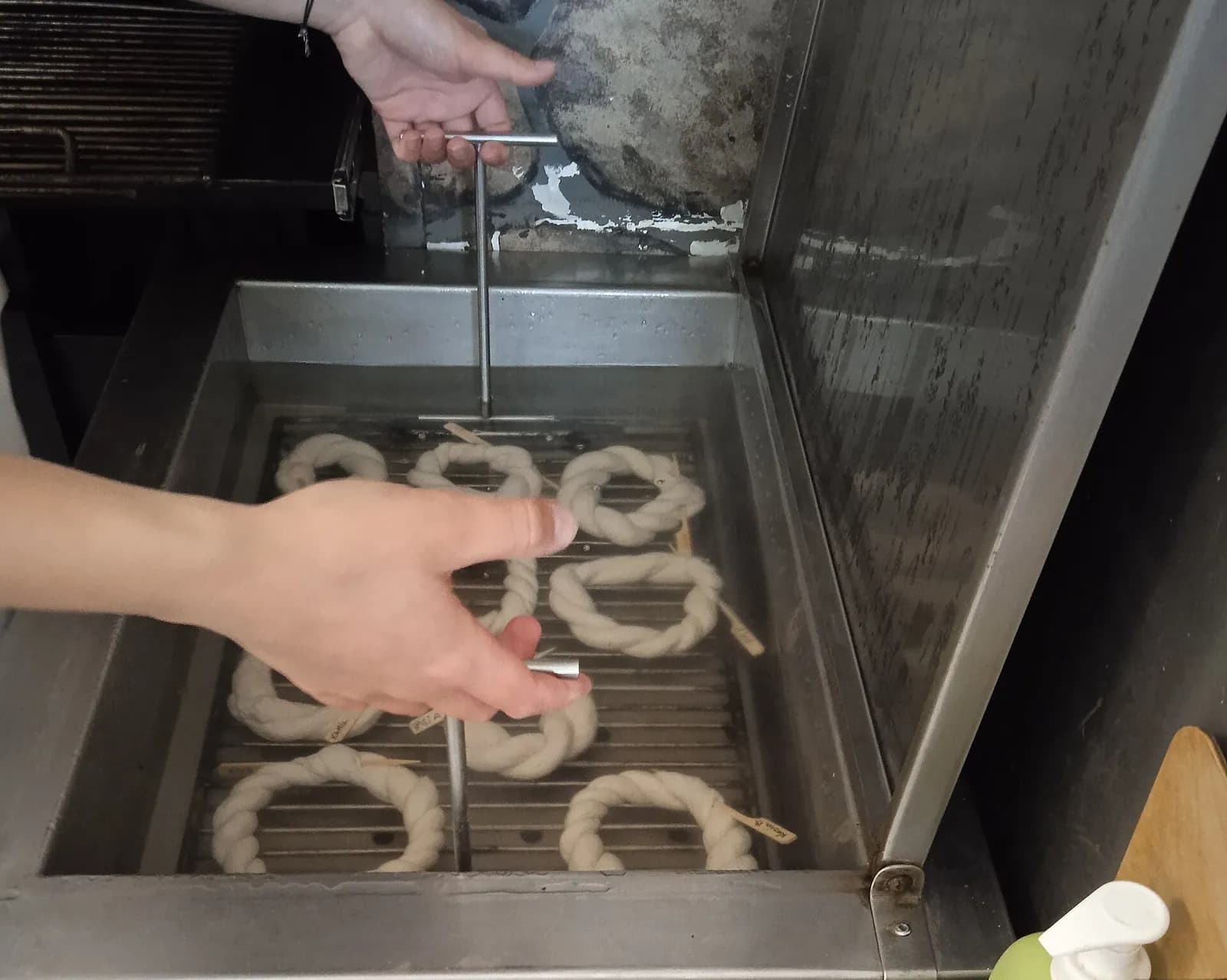
- Scalding: the raw ring goes into water of at least 90°C (194°F) and stays there until it floats.
- Topping: the wet ring is rolled in seeds or salt by hand.
- Baking at 250–320°C (480–610°F) for 10–17 minutes, until it has the right color and size.
Where does the name obwarzanek come from?
The name describes the method. Obwarzać means to scald, to dip briefly in hot water. The Old Polish dictionary quoted in the registration file defines the obwarzanek as a rope of dough curled into a ring, “probably scalded before baking”.
In the city’s Latin documents obwarzanki are circuli or circinelli, little circles. The first word appears in the royal accounts of 1394. The second appears in King Jan Olbracht’s privilege of 1496 and in a city council resolution of 1529, which demanded that obwarzanki be “always fresh, beautiful and tasty”.
Who was allowed to bake obwarzanki in old Kraków?
Bakers worked in Kraków from the founding of the chartered city. In the charter of 1257 Duke Bolesław the Chaste allowed the city’s reeves to build bakers’ stalls. In 1458 the city council approved the articles of the bakers’ guild, which set rules for the quality of bread, the size of ovens and the conduct of masters.
King Jan Olbracht’s privilege of May 26, 1496, forbade anyone who did not live inside the city to bake white bread, obwarzanki included. Later kings confirmed it up to Jan III Sobieski. Baking was also seasonal. Obwarzanki could be made only in Lent, by bakers appointed by the guild, and a guild resolution of 1611 gave the guild full control over who baked and sold them.
Exceptions came slowly. In 1720 the guild allowed one baker, Stanisław Gościejowic, to bake obwarzanki outside Lent for the first time, and only on Fridays. From January 22, 1802, every master of the guild could take a turn, with the order decided by drawing lots. The last recorded draw, held in 1843, was to run until 1849. After that the draws disappear from the records.
The guild watched more than the ovens. It sent eight members to inspect the stalls, which opened before 6 a.m. From the mid-16th century the bakers also defended the New Gate at the end of today’s Sienna Street and kept weapons there.
How many obwarzanki does Kraków eat?
Figures gathered for the registration file from 13 producers, around 2006, put weekday sales in Kraków at close to 150,000 rings a day. Sales dropped at weekends and on holidays and rose in spring and autumn. We have not found a more recent official count.
As late as the 1950s obwarzanki were sold from wicker baskets. Then came the familiar street carts. There were 180 outlets in 2000 and 133 in 2003, and the 2010 registration document counted about 170–180 carts. In 2018 the city tested new cart designs chosen in a competition, starting with three on the streets.
How can you tell a certified obwarzanek? The city advises looking for stalls with a blue sticker showing the EU’s Protected Geographical Indication logo. The second clue is underneath: lengthwise marks from the rack it was baked on.
What does EU protection mean for the obwarzanek?
The obwarzanek krakowski entered the EU register under Commission Regulation (EU) No 977/2010 of October 29, 2010. The application came from a group of Kraków bakers organized through the Jurajska Chamber of Commerce in Zabierzów. Before that, on November 28, 2006, the bread was added to Poland’s national List of Traditional Products.
The production area is the city of Kraków and the counties of Kraków and Wieliczka. The specification also points to salt: Wieliczka county is home to the salt mine that supplied the region’s bakers for centuries. Poland’s Agricultural and Food Quality Inspection (IJHARS) checks compliance, inspecting a bakery once a year for its first two years and, if all is well, every two years after that.
The number of certified bakeries has been falling. When the application was prepared, 13 bakers in and around Kraków made obwarzanki. In 2020 the city listed eight certified bakeries, and the IJHARS register updated on November 9, 2026, names six producers.
Two official descriptions differ on weight. The List of Traditional Products gives 120–200 g and a thickness of 3–4 cm. The EU specification, which decides who may use the name, says 80–120 g.
How is an obwarzanek different from a bagel or a pretzel?
All three are boiled before baking, but they are different breads. A pretzel is usually shaped like a figure eight and keeps longer. A bagel is softer and puffier. An obwarzanek is best on the day it is baked, and its surface is made of twisted ropes of dough.
Kraków also has a place in the bagel’s story. According to the city’s culinary portal, the first printed mention of the word bajgiel appears in Kraków city documents of 1610. The portal adds that bagels were given to women after childbirth.
Where can you learn to make obwarzanki?
Since 2017 the Living Obwarzanek Museum (Żywe Muzeum Obwarzanka) has run workshops at 4 Paderewskiego Street, near the Stary Kleparz market. A visit is an hour-long session, also available in English: first the history, then twisting the dough yourself. Everyone leaves with their own obwarzanek and an “obwarzanek journeyman” diploma.
Since 2018 the Obwarzanek Festival has been held on the Small Market Square (Mały Rynek). Obwarzanek Day has been marked in June since 2023, and in 2025 a restored historic obwarzanek booth went on show in the hall of the Krzysztofory Palace for the occasion.
Timeline
- 1257Kraków’s town charter mentions bakers’ stalls.
- March 2, 1394Royal accounts record obwarzanki for Queen Jadwiga at one grosz.
- 1458The city council approves the articles of the bakers’ guild.
- May 26, 1496Jan Olbracht’s privilege: only city bakers may bake white bread and obwarzanki.
- 1611A guild resolution puts the guild in charge of baking and selling obwarzanki.
- 1720One baker is first allowed to bake them outside Lent, on Fridays.
- 1802Guild masters begin drawing lots for the right to bake.
- 2006The obwarzanek joins Poland’s List of Traditional Products.
- 2010EU Protected Geographical Indication.
- 2023The first official Obwarzanek Day.
Practical info
- Where
- Carts and booths across central Kraków. Workshops: Living Obwarzanek Museum, 4 Paderewskiego Street, by the Stary Kleparz market.
- Best time
- In the morning, when the rings are fresh. They stay crisp for only a few hours.
- On site
- Look for the blue sticker with the EU Protected Geographical Indication logo, and rack marks on the underside.
- Tickets
- Workshop times and prices are on muzeumobwarzanka.com.
Questions and answers
How much does an obwarzanek krakowski weigh?
Between 80 and 120 g (3–4 oz). It is 12–17 cm across, and the twist is 2–4 cm thick, according to the EU specification.
Is an obwarzanek a bagel?
No, though both are boiled before baking. An obwarzanek is twisted from two or three ropes of dough and is best on the day it is baked. A bagel is puffier.
Why is an obwarzanek boiled?
Scalding in water of at least 90°C is a required step in the specification. It gives the bread the taste typical of scalded and baked dough, and after baking a crisp, shiny crust with a soft inside. The name comes from that scalding, obwarzanie.
When did the obwarzanek krakowski get EU protection?
In 2010. Commission Regulation (EU) No 977/2010 of October 29, 2010, entered it in the register of Protected Geographical Indications.
Where can obwarzanek krakowski be made?
In the city of Kraków and in Kraków and Wieliczka counties. Every stage, from mixing the dough to baking, must happen there.
How long does an obwarzanek stay fresh?
A few hours. That is why bakeries deliver them to the carts while still warm, and only cooled rings may be packed in bags.
Sources
- Commission Regulation (EU) No 977/2010 (Obwarzanek krakowski PGI) (opens in a new tab)
- Official Journal of the EU C 38, February 16, 2010: the Obwarzanek krakowski single document (PDF, in Polish) (opens in a new tab)
- Product specification: Obwarzanek krakowski (English translation) (opens in a new tab)
- Polish Ministry of Agriculture, List of Traditional Products: obwarzanek krakowski (in Polish) (opens in a new tab)
- IJHARS, register of PDO, PGI and TSG producers (in Polish) (opens in a new tab)
- City of Kraków: the obwarzanek’s tenth anniversary in the EU register (2020, in Polish) (opens in a new tab)
- Culinary Kraków: a melting pot of cultures (PDF, in Polish) (opens in a new tab)
- Radio Kraków: Obwarzanek Day (2025, in Polish) (opens in a new tab)
- Visit Małopolska: the Living Obwarzanek Museum (opens in a new tab)