The silk that stopped bullets
In 1897 a Polish monk in Chicago patented a silk fabric that revolver bullets could not pierce. Jan Szczepanik taught machines to weave it. Then each claimed the invention as his own.
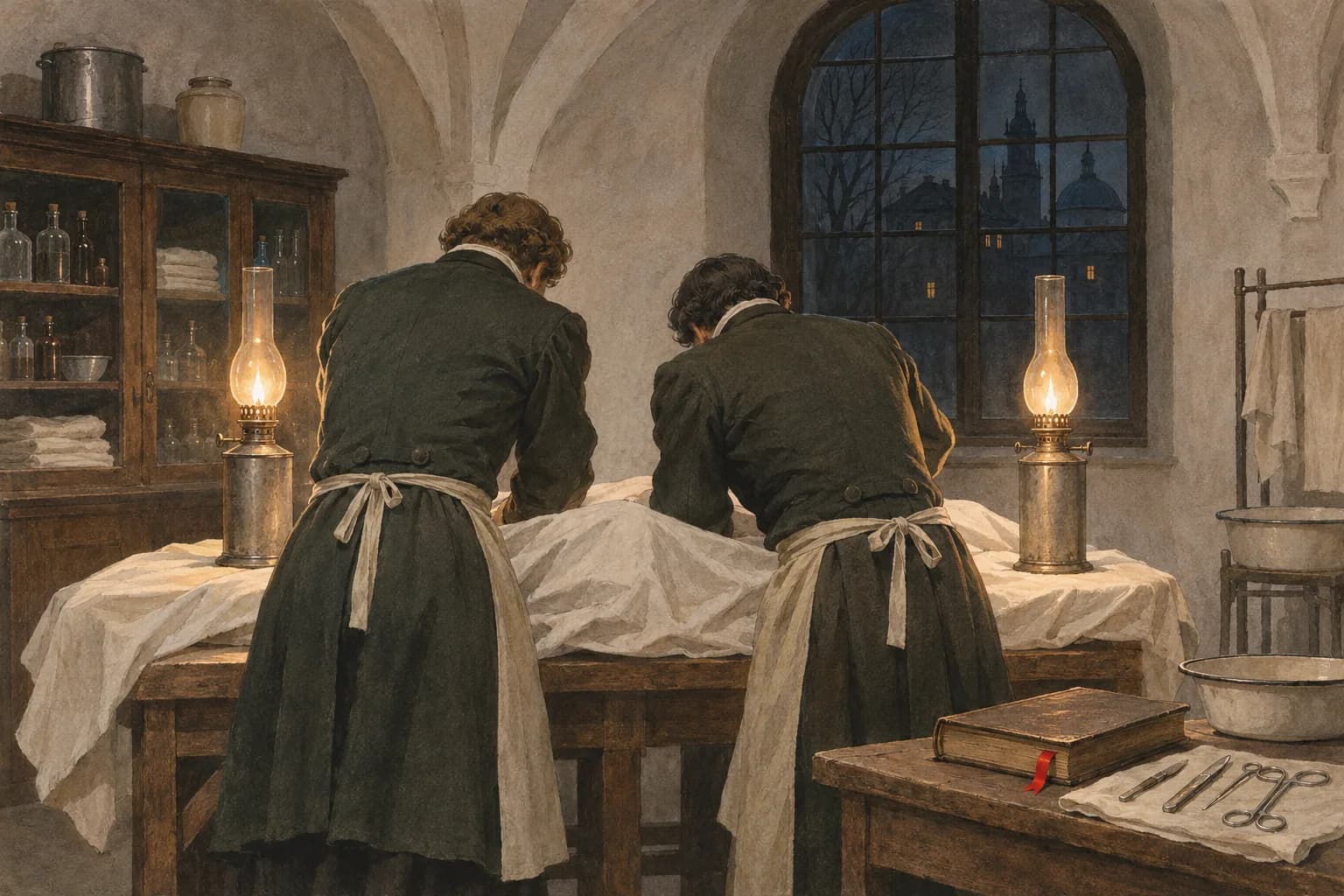
On the evening of June 4, 1897, professors and army officers in Chicago watched an unusual experiment. A woman’s corpse was wrapped in a fabric of silk cords and shot with revolvers. Thirty .44-caliber bullets, fired from 3 to 15 paces, failed to go through. The post-mortem still found two broken ribs.
The fabric was the work of Kazimierz Żegleń, known in America as Casimir Zeglen, a Polish religious brother of the Resurrectionist order in Chicago. He had received US patents for it a few months earlier. At the end of 1897 he went to Europe and hired Jan Szczepanik of Tarnów, an inventor later known as the “Polish Edison”. Before long each man said the bulletproof vest was his.
This story runs from the patents and press reports of 1897, through a demonstration in Vienna in 1901 and the myth that a Polish vest saved the King of Spain, to Kevlar, discovered by the daughter of Polish immigrants.
Who invented the bulletproof vest?
According to the biography of Szczepanik published by Poland’s Institute of National Remembrance (IPN), the idea was Żegleń’s, and he had been working on it since 1893. In spring 1897, with his patents granted, he began public demonstrations. Only around the turn of 1897 and 1898, in Europe, did he hire Szczepanik for a monthly fee to improve the fabric and find a way to weave it by machine.
Szczepanik tried to buy Żegleń’s patents. When Żegleń refused outright, Szczepanik began exhibiting and selling the vest under his own name, and the partnership ended. A Kraków weekly in 1901 presented Szczepanik as the true inventor and wrote that nothing was left of Żegleń’s efforts “except the raw silk”.
Silk armor was not entirely new. A Lviv trade journal reminded readers in 1902 that in 1894 Heinrich Dowe from Westphalia had made a silk-and-cement armor 5 cm thick and weighing 2 kg, which the German army tested.
What did Casimir Zeglen patent?
On March 2, 1897, Casimir Zeglen “of Chicago”, as the documents put it, received two US patents for bulletproof fabric, numbers 577,999 and 578,000. Both were split off from an application filed on April 24, 1896. The same day he applied in Britain, where his patent was published on April 3, 1897.
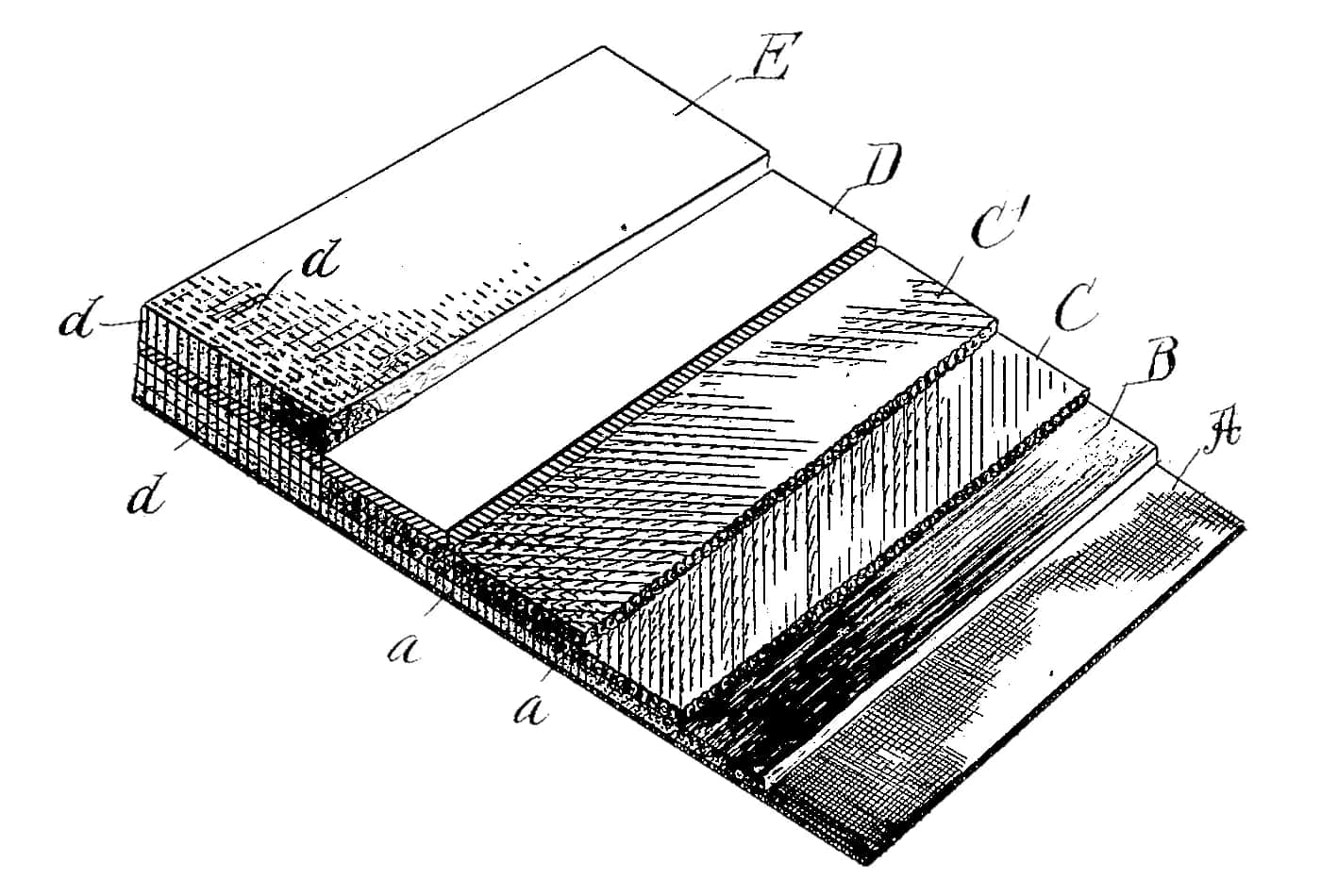
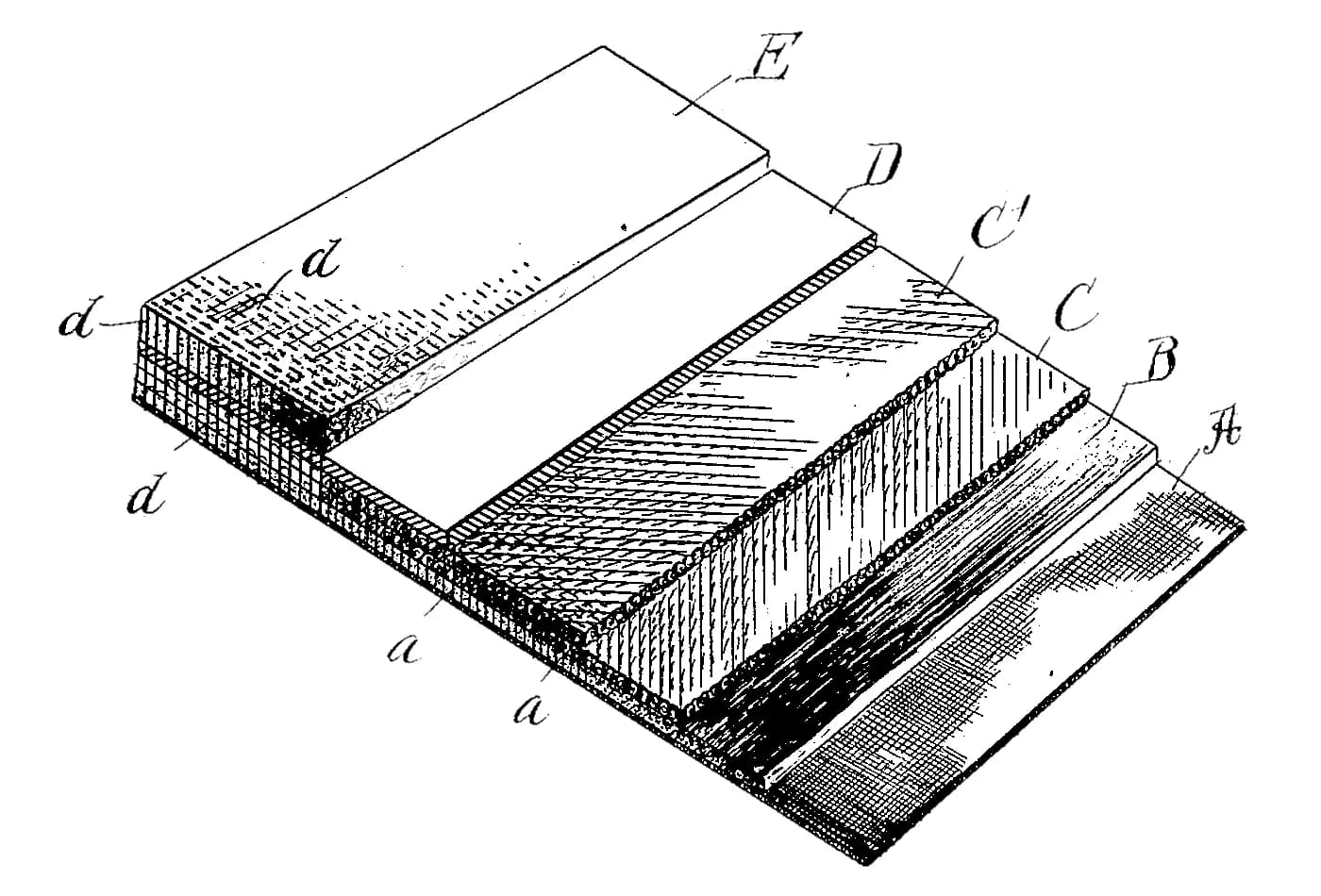
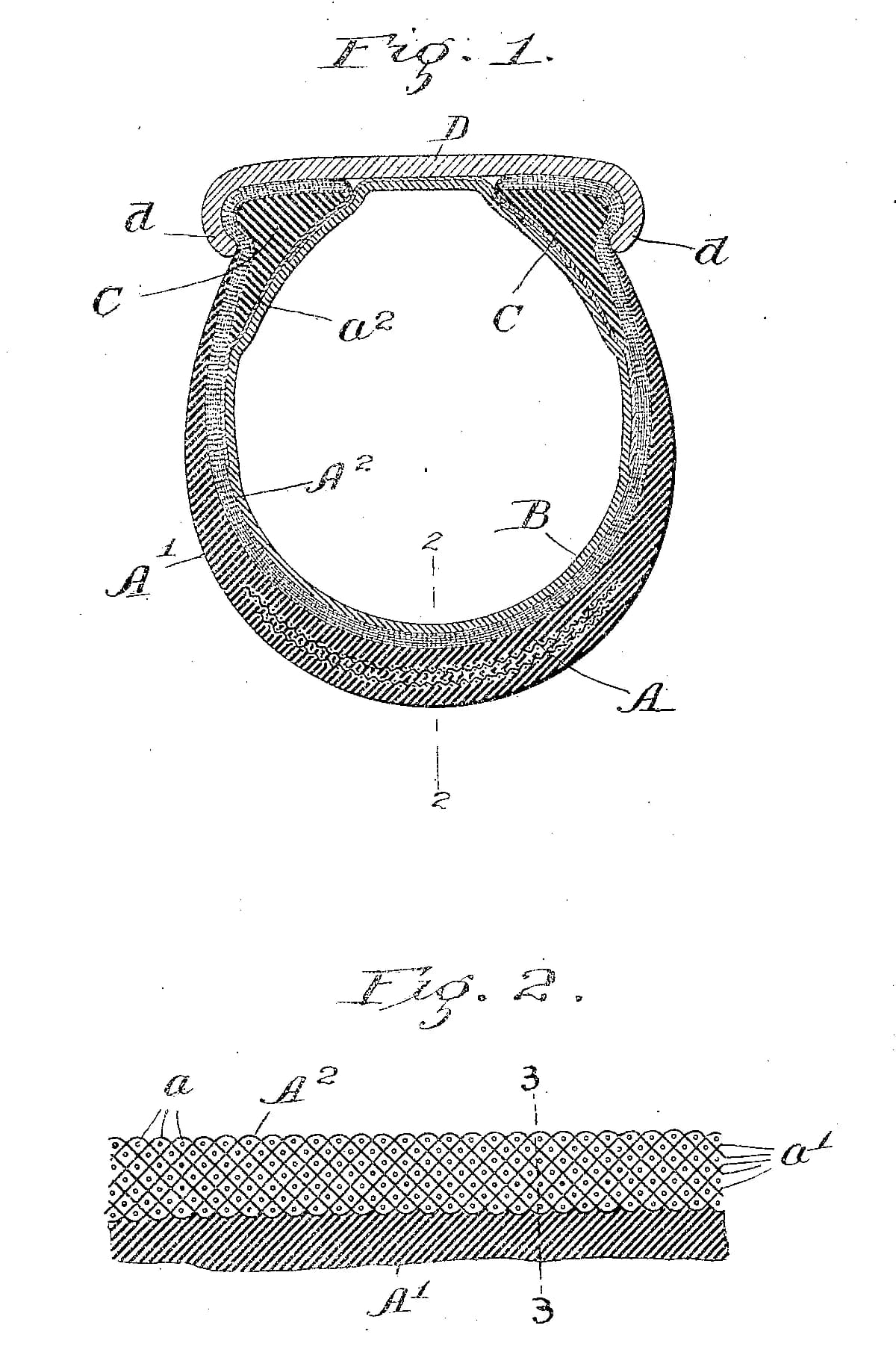
Patent 577,999 describes a layered sandwich. On the outside is closely woven canvas, then a thick layer of combed Angora goat hair, several plies of parallel silk cords, pasteboard and felt, all stitched through with silk thread. A third patent, issued on May 31, 1898, replaced the hair and canvas with woven or braided silk cords.
Zeglen later moved into tires. He patented puncture-proof tires, tire reinforcement and industrial fabrics, and in 1921 returned to armor once more with a plate made of wire fabric.
- canvas, preferably linen, on the outside,
- combed Angora goat hair,
- several plies of parallel silk cords,
- pasteboard and felt next to the body,
- silk thread stitched through every layer.
How was the silk armor tested in Chicago?
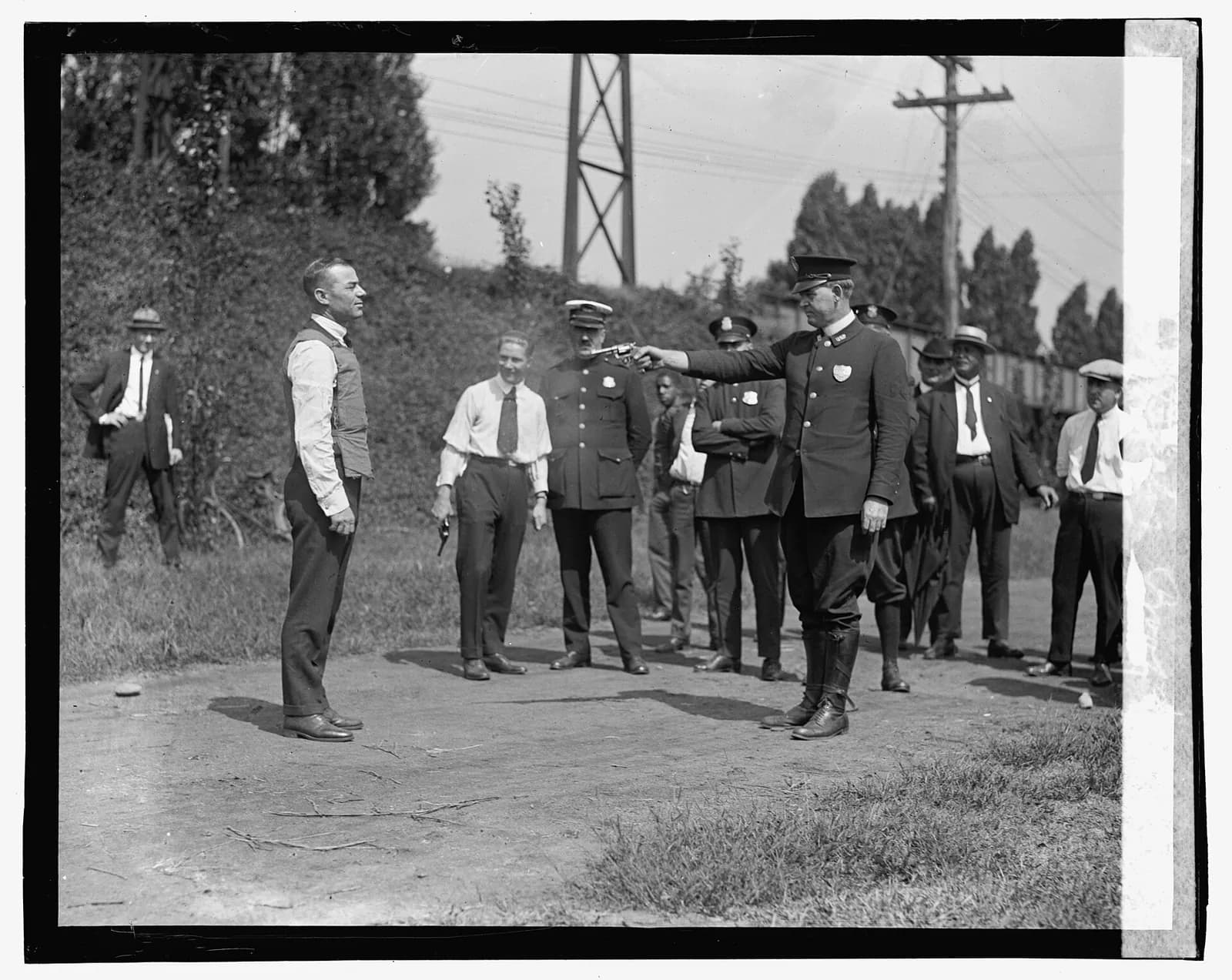
The June 1897 test took place at the Chicago College of Dental Surgery. The New York Times of June 6, 1897, reported that thirty shots from a .44 revolver and one from a .38 failed to pierce the cloth on a woman’s body. Lieutenant Stanislaus de Korwin Sarnecki of the Austrian army supervised. Two ribs on the right side were nonetheless broken by the force of the bullets. It is one of the earliest records of the blunt injury a bullet can cause through soft armor.
A day later a Swedish journalist and artist in Chicago, Gustave Higgins, offered to put on a suit of the cloth and be shot at for $5,000. If he died, the money was to go to his sweetheart. In July the Chicago German-language daily Abendpost reported that Zeglen had tested the cloth on his own body.
In August 1897, at Fort Sheridan, the best marksmen of the garrison fired Krag-Jørgensen rifles at a man-shaped target from 400 down to 200 yards. According to Abendpost, the bullets stuck in the outer layer. A Brooklyn paper in 1902 told it differently, saying that at 200 yards a bullet went through the whole shield. In October 1897, on the stage of Koster & Bial’s music hall in New York, Zeglen took a .44 bullet aimed at his heart from eight paces. It flattened against the vest.
Why was a Chicago monk looking for a fabric to stop bullets?
A 1902 profile in the Brooklyn Eagle linked Zeglen to St. Stanislaus parish in Chicago, which it called the largest Polish parish in the United States, with 40,000 members. According to the paper, he spent fifteen years trying steel shavings, moss and hair. He redoubled his efforts after the assassination of Chicago mayor Carter Harrison in 1893 and settled on silk.
The same paper said he perfected the weave only after visiting mills in Vienna and Aachen. The vest fabric was one-eighth of an inch thick, four-ply, and weighed half a pound per square foot. In July 1899, in Chicago, revolvers were fired at it for a quarter of an hour in front of the police chief and several aldermen. No bullet went through, but a ricochet grazed the chief’s secretary on the forehead.
What did Zeglen do after he stopped making vests?
A 1902 American profile in The Inventive Age says Zeglen was born in 1869 in Kaczanówka in Galicia to poor Polish parents. In 1887 he joined the Resurrectionists in Lviv as a lay brother, and in 1890 he went via Rome to Chicago, where he was sacristan at St. Stanislaus Kostka church. The same article says the Austrian government liked his cloth but found it too expensive for the army. In the United States Zeglen sold vests to sheriffs, detectives and policemen. After a test on July 8, 1899, Alderman John F. Smulski proposed that Chicago buy them for its police; the city did not pay, so officers bought them with their own money.
In 1906 Zeglen’s vest weighed 24 ounces, about 680 g, and cost $50. Being hit, he said, felt like “a sharp thrust in the ribs”. Two years later his company reopened its Chicago factory to make puncture-proof tires, and in 1909 it raised its capital from $100,000 to $500,000. In 1911 India Rubber World reported that Zeglen had abandoned bulletproof cloth because armies had adopted high-powered rifles, and was using his weave in tires and hose instead.
His later firms had no luck. The American Rubber and Fabric Co. of Philadelphia, which bought rights to the patents, failed. In 1915 the Zeglen Tire & Fabric Co. was set up in South Bend, Indiana, and in 1920 the Zeglen Tire and Rubber company bought a factory building on Rawson Street in Chicago. The last trace found dates from June 1926, when The Rubber Age reported that Casimir Zeglen, formerly president of that company, was applying for new patents on tire fabric woven from rubberized yarn.
What did Jan Szczepanik add to the vest?
Szczepanik had the loom for the bulletproof fabric built by N. Reiser, director of the weaving school in Aachen. It was ready in August 1898, opening the way to industrial production. According to a Kraków weekly in 1901, the first machine-woven cloth frayed when it was cut and sewn, and bullets passed through the seams. Szczepanik’s patent for weaving carpets in relief solved the problem.
The same weekly explained how the armor worked. A special weave of raw silk spread the force of the impact sideways, so that “the bullet drops, the dagger slides off, the fabric stays intact”. It also printed a photograph of a trial in a courtyard in Vienna: a director named Borzykowski fires a 7 mm revolver from three paces at a servant, Józef, who is wearing the armor. A strongman could not pierce it either, using a sharpened file like the one that killed Empress Elisabeth of Austria.
Demand followed the assassins. After the attacks on Kaiser Wilhelm II in Bremen and on President McKinley in Buffalo in 1901, princes, company directors and police forces began to ask for it. In February 1902, at a photography exhibition in Kraków, Captain Urbański of the 56th Regiment fired a 9 mm revolver from two meters at an engineer, L. Sippel, who was unhurt. The vest tested was white, fastened at the side, covered about 0.25 m² and was made of raw-silk cloth 1 cm thick that could be squeezed to 4 mm between the fingers.
What did Szczepanik’s armor cost, and how much did it weigh?
The papers gave different figures. In August 1901 the Kraków daily Głos Narodu reported that Szczepanik had sent an armor to Kaiser Wilhelm, and that a version with a 1 mm steel plate had been fired at in an arsenal with Mannlicher rifles from 200 paces. The bullets went through, deformed and harmless, but the army wanted protection from 50 paces. The chest piece, by this account, weighed 2 kg. Alfred Dzikowski, a Lviv gun dealer who saw it in Vienna, described a pure silk fabric 7 mm thick; a shot from a 7 mm revolver at two paces flattened the bullet.
After the Kraków demonstration of February 17, 1902, the socialist daily Naprzód reported that the cloth weighed 900 g and cost 3,000 gulden, and that a shot at a sawdust-filled dummy left a 3 mm dent in a board behind it. The paper judged the armor militarily worthless against Mannlicher or Mauser rifles. Gazeta Lwowska gave 6,000 crowns for a chest armor and twice as much for front and back, and claimed the Khedive of Egypt had ordered three. In March 1902 officers of the Kraków fortress artillery fired at the armor with a new-model revolver and a 5 mm small-caliber rifle, and no bullet went through.
Did Szczepanik’s vest save the King of Spain?
A popular story says Szczepanik’s silk lined the carriage of Alfonso XIII and saved the king from a bomb. The IPN calls it a mistake that took hold through the inventor’s biographer, Jewsiewicki. Szczepanik did receive the knight’s cross of the Spanish Order of Isabella the Catholic on June 2, 1902. According to the Lviv press at the time, though, it was a reward for setting up a factory in Spain that made waterproof military uniforms and coats.
The armor did reach European courts. In May 1902 Tsar Nicholas II, in thanks for vests delivered to the Russian court, awarded Szczepanik the Order of St. Anna and a gold watch set with diamonds and sapphires. According to Jewsiewicki, Szczepanik kept the watch and turned down the order.
The writer in the Lviv trade journal was sober about the invention. The vest might protect a civilian from an assassin with a revolver, he argued, but as military armor against steel rifle bullets fired with smokeless powder it made no sense.
Would a silk vest have saved Archduke Franz Ferdinand?
In 2014, on the centenary of the Sarajevo assassination, the Royal Armouries in Leeds had replica silk vests made to the specification in Zeglen’s patent. The researcher Lisa Traynor had found a Browning pistol in the museum’s collection whose serial number was just 516 away from Gavrilo Princip’s. The vests were tested with the same model, an FN Browning 1910 in .380 ACP. According to The Guardian, the early trials already showed that silk could stop a bullet. The results were written up in two papers in Arms & Armour in October 2014, by Traynor and by the Polish historian of technology Sławomir Łotysz.
Whether the Archduke owned such a vest is unknown. Traynor writes cautiously that it was “entirely possible”. In 1915 the American trade weekly Motor Age reported that “it is said” Franz Ferdinand had worn a vest of Zeglen’s material. The Royal Armouries notes that Princip fired from about two meters and that the first shot hit the Archduke in the neck, severing his jugular vein. A silk vest would not have covered his neck anyway.
What came after silk? Kevlar and a daughter of Polish immigrants
The soft vests police wear today are made from a different fiber. Stephanie Kwolek, the daughter of two Polish immigrants, joined DuPont’s textile fibers department in Buffalo, New York, as a chemist in 1946. In 1965 she looked into a thin, cloudy polymer solution and found something new in it. That discovery led to Kevlar, which the Science History Institute describes as five times stronger than steel.
Kevlar was first marketed in 1971, and her patent on aromatic polyamide solutions was issued in 1972. The US National Institute of Justice paid for 5,000 Kevlar vests for a field test with 15 police agencies. The first life saved was recorded on December 23, 1975, and in the following year the vests protected officers in 18 shootings.
How does a vest stop a bullet?
The US National Institute of Justice compares a soft armor panel to a baseball catcher’s mitt. A handgun bullet is caught in a web of strong fibers that absorb and spread its energy, with each layer taking up more. The fibers are pushed into the body, which can break ribs and damage organs, as in the Chicago test of 1897. Since 1978 the US standard has limited the dent a bullet leaves in clay behind the vest to 44 mm. Under the 2023 standard, any dent deeper than 50 mm is a failure.
NIJ stresses that no armor is “bulletproof” against everything. Soft levels IIA, II and IIIA stop handgun rounds but not rifle bullets; that takes hard plates at levels III and IV. In 2023 the levels were renamed HG1 and HG2 for handguns and RF1 to RF3 for rifles. Tests more than a century ago taught the same lesson: rifle bullets went through Zeglen’s silk at the Springfield Arsenal range in 1897 and at Fort Sheridan in 1900.
After Kevlar came polyethylene with extremely long molecular chains. The Dutch company DSM filed a patent in 1979 for strong gel-spun polyethylene fibers, which became Dyneema. In Poland vests are tested to the PN-V-87000:2011 standard, which sets bullet-resistance classes K1 to K5 and fragment-resistance classes O1 to O3. The laboratory of the MORATEX Institute of Security Technology in Łódź is accredited by the military to run these tests. In December 2024 the Polish police headquarters signed a contract for 900 plate-carrier vests worth 9.26 million złoty.
What else did Szczepanik invent?
Szczepanik was born on June 13, 1872, in Rudniki near Mościska, trained at the teachers’ college in Kraków and taught physics in Korczyna. His first inventions used photography to speed up the weaving of pictures on Jacquard looms, cutting the time needed to prepare a pattern from weeks to a few dozen minutes, according to the IPN. Mark Twain visited his workshop in Vienna, dedicated two stories to him and started calling him the “Austrian Edison”.
In 1897 he applied for a British patent on a telectroscope for transmitting pictures. The IPN historians write that the device as described in the patent could not have worked. He left a more lasting mark in color photography: from 1905 his Utopapier was made in Zurich, and from 1909 his Veracolor plates in Dresden. Between 1918 and 1925 he worked on color film, and a few landscape films were shot with it, including Przełęcz in the Alps in 1921. In all he obtained almost 100 patents. He died in Tarnów on April 18, 1926.
Where can you find traces of Szczepanik in Tarnów?
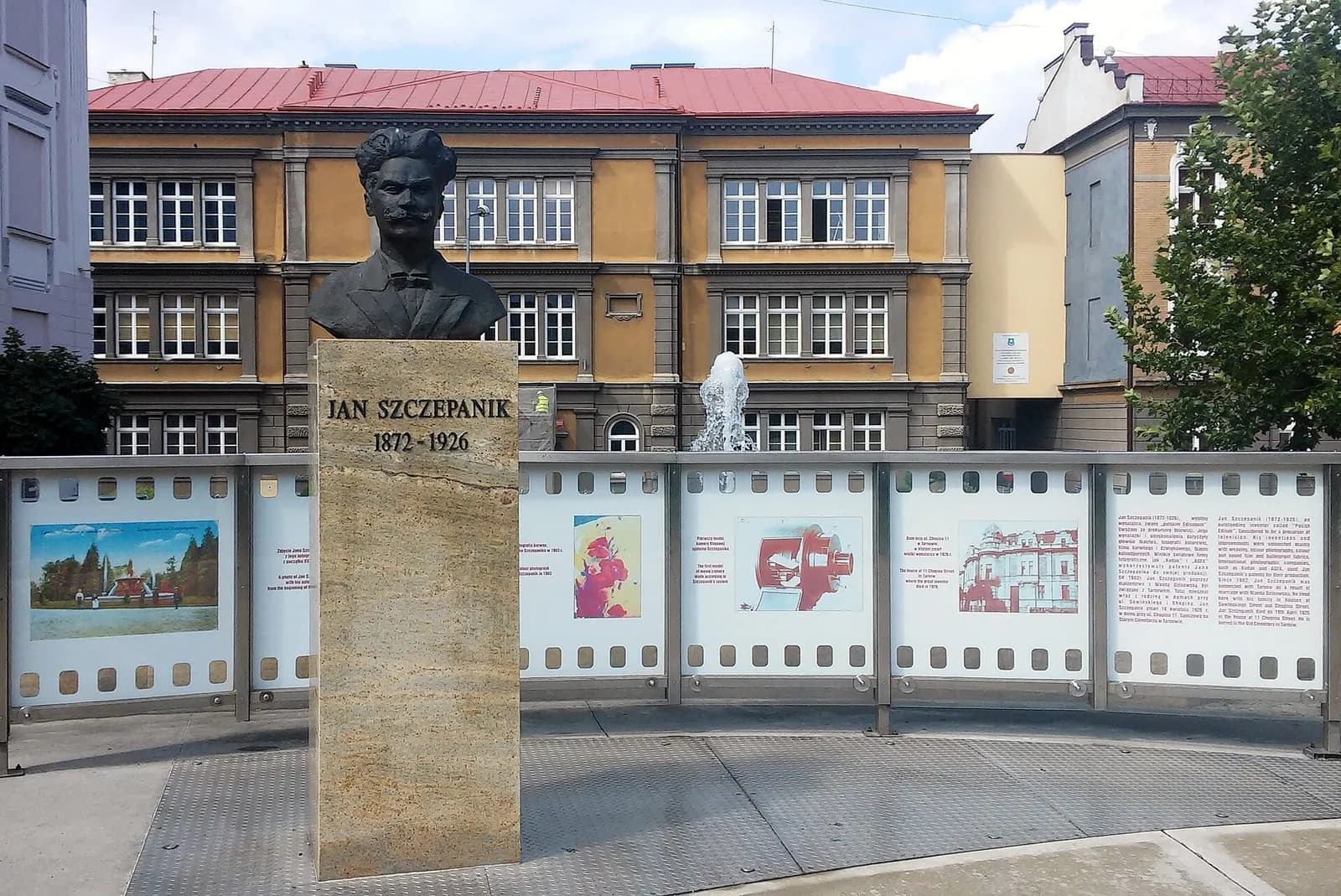
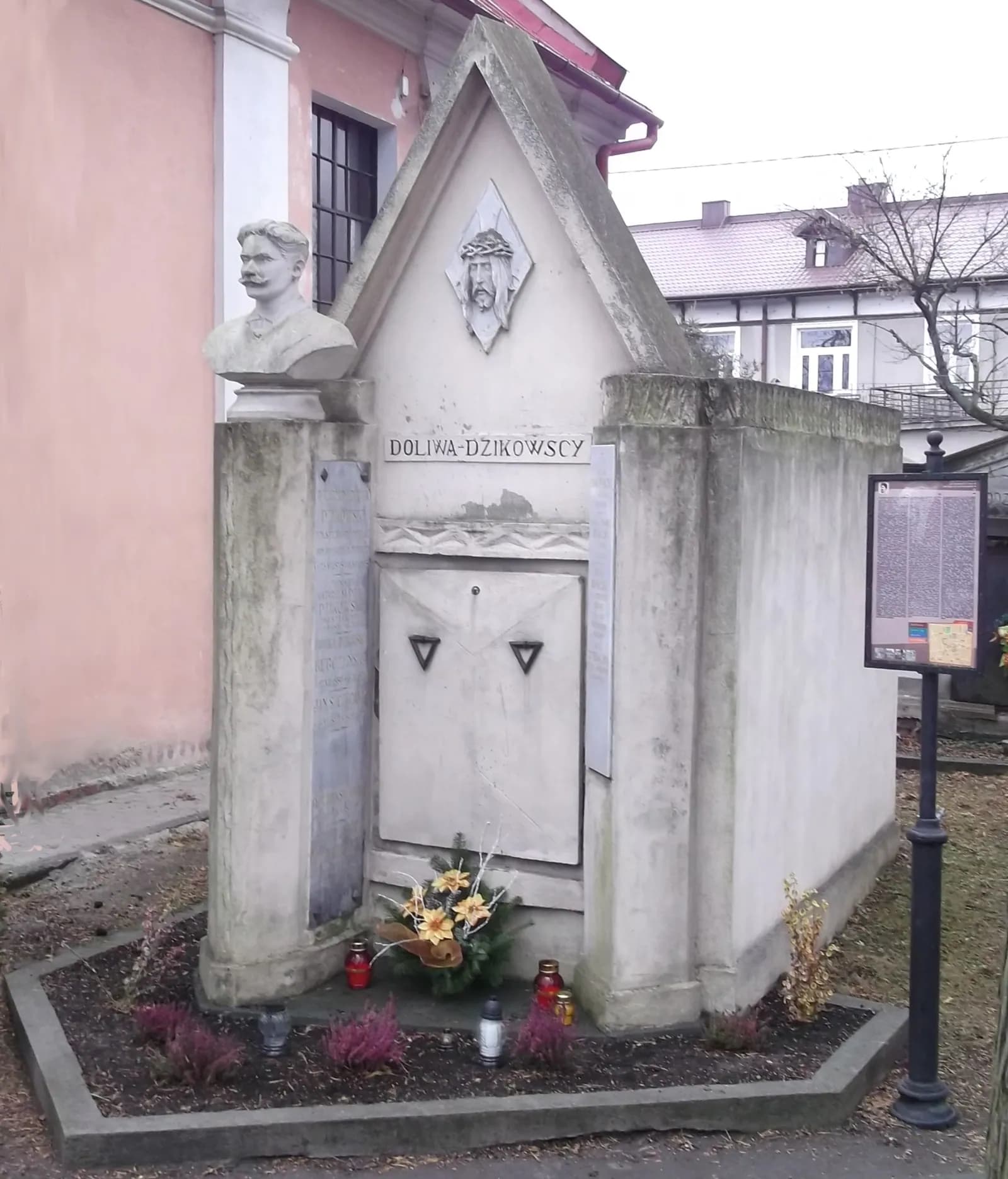
Szczepanik lies in the tomb of the Doliwa-Dzikowski family, his wife’s family, in Tarnów’s Old Cemetery (Stary Cmentarz). His bust stands on one of the tomb’s pillars. A second memorial stands on Plac Szczepanika, north of the Old Town. The square was renovated in 2011 with a fountain and an outdoor exhibit about his inventions.
The Tarnów Regional Museum (Muzeum Ziemi Tarnowskiej) runs a museum lesson about him in which participants make a cyanotype. On February 26, 2026, the city council unanimously made him an Honorary Citizen of Tarnów, posthumously. His Art Nouveau villa, Świtezianka, has belonged to the city since 2019. A Szczepanik museum was announced there that year, but in 2021 the building was still waiting for renovation money.
Timeline
- 1893After the murder of Chicago’s mayor, Zeglen sets out to find a bulletproof fabric.
- March 2, 1897Zeglen receives US patents 577,999 and 578,000.
- June 4, 1897A test on a corpse in Chicago: 30 .44 bullets fail to pierce the cloth.
- August 1897A trial with Krag-Jørgensen rifles at Fort Sheridan.
- 1897/1898Zeglen hires Jan Szczepanik in Europe.
- August 1898The loom for the bulletproof fabric is ready.
- 1901A demonstration in Vienna: a shot from three paces at a servant in the armor.
- 1902Szczepanik receives the Russian Order of St. Anna and the Spanish Order of Isabella the Catholic.
- 1965Stephanie Kwolek discovers at DuPont the polymer that becomes Kevlar.
- December 23, 1975A Kevlar vest saves a US police officer for the first time.
- 2026Szczepanik is made an Honorary Citizen of Tarnów.
Practical info
- Where
- Tarnów: the memorial on Plac Szczepanika, the Doliwa-Dzikowski tomb in the Old Cemetery, and the Museum of the History of Tarnów and the Region at Rynek 20–21.
- On site
- An outdoor exhibit about his inventions on Plac Szczepanika. The Tarnów Regional Museum runs a lesson on Szczepanik with cyanotype printing.
- Tickets
- Opening hours and the program of classes are on muzeum.tarnow.pl.
Questions and answers
Who invented the bulletproof vest?
The first patents for a bulletproof silk fabric went to Casimir Zeglen (Kazimierz Żegleń), a Polish religious brother in Chicago, in the United States in 1897. Jan Szczepanik developed a way to weave the fabric by machine and sold vests under his own name. Each man considered himself the inventor.
What was the first bulletproof vest made of?
Silk. Zeglen’s 1897 patent combined plies of silk cord with canvas, Angora goat hair, pasteboard and felt. Szczepanik’s vest of 1902 was made of raw-silk cloth 1 cm thick.
Did Szczepanik save the King of Spain?
According to the IPN, no. Szczepanik received the Spanish Order of Isabella the Catholic in 1902, but for a factory making waterproof uniforms in Spain, not for saving Alfonso XIII.
Who invented Kevlar?
Stephanie Kwolek, a DuPont chemist and the daughter of Polish immigrants. In 1965 she discovered the polymer solution that became Kevlar, first marketed in 1971.
Why was Szczepanik called the Polish Edison?
Mark Twain, who visited his workshop in Vienna, called him the “Austrian Edison”, and in time the nickname became the “Polish Edison”. Szczepanik obtained almost 100 patents.
Where is Jan Szczepanik buried?
In the Doliwa-Dzikowski family tomb in the Old Cemetery in Tarnów, which carries his bust.
What are bulletproof vests made of?
The first were silk. Today’s soft vests have many layers of strong fiber: since the 1970s aramid such as Kevlar, and since the 1980s also gel-spun polyethylene such as Dyneema. Plates that stop rifle bullets are made of ceramics, laminates, metal or composites.
Can a bulletproof vest stop a rifle bullet?
A soft vest cannot. Under the US NIJ standard, levels IIA, II and IIIA protect only against handguns. Rifle bullets need hard plates at levels III and IV.
Did Franz Ferdinand own a bulletproof vest?
Nobody knows. A Royal Armouries researcher called it “entirely possible”, and in 1915 the American press reported that “it is said” he wore one. The first bullet hit him in the neck, which a vest would not have covered.
Sources
- Institute of National Remembrance, Giants of Science: Jan Szczepanik (in Polish) (opens in a new tab)
- The Guardian: could a silk vest have prevented the First World War? (2014) (opens in a new tab)
- Lisa Traynor, The Archduke and the Bullet-Proof Vest, Arms & Armour 2014 (opens in a new tab)
- Sławomir Łotysz, Tailored to the Times, Arms & Armour 2014 (opens in a new tab)
- Royal Armouries: arms of the First World War, Princip’s pistol (opens in a new tab)
- The Inventive Age, 1902: profile of Casimir Zeglen (scan) (opens in a new tab)
- Chicago Daily Tribune, March 12, 1906: Zeglen’s vests (scan) (opens in a new tab)
- India Rubber World, August 1, 1911: a puncture-proof tire (scan) (opens in a new tab)
- The Rubber Age, June 25, 1926 (scan) (opens in a new tab)
- Naprzód, February 19, 1902 (scan, in Polish) (opens in a new tab)
- NIJ, Selection and Application Guide to Ballistic-Resistant Body Armor (2014, PDF) (opens in a new tab)
- NIJ Standard 0101.07 (2023, PDF) (opens in a new tab)
- NIJ: understanding the 0101.06 protection levels (opens in a new tab)
- US Patent 4,430,383, DSM polyethylene filaments (opens in a new tab)
- US Patent 577,999, Bullet-proof fabric, Casimir Zeglen (1897) (opens in a new tab)
- US Patent 578,000, Bullet-proof fabric (1897) (opens in a new tab)
- US Patent 604,870, Bullet-proof fabric (1898) (opens in a new tab)
- British patent GB 1897/5536, Improvements in Bullet Proof Fabrics (opens in a new tab)
- The New York Times, June 6, 1897: Bullet Proof Cloth Tested (scan) (opens in a new tab)
- The New York Times, June 7, 1897: Offers to Be a Target (scan) (opens in a new tab)
- Abendpost, August 12, 1897: the Fort Sheridan trial (scan, in German) (opens in a new tab)
- Abendpost, October 2, 1897: the New York demonstration (scan, in German) (opens in a new tab)
- Brooklyn Eagle, October 9, 1902: Three Grades of Fabric (transcription) (opens in a new tab)
- Głos Narodu Ilustrowany no. 12, December 7, 1901: Szczepanik’s armor (Jagiellonian Digital Library, in Polish) (opens in a new tab)
- Przewodnik Przemysłowy no. 4, February 28, 1902: Armor of the 20th century (Jagiellonian Digital Library, in Polish) (opens in a new tab)
- Science History Institute: Stephanie Kwolek (opens in a new tab)
- Lemelson-MIT: Stephanie Kwolek (opens in a new tab)
- US Patent 3,671,542, Stephanie Kwolek (1972) (opens in a new tab)
- Office of Justice Programs: body armor programs and the first Kevlar save (opens in a new tab)
- City of Tarnów: Jan Szczepanik made an Honorary Citizen (2026, in Polish) (opens in a new tab)