Wawel, the castle whose treasures sat out the war in Canada
Show on mapSigismund the Old's Renaissance palace, 30 carved heads in a ceiling and tapestries that left Kraków on coal barges in 1939 and came home only in 1959–1961.
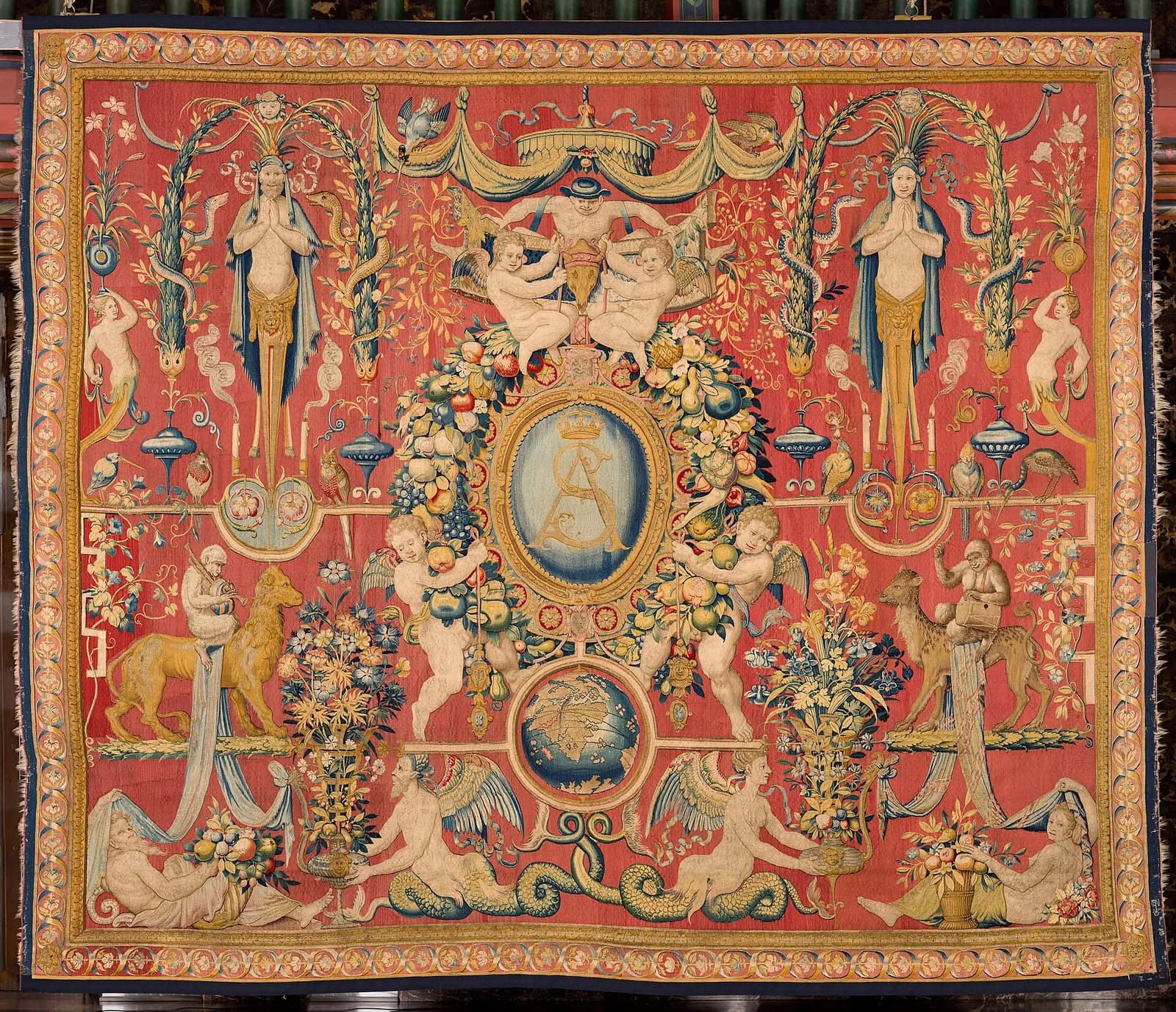
In September 1939 the greatest treasures of Wawel left Kraków on coal barges heading down the Vistula. The tapestries of King Sigismund Augustus, the coronation sword Szczerbiec and other royal objects came home only two decades later, in 1959 and 1961, from Canada. The tapestries are the only part of the royal rooms’ original furnishings to survive.
Wawel Royal Castle was the seat of Polish rulers until the turn of the 17th century. It later became an Austrian army barracks and, under German occupation, the residence of the Nazi governor Hans Frank. It has been a museum since 1918. In 2025 Wawel and its two branch sites drew about 3.4 million visitors.
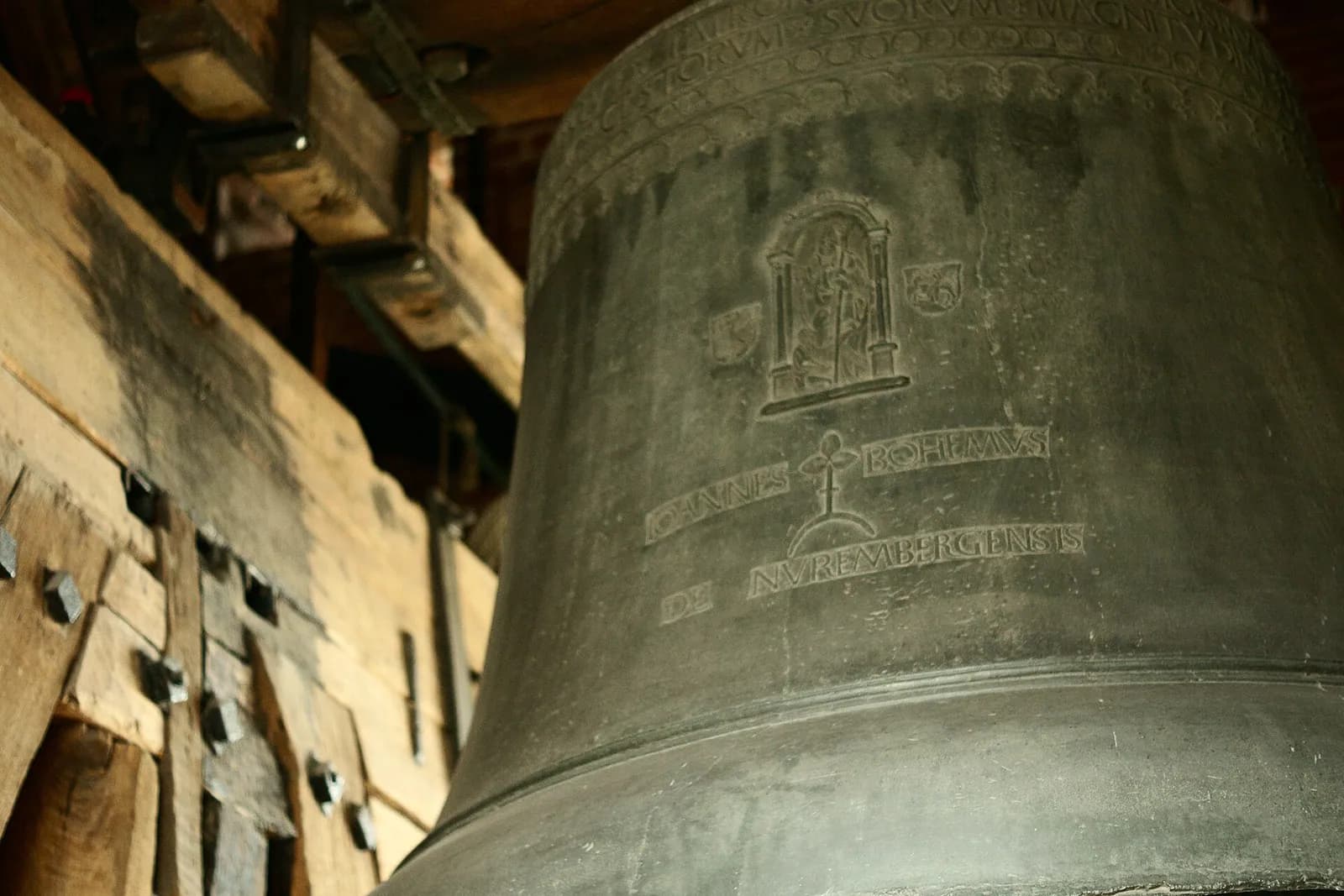
Below: how a Gothic castle became a Renaissance palace, where the tapestries and the carved heads in the Envoys’ Hall ceiling came from, how Wawel was won back from the army, what lies in the Dragon’s Den, and how to plan a visit. The great bell in the cathedral tower has its own story: [the Sigismund Bell](/en/castles/sigismund-bell).
How did a Gothic castle become a Renaissance palace?
After a fire in 1499, King Alexander Jagiellon began rebuilding the residence around 1504, and his brother Sigismund the Old took the work much further. Poland’s national education platform dates the rebuild to 1507–1536, the City of Kraków to 1506–1534. The regional tourism board says the palace was finished around 1540.
The work was directed by Francesco Fiorentino, known in Poland as Franciszek Florentczyk, and then by Bartolomeo Berrecci. After both Italians died, Benedykt of Sandomierz took over. The Romanesque rotunda of Sts Felix and Adauctus and a chapel were pulled down. An oriel window on the west wing survives as the oldest example of Italian Renaissance ornament in Polish architecture.
The regional tourism board calls the rebuild a turning point in the development of Polish architecture.
What makes the arcaded courtyard special?
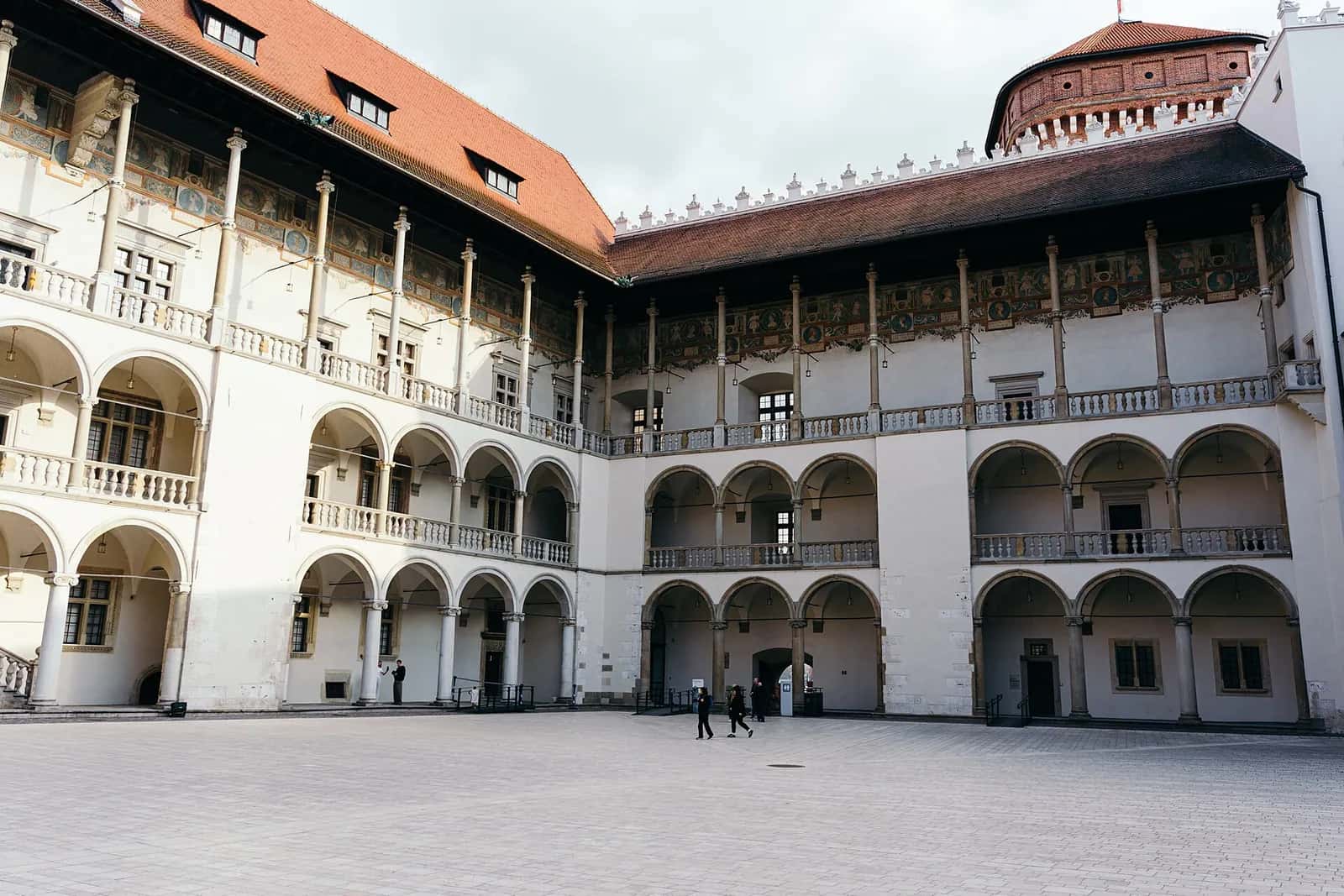
The courtyard is almost square, surrounded by galleries on three levels. They link the rooms and made it possible to walk around them from the outside.
In 1534 Berrecci carved coat-of-arms shields of Poland, Lithuania and the Sforzas, the family of Queen Bona. Tournaments were held in the courtyard. On our castles in Poland page you can read how servants used the galleries to light fires in royal fireplaces without entering the rooms.
How many tapestries did Sigismund Augustus order, and how many survive?
Between 1550 and 1560 Sigismund Augustus ordered about 160 tapestries from Brussels. The museum calls it the largest set of tapestries ever commissioned by a single ruler.
How many survive depends on how you count. The museum lists 136 pieces at Wawel and 137 in Poland, and elsewhere says 140 exist today, most of them at Wawel. After the third partition of Poland in 1795 the tapestries were taken to Russia. Poland reclaimed them under the 1921 Treaty of Riga, in 1922–1924.
In September 1939 the museum decided to evacuate. On September 3 the tapestries and other treasures went down the Vistula on coal barges to Kazimierz Dolny, then traveled through Romania, France and Britain. On July 12, 1940, the liner Batory brought them to Halifax, and they were stored in Ottawa. The first 74 objects, including Szczerbiec, returned on February 3, 1959. By 1961 all the Wawel treasures were back.
Whose faces look down from the Envoys’ Hall ceiling?
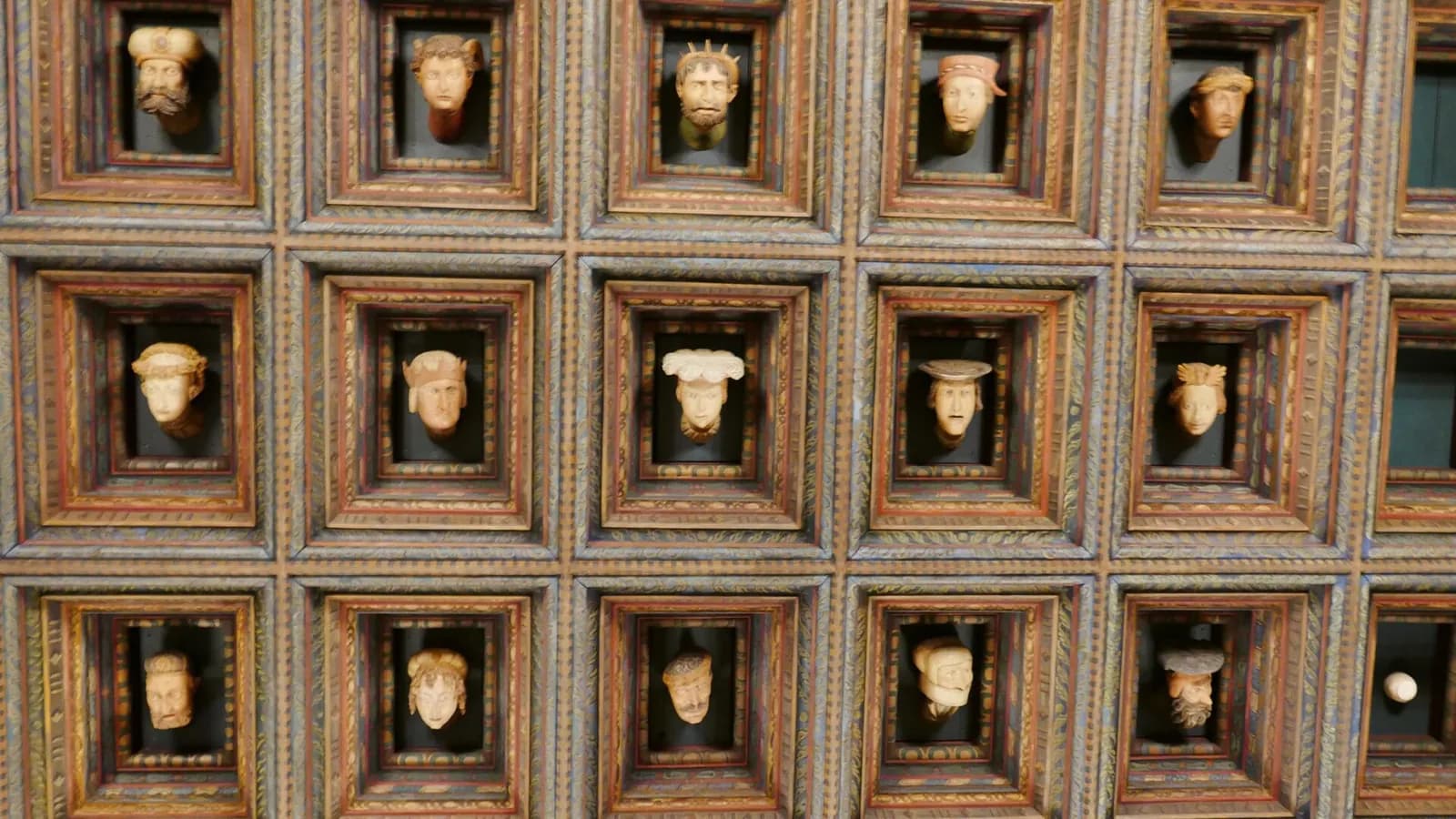
In the Envoys’ Hall, known as the Hall under the Heads, carved heads of lime wood are set into the coffered ceiling. They were made around 1540 in the workshop of Sebastian Tauerbach, a carver from Wrocław. The museum gives two figures for the original set, 194 or 193 heads. Thirty survive.
Most were destroyed in the 19th century, when the Austrians turned the castle rooms into barracks. Three noble families, the Czartoryskis, Podczaszyńskis and Tarnowskis, kept the survivors safe. In the mid-1920s the sculptor Xawery Dunikowski carved a new set modeled on the originals and gave it to the castle.
The best known is a woman’s head with a band across her mouth, catalogued as “Woman with a cloth over her mouth”, Tauerbach workshop, 1535–1540. The museum tells a legend about her involving a widow, a castellan and a judgment by King Sigismund Augustus.
Why did the king leave Wawel for Warsaw?
In 1595 fire swept the castle. Giovanni Trevano rebuilt the east and north wings in an early Baroque style for Sigismund III Vasa.
Another fire broke out in 1596, reportedly during an alchemy experiment. Sigismund III then decided to move the court to Warsaw for the time being. Repairs to the castle were finished in 1611, but that same year Warsaw officially became the royal residence and the king never moved back. Wawel remained the place of coronations and royal burials.
A third fire in 1702, during the Swedish occupation, destroyed the Renaissance interiors. Of the rooms’ original decoration, only the tapestries survive.
How was Wawel won back from the army?
The Austrians took over the castle in 1796 and converted it into barracks in 1804–1807. In 1846 Kraków was annexed to Austria and turned into a fortress. In 1880 the Galician parliament offered the castle to Emperor Franz Joseph I as a residence. The campaign to get the army out took more than 50 years, from 1860 to 1911, and the troops left in stages between 1905 and 1911.
Restoration began in 1905, led by Zygmunt Hendel until 1912 and by Adolf Szyszko-Bohusz from 1916 to 1939. After the war Alfred Majewski took over, and the restoration office ran until 1985. From 1918 Wawel served as a state residence and a museum of historic interiors.
German troops occupied Wawel on September 6, 1939. Hans Frank, appointed governor-general on October 12, renamed it Krakauer Burg and made a ceremonial entry on November 7. He worked in the Envoys’ Hall. When the Germans fled in January 1945 they took artworks with them.
What lies under the hill?
A cave runs beneath the hill: the Dragon’s Den. Its passages total 270 meters and reach 10 meters high, and the visitor route is 81 meters long. The cave formed between 12 and 1.6 million years ago. Between 1846 and 1905 visitors needed permission from the Austrian garrison commander. Szyszko-Bohusz opened it to the public in 1918.
At the cave entrance by the Vistula stands a six-meter bronze dragon by Bronisław Chromy, put up in 1972. It breathes real fire, fed by gas. Under the castle, the Lost Wawel exhibition, opened in 1975, shows remains of the buildings that stood on the hill before the castle. A four-apse stone rotunda went up here in the first half of the 11th century, and by the late 12th century the hill had up to ten churches.
How to visit Wawel Royal Castle
The castle is seen on separate routes. The State Rooms, with the tapestries and the Envoys’ Hall, are on the second floor, and the Royal Private Apartments on the first. The Crown Treasury, the Armoury and the underground Lost Wawel exhibition need their own tickets. The Treasury holds Szczerbiec, a 13th-century sword used at the coronation of Władysław the Elbow-high in 1320, which the museum calls Poland’s most precious historical object.
In November and December the castle is open Tuesday to Sunday, 9:00 to 17:00. On Mondays selected exhibitions are free, with tickets handed out at the ticket office from 8:45 until they run out. According to the museum’s price list, both castle floors with an audio guide cost 95 zł, reduced 71 zł, and one floor 57 zł (as of November 2026).
Online tickets go on sale up to a month ahead at bilety.wawel.krakow.pl. For a noble residence from the same century that ended up a ruin, visit Krzyżtopór Castle at Ujazd.
Timeline
- 11th centuryA stone rotunda of Sts Felix and Adauctus is built on the hill.
- 1499Fire damages the Gothic castle.
- c. 1504–1540The castle is rebuilt as a Renaissance palace.
- 1550–1560Sigismund Augustus orders about 160 tapestries from Brussels.
- 1595–1596Fires at the castle; Sigismund III moves the court to Warsaw.
- 1702Fire during the Swedish occupation destroys the Renaissance interiors.
- 1804–1807The Austrians turn the castle into barracks.
- 1905–1911The army leaves Wawel and restoration begins.
- 1939The tapestries and Szczerbiec leave Kraków; German troops occupy the castle.
- 1959–1961The Wawel treasures return from Canada.
- 1978Wawel, with Kraków’s historic center, joins the UNESCO World Heritage List.
Practical info
- Where
- Wawel Hill in central Kraków, above the Vistula.
- Best time
- Early, as soon as the ticket office opens. On Mondays selected exhibitions are free, but the free tickets go fast.
- Hours
- November and December: Tuesday to Sunday, 9:00–17:00. Closed December 24–25 and January 1.
- Tickets
- Both castle floors with audio guide 95 zł, reduced 71 zł (as of November 2026). Online at bilety.wawel.krakow.pl.
- On site
- The Crown Treasury with Szczerbiec, the Armoury, Lost Wawel, the Dragon’s Den and the Sigismund Bell in the cathedral.
Questions and answers
Who built the Renaissance castle at Wawel?
King Alexander Jagiellon began the rebuild around 1504 and Sigismund the Old carried it through. The architects were Franciszek Florentczyk and Bartolomeo Berrecci, followed by Benedykt of Sandomierz.
How many tapestries are at Wawel?
Sigismund Augustus ordered about 160. The museum says 136 survive in the Wawel collection and 137 in Poland.
Is Wawel Castle free on Mondays?
Selected exhibitions are free on Mondays. Free tickets are handed out at the ticket office from 8:45 until they run out, and not to organized groups.
Why did the Polish capital move from Kraków to Warsaw?
After fires at the castle in 1595 and 1596, Sigismund III moved the court to Warsaw, at first temporarily. In 1611 Warsaw officially became the royal residence.
How long is the Dragon’s Den?
Its passages total 270 meters, and the visitor route is 81 meters long.
Sources
- Wawel Royal Castle (opens in a new tab)
- UNESCO: Historic Centre of Kraków (opens in a new tab)
- Wawel Royal Castle: State Rooms (opens in a new tab)
- Wawel Royal Castle: textiles and tapestries (opens in a new tab)
- Wawel Royal Castle: sculpture and the Wawel heads (opens in a new tab)
- Wawel Royal Castle: catalogue of the tapestry exhibition (PDF in Polish) (opens in a new tab)
- Halina Billik: the 1939 evacuation of the Wawel collections (PDF in Polish) (opens in a new tab)
- Wawel Royal Castle: Wawel Recovered (opens in a new tab)
- Wawel Royal Castle: Crown Treasury (opens in a new tab)
- Wawel Royal Castle: what to see and tickets (opens in a new tab)
- Wawel Royal Castle: 2025 summary (in Polish) (opens in a new tab)
- Institute of National Remembrance: the return of the Wawel treasures (PDF in Polish) (opens in a new tab)
- Kraków.pl: history of Wawel Royal Castle (in Polish) (opens in a new tab)
- Kraków.pl: the Dragon’s Den (in Polish) (opens in a new tab)
- VisitMałopolska: Wawel Castle courtyard (opens in a new tab)