The Biebrza marshes, home of elk and the aquatic warbler
Show on mapPoland's largest national park is mostly peatland. In spring the Biebrza floods its meadows, and aquatic warblers, with an estimated 9,000 to 13,800 singing males worldwide, nest in the sedge fens.
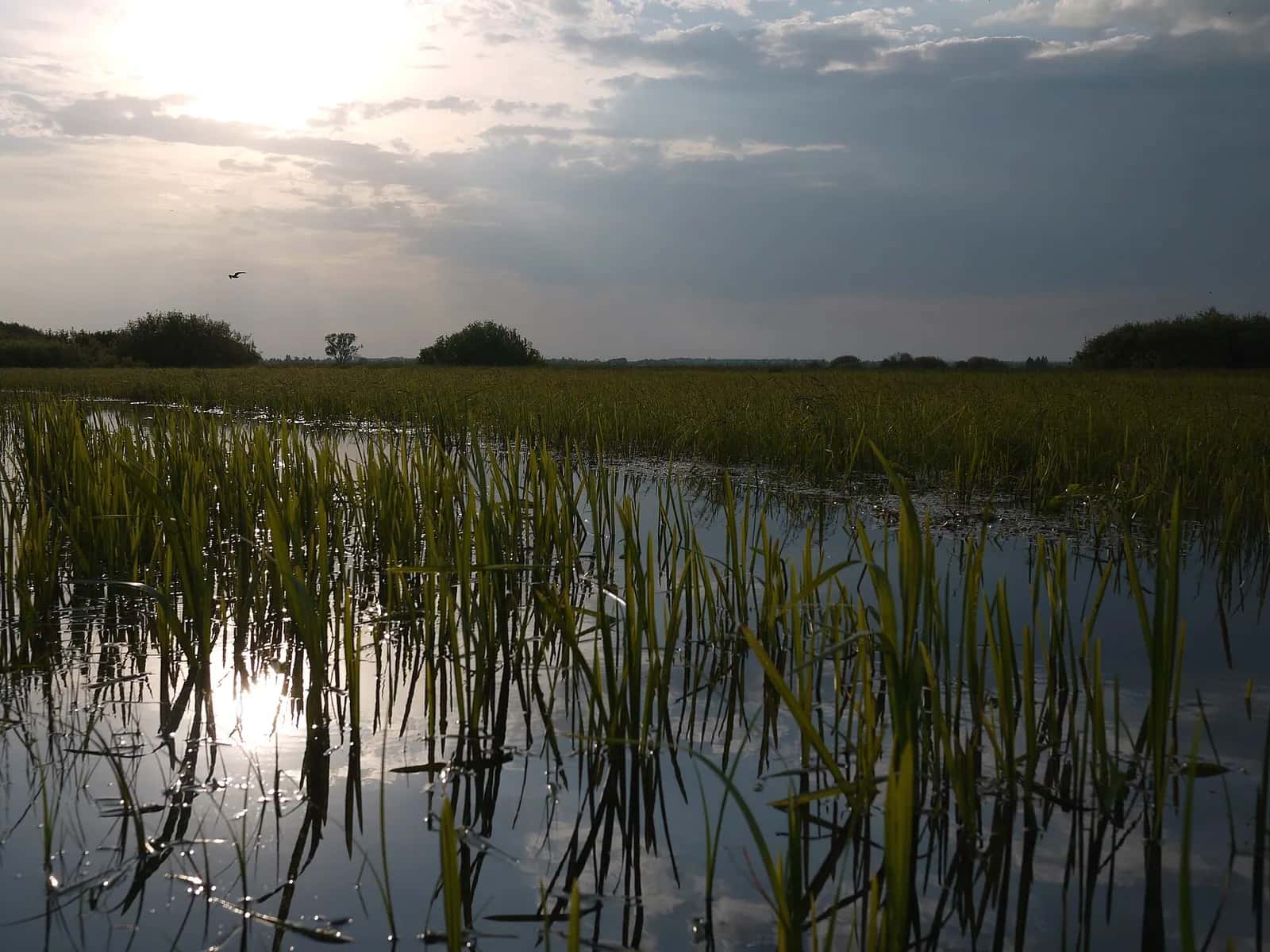
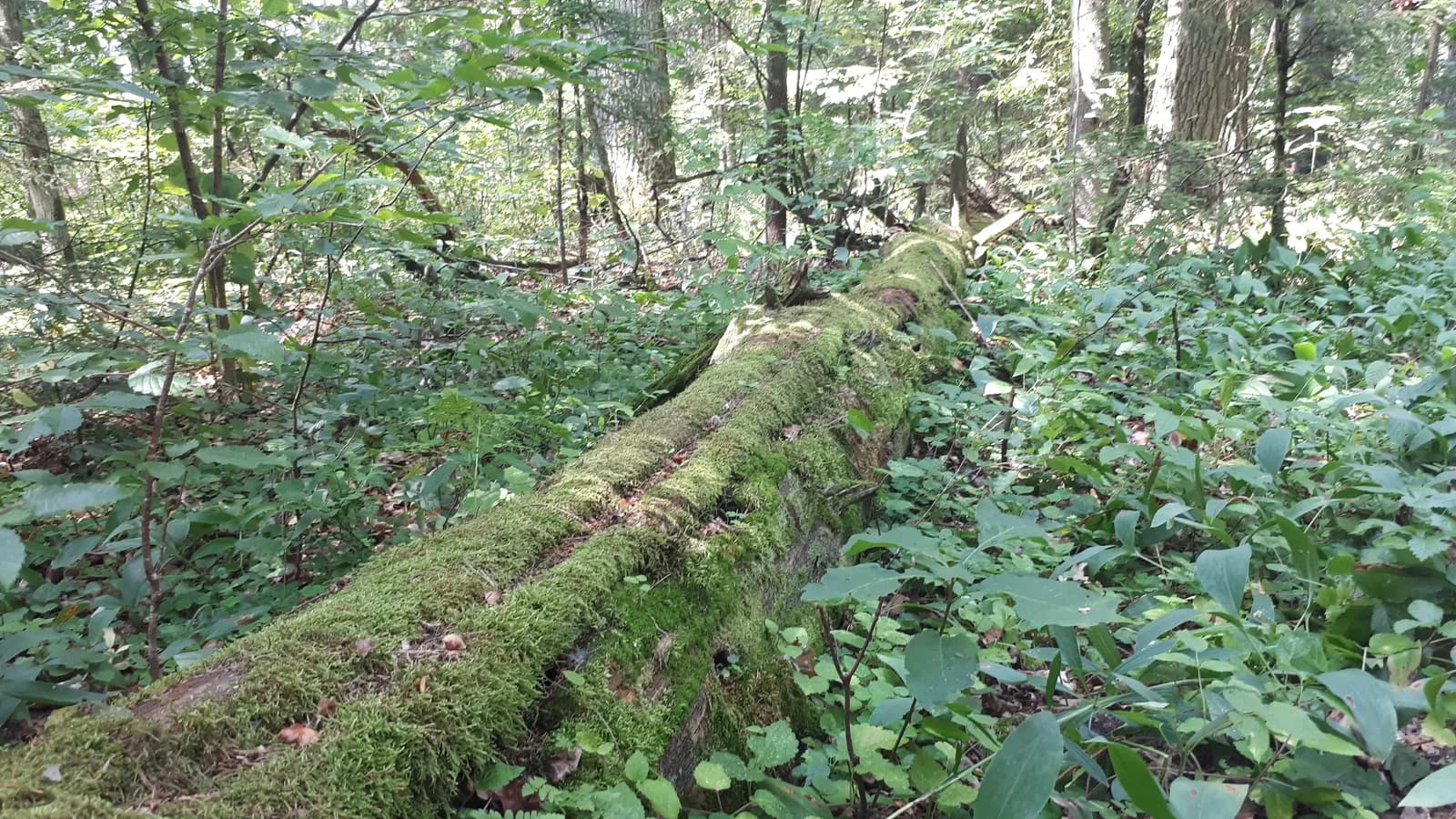
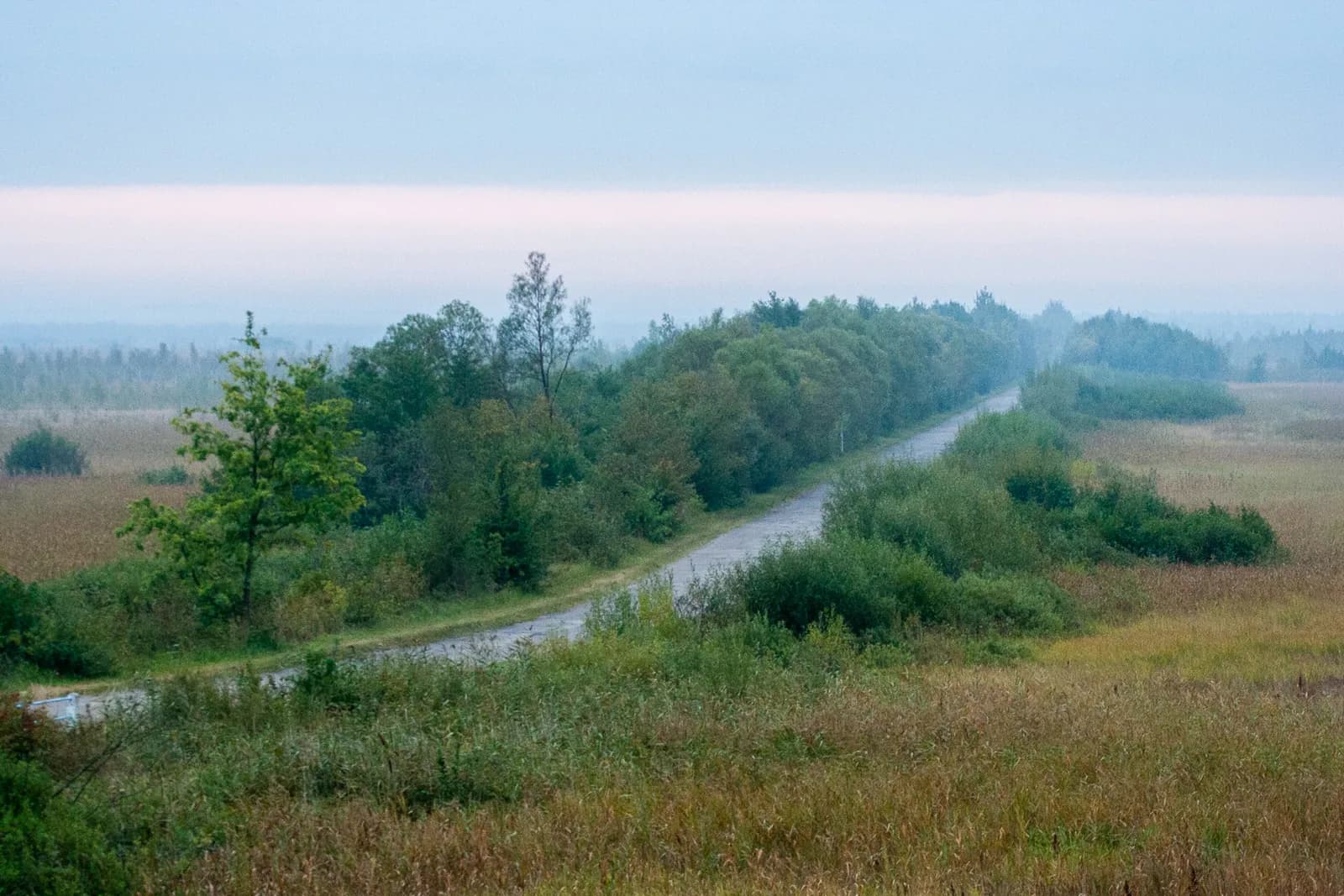
Biebrza National Park covers 59,223 hectares (about 229 square miles), more than any of Poland's other 22 national parks. Yet from the viewing tower over the Ławki Marsh you see mostly reeds, sedges and clumps of birch, with forest only on the horizon. Most of the park is peatland: wetland where dead plant matter has been piling up, half-rotted, for thousands of years.
The park was created on September 9, 1993, in the northeastern Podlasie region, to protect the largest complex of fens in Western and Central Europe. Its Ramsar wetland listing describes the Biebrza valley as one of the largest and best-preserved stretches of natural marsh and peatland in Europe. The river itself is almost entirely natural, never straightened or confined by flood banks.
Below: how the river floods the valley each spring, how many elk live here, why birders travel from across Europe to hear a small brown warbler, what is left of the fortress at Osowiec, and how to plan a visit.
How big is Biebrza National Park?
The park lies in the Podlaskie province of northeastern Poland. It is surrounded by a buffer zone of 66,824 hectares. Its headquarters and visitor center are at Osowiec-Twierdza, on the road from Białystok to Ełk.
Protection varies across the park. According to the park's 2025 yearbook, 7,494 hectares are under strict protection, left entirely alone. Another 28,455 hectares are under active protection: staff mow meadows and clear shrubs so the open marsh does not turn into woodland. The remaining 23,273 hectares are protected landscape.
The valley also has international status. On October 24, 1995, the park became Ramsar site no. 756, the largest of Poland's 19 wetlands of international importance. Since 2004 it has also been part of the EU's Natura 2000 network, with a bird area of more than 148,000 hectares.
How does the Biebrza flood its valley?
The Biebrza rises from springs near Nowy Dwór and flows into the Narew. The park gives its length as 162.8 km (101 miles), 156.5 km of it inside the park. Its catchment covers 7,057 km².
The valley falls into three basins. In the Upper Basin the river is only a few meters wide and the peat is up to 6 meters deep, the deepest in the valley. The Middle Basin opens out to 15–30 km across, with about 45,000 hectares of fen. In the Lower Basin, below Osowiec, the valley is 10–15 km wide.
Every spring the snowmelt raises the water and the river spills over its meadows. Levels peak during the thaw and drop lowest in late summer. The Ramsar file calls the valley the natural system with the greatest water-holding capacity in Poland, comparable to the country's largest artificial reservoir. The peat works like a sponge, soaking up water in spring and releasing it slowly through the summer.
How many elk live in the Biebrza marshes?
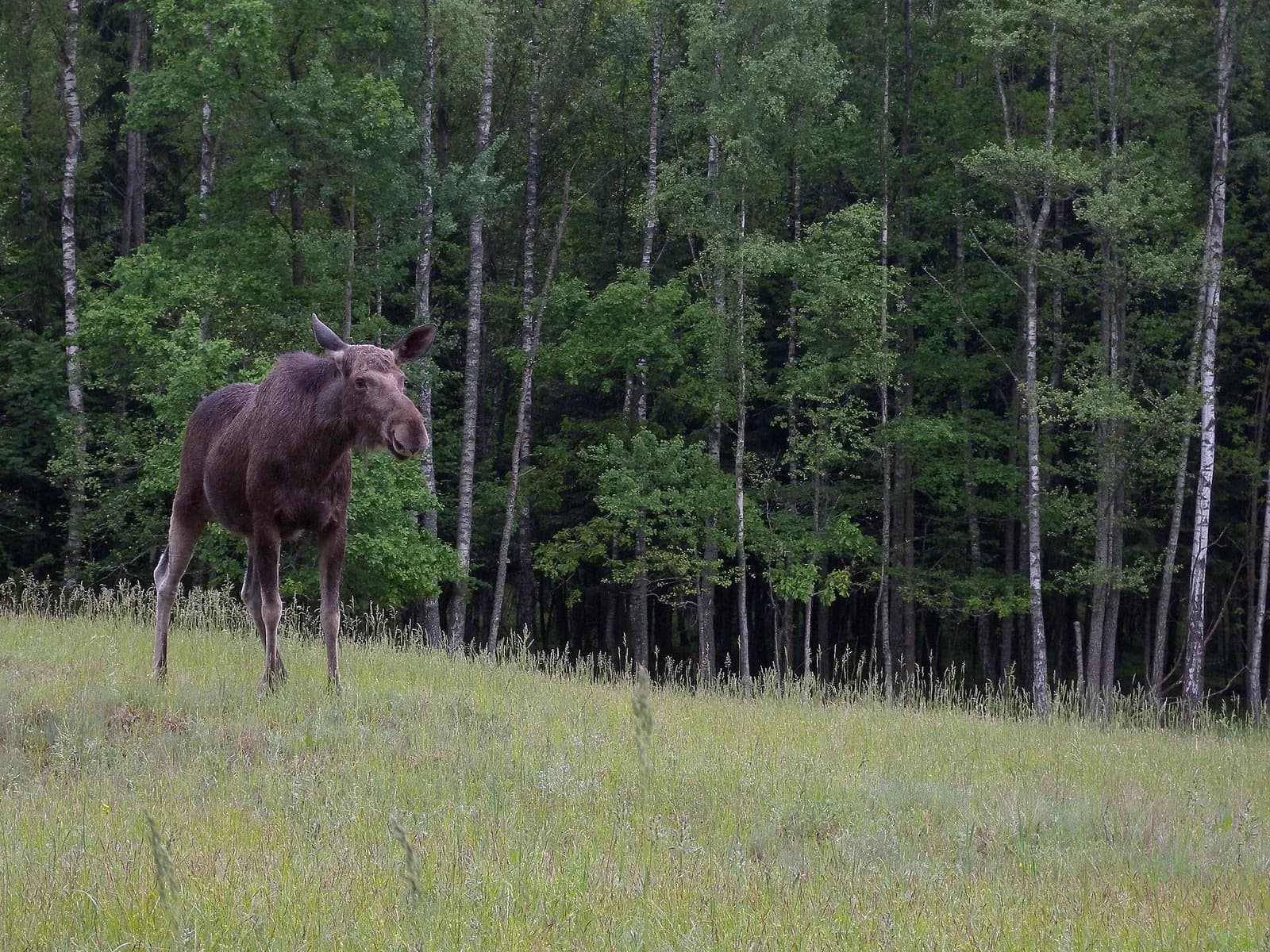
Biebrza is Poland's main refuge for elk, the animal Americans call moose. In 2025 the park estimated 418 elk by counting droppings on sample plots, about 0.71 per square kilometer. In 2019 two methods gave different answers: a drive count, with a line of people walking the animals past observers, found 478, while distance sampling gave 424.
The elk survived thanks to the Red Marsh (Czerwone Bagno), one of the oldest strict reserves in Poland, set up at the urging of the botanist Władysław Szafer. The park marked a century of its protection in 2025; a 1970 article dates the reserve to 1926. After the Second World War the elk had been almost wiped out here. The reserve was restored as a strict reserve of 2,172 hectares precisely to save them.
Your best chance of seeing one is at dawn or dusk where the forest meets the marsh. The Red Marsh itself is closed, but a 0.7 km trail on its edge includes a 662-meter boardwalk and two viewing platforms.
Why does the aquatic warbler matter so much here?
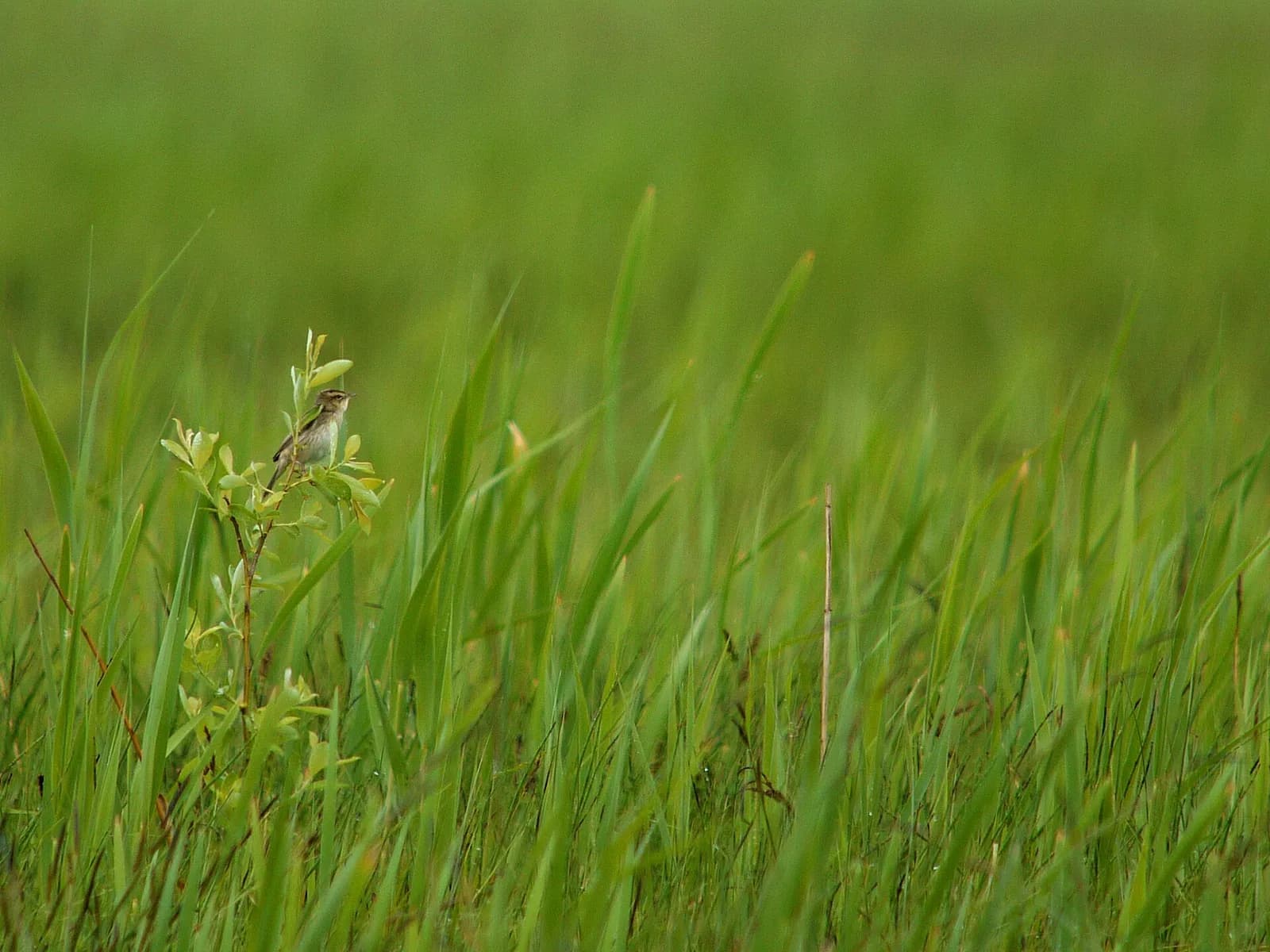
The aquatic warbler is a small brown songbird. It breeds only in large open sedge fens, a habitat that has nearly vanished from Europe. BirdLife International puts the world population at 9,000–13,800 singing males.
In 2024 the Polish Society for the Protection of Birds (OTOP) counted 2,411 singing males in the Biebrza valley, over about 22,500 hectares. Simple arithmetic puts somewhere between a sixth and more than a quarter of the world's aquatic warblers here. Over almost 30 years of censuses the population has been fairly stable, above 2,000 males every time.
Then came 2025. According to the park's yearbook, national monitoring found the lowest numbers since records began, little more than half the 2024 figure. The warbler starts nesting in mid-May and needs fen that does not fill with shrubs, which is why the park mows parts of the marsh every year.
What else lives in the marshes?
Birders have recorded 307 species in the Biebrza basin. 199 have bred at least once and 169 breed regularly. In 2025 they logged 222 species, including one new to the valley: a griffon vulture photographed at Karpowicze on June 6, 2025.
In spring, migrating ruffs stop here; the males grow ruffs of feathers for display. At the 2025 peak, counters tallied 9,779 of them. Great snipes, which display at night on wet meadows, are struggling: 138 males on 13 display grounds in 2025, against 213 on 21 the year before.
Black grouse have almost gone, from about 15 displaying males in 2020 to two in 2025, and the park expects the species to disappear within a few years. Wolves are doing better, with 40–50 living in the park in 2025. The park lists 48 mammal species and more than a thousand species of vascular plants.
Why build the Tsar's Road and a fortress at Osowiec?
Osowiec sits at the only point where you could cross the marshes on dry ground. That is why the Russian Empire built a fortress with four forts here in 1882–1892, moving the whole village of Osowiec 2 km north to make room.
The fortress was tested in the First World War. On August 6, 1915, German troops released chlorine from about 3,000 gas cylinders. According to an exhibition by the Polish Army Museum in Białystok, reported by the Polish Press Agency, more than 1,500 Russian soldiers died. The garrison withdrew a few weeks later. Today only Fort IV, about 7 km from the park headquarters, is open to visitors.
The Tsar's Road (Carska Droga) was built at the end of the 19th century as a military road. Its scenic stretch runs 34 km between Strękowa Góra and Osowiec-Twierdza. Trails lead off it, including the 3.4 km Honczarowska Causeway, the 2.5 km Barwik trail and Długa Luka, whose 400-meter boardwalk runs out into the Ławki Marsh.
Why do the Biebrza peatlands catch fire?
Peat is fuel. Once a marsh dries out, fire can travel underground and smolder in the deposit long after the flames on the grass are out. In April 2020 a fire burned about 5,280 hectares, roughly 9.5% of the park.
It came back in 2025. Between April 20 and 30, peat burned below the surface near Polkowo across 157 hectares of open marsh and about 28 hectares of forest. In early spring, before new growth appears, last year's dry reeds catch easily.
How to visit: trails, canoeing and tickets
For a first day, drive the Tsar's Road. Between Osowiec, Goniądz and Strękowa Góra there is a tower or a boardwalk every few kilometers, and the park has 17 towers and viewpoints in all. Good choices are Burzyn, with parking above the Lower Basin, and Wilcza Góra at Grzędy, a place the park calls Poland's Siberia, where the village vanished after 1945.
The Biebrza is also a canoe route, 149.3 km long inside the park from Bobra Mała to the Narew. Oxbow lakes are closed from February 1 to July 15 for nesting birds. The Osowiec to Brzostowo stretch needs a permit from January 1 to June 30, with a limit of 25 people a day.
Tickets apply on the land trails. Under the April 2025 price list, a day ticket cost 10 zł, reduced 5 zł (as of November 2026), on sale online at biebrza.eparki.pl. The park estimates about 74,600 visitors in 2025. For a similar spectacle of migrating birds near Wrocław, try the Milicz Ponds in the Barycz Valley.
- Honczarowska Causeway: 3.4 km along an old causeway into the marsh.
- Barwik: 2.5 km, with a viewing tower.
- Długa Luka: a 400-meter boardwalk over the Ławki Marsh.
- Around Fort IV: 4.2 km through the fortress grounds.
- Red Marsh: 0.7 km, a boardwalk and two platforms.
Timeline
- 1824–1839The Augustów Canal is built; a lock at Dębowo links it to the Biebrza.
- 1882–1892Russia builds the Osowiec fortress at the only dry crossing of the marshes.
- August 6, 1915German forces attack the fortress with chlorine from about 3,000 cylinders.
- 1925–1926Protection begins on the Red Marsh, the refuge of the elk.
- September 9, 1993Biebrza becomes Poland's 18th national park.
- October 24, 1995The park is listed as a Ramsar wetland of international importance.
- 2004The valley joins the Natura 2000 network.
- April 2020Fire sweeps across about 5,280 hectares, nearly a tenth of the park.
- 2024Surveyors count 2,411 singing male aquatic warblers in the valley.
Practical info
- Where
- Podlaskie province, northeastern Poland, the Biebrza valley between Lipsk and Wizna. Park headquarters: Osowiec-Twierdza 8, 19-110 Goniądz.
- Best time
- March to May, for the spring floods and bird migration. For elk, go at dawn or dusk.
- Getting there
- Take national road 65 from Białystok toward Ełk, 54 km to Osowiec-Twierdza. Osowiec railway station is about 200 meters from the park headquarters.
- Tickets
- Required on land and water trails; a day ticket cost 10 zł under the April 2025 price list (as of November 2026). Check bbpn.gov.pl.
- On site
- The Tsar's Road with its towers and boardwalks, Fort IV at Osowiec and the Red Marsh trail. In spring the dry reeds and peat catch fire easily.
Questions and answers
What is the largest national park in Poland?
Biebrza National Park. It covers 59,223 hectares, the largest of Poland's 23 national parks.
Where can you see elk in Biebrza?
Look at dawn or dusk where the forest meets the marsh, for example from the Tsar's Road or the trail beside the Red Marsh. The park counted 418 elk in 2025.
Do you need a ticket for Biebrza National Park?
Yes, on the land and water trails. Under the April 2025 price list a day ticket cost 10 zł, reduced 5 zł. Children under seven go free.
What is the Tsar's Road?
A military road built at the end of the 19th century. Its scenic stretch runs 34 km across the marshes between Strękowa Góra and Osowiec-Twierdza.
When is the best time for birdwatching at Biebrza?
Spring. Waterbirds peak from mid-March to early April, and the aquatic warbler begins nesting in mid-May.
Sources
- Biebrza National Park (in Polish) (opens in a new tab)
- Ramsar Sites Information Service: Biebrza National Park (opens in a new tab)
- Biebrza National Park: 2025 yearbook (PDF in Polish) (opens in a new tab)
- Biebrza National Park: 2024 yearbook (PDF in Polish) (opens in a new tab)
- Biebrza National Park: 2019 yearbook with the elk counts (PDF in Polish) (opens in a new tab)
- Biebrza National Park: the river and landforms (in Polish) (opens in a new tab)
- Biebrza National Park: wildlife (in Polish) (opens in a new tab)
- Biebrza National Park: the Tsar's Road (in Polish) (opens in a new tab)
- Biebrza National Park: monuments and the Osowiec fortress (in Polish) (opens in a new tab)
- Biebrza National Park: canoe routes (in Polish) (opens in a new tab)
- Biebrza National Park: tickets (in Polish) (opens in a new tab)
- Biebrza National Park: getting there (in Polish) (opens in a new tab)
- Ramsar Information Sheet: Biebrza National Park (PDF) (opens in a new tab)
- OTOP: the aquatic warbler population in the Biebrza valley in 2024 (PDF) (opens in a new tab)
- B. Czeczuga, Chrońmy Przyrodę Ojczystą 1970: the Red Marsh reserve (PDF in Polish) (opens in a new tab)
- Polish Ministry of Climate and Environment: the 2020 Biebrza fire (in Polish) (opens in a new tab)
- Dzieje.pl (PAP): the 1915 gas attack on Osowiec (in Polish) (opens in a new tab)