Polish ramps pass a rehearsal for the ExoMars rover’s first drive on Mars
Warsaw company Astronika built the ramps that the Rosalind Franklin rover will use to drive off its lander onto Mars. The rover’s twin drove down them more than 20 times in tests.
The landing platform has two pairs of ramps, one at the front and one at the back. After landing, the team on Earth will choose the safer way out. Each aluminium ramp is three metres long, with a honeycomb pattern to give the wheels a better grip.
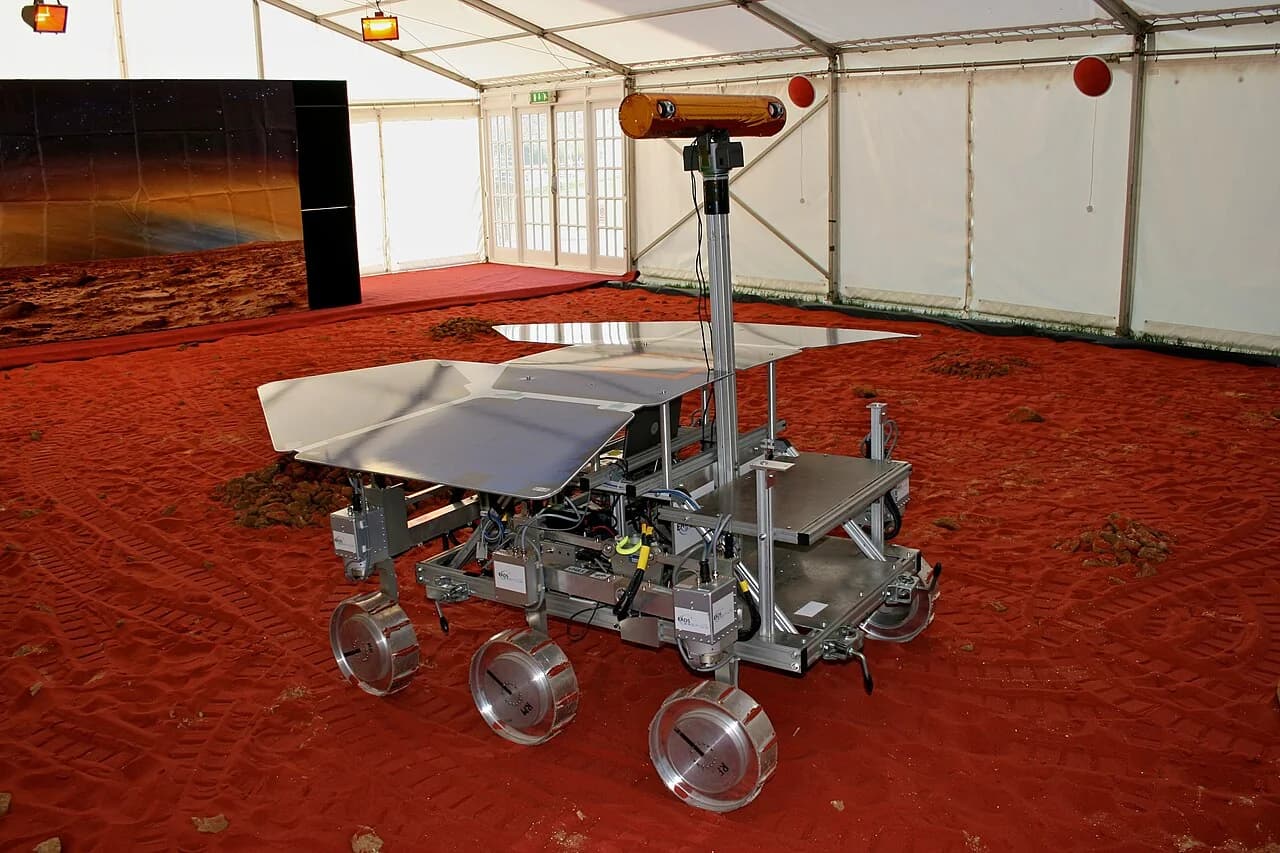
In Turin, engineers used Amalia, a full-size twin of Rosalind Franklin. An overhead rig supported two-thirds of the 300-kilogram rover’s weight so that its wheels pressed down on the ramps with roughly the force they would exert on Mars.
Engineers tilted the platform by up to 20 degrees and placed obstacles beneath the ramps as if the lander had come to rest on a boulder. Amalia drove off both ends of the platform. Astronika recorded more than 20 descents and nearly 100 tests of the ramps unfolding.
The ExoMars mission is due to launch in October 2028 and land in 2030. Once clear of the platform, Rosalind Franklin will search for signs of ancient life. Its drill is designed to reach two metres below the Martian surface.